mead yeast
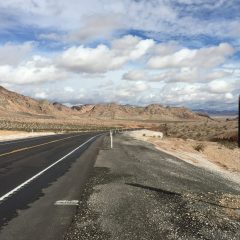
Nevada Condition Route 147

Condition Route 147 (SR 147) is really a condition highway serving the Vegas Valley in southern Nevada. It’s signed as Lake Mead Boulevard and runs from Interstate 15 (I-15) and U.S. Route 93 (US 93) in North Vegas east towards the border from the Lake Mead National Entertainment Area. It’s not to be mistaken with Lake Mead Parkway (formerly Lake Mead Drive), that also would go to Lake Mead but mainly runs in southern Vegas Valley and carries the designation of Condition Route 564.
Lake Mead Boulevard grew to become a condition highway in 1978, however the highway didn’t have markers published to recognize it as being a condition highway.
Condition Route 147 begins at Interstate 15 and U.S. Route 93 in North Vegas. After that, SR 147 comes with an intersection at Vegas Boulevard (SR 604) and Social Center Drive (former SR 607). Traveling further east, SR 147 leaves the town of North Vegas because it enters the unincorporated capital of scotland- Sunrise Manor where it’s intersections at Lamb Boulevard and Nellis Boulevard (SR 612). The highway then leaves the unincorporated capital of scotland- Sunrise Manor because it travels with the Frenchman Mountain on its northern slope. The street then curves right into a southeastern direction in which the highway ends close to the Lake Mead NRA as Lake Mead Boulevard continues past the highway’s eastern terminus.
SR 147 first seems around the official Nevada condition highway map using the 1978-79 edition like a semi-circular route. The path adopted Lake Mead Boulevard (that was formerly unnumbered) eastward from North Vegas to Northern Coast Road within the Lake Mead National Entertainment Area south on Northern Coast Road (replacing SR 41A) to Lakeshore Road then west on Lakeshore Road (later Lake Mead Drive, now Lake Mead Parkway), replacing a part of SR 41. The terminus what food was in Lakeshore Road and Boulder Highway (then US 93/US 95, now SR 582). The highway ongoing west of Boulder Highway as SR 146.
The northern section along Lake Mead Boulevard lacks the SR 147 designator around the 1983-84 and 1985-86 maps. However, it’s back around the 1987-88 map, so it’s unclear whether it was a roadmap error or maybe a planned decommissioning that wasn’t transported out.
Around the 1998-99 map, the southern portion of SR 147 (along Lake Mead Drive) was substituted with an eastward extension of SR 146 (now SR 564). The whole period of SR 147 has become on Lake Mead Boulevard, using the eastern terminus truncated towards the northern border from the Lake Mead National Entertainment Area.
The whole route is within Clark County.
RTC Transit Route 210 functions about this road.
Route map:
Stu Mead
Stuart “Stu” Mead (born October 18, 1955) is definitely an American artist who lives and works in Berlin, Germany.
Mead was created in Waterloo, Iowa in 1955. He was created with arthrogryposis, a hereditary condition affecting the muscles and joints. Like a teen, Mead was inspired by European painting and subterranean comics, especially individuals of Robert Crumb. He studied art in the College of Northern Iowa before moving together with his parents to England in 1975. He studied printmaking in the Camden arts Center working in london.After coming back to Iowa in 1977, he studied drawing in the College of Iowa, as well as in 1983 gone to live in Minneapolis Minnesota. Later he finished the Minneapolis College of Art and style, where he grew to become knowledgeable about artist and future collaborator Frank Gaard.
Mead’s work includes painting, drawing, printmaking, and producing Zines and art books. His jobs are inspired by popular culture, for example comics, (including Subterranean Comics) British seaside postcards, and cartoons appearing in cheap men’s magazines from the 1950s and early 1960s. Mead also draws inspiration from “high” culture sources like European painting, (especially German modernist painters). Mead cites Picasso and Balthus as getting the finest affect on his artistic practice. Another strong influence is Bruno Bettelheim’s book “The Purposes Of Enchantment,” which explores the Grimm Brothers’ dark fairytales from the Freudian mental perspective. Bettelheim’s analysis of folktales, as well as their utilization of simple, effective archetypes to trigger deep emotional responses informed Mead’s efforts to produce images that engage the viewer immediately and emotionally.
Later, Mead started adding towards the artist zine “Art Police,” which Frank Gaard edited. Mead took part in this publication from 1987 until its final issue in 1994. “Art Police” gave Mead a forum where he could freely explore taboo styles, including adolescent sexuality, bestiality, and scatology. In 1991, Mead, (together with Frank Gaard) started publishing the zine “Man Bag.” An kind of Art Police, the zine focused exclusively on sexual images. In 1993 Mead received the Plant Foundation Artists Fellowship, which permitted a number of journeys to Europe.At the moment, he started a lengthy connection to French art book writer Le Dernier Cri, in addition to with Gallery Endart in Berlin. Le Dernier Cri printed a selection of Man Bag’s six issues in 1999 known as “The Immortal MAN BAG Journal of Art”. In 1994 Mead began a number of works of art according to his sexually explicit sketches that have been exhibited at Endart in Berlin in 1995. His works of art of the period were a topic of “The Late Great Aesthetic Taboos, an essay incorporated included in “Apocalypse Culture II,” the questionable anthology, compiled by Adam Parfrey and printed by Feral House in 2000. Mead gone to live in Berlin in 2000. In 2003, he took part in the exhibition “Do Not Cause Me To Feel Cry,” curated by Georgina Starr at Emily Tsingou Gallery working in london. There, Mead exhibited works of art depicting women in graveyards.
In April, 2004 an organization exhibition known as “When Love Turns to Poison” occured in the Kunstraum Bethanien in Berlin, showing, among other functions by Mead, the painting “First Breaking of the bread,” that was destroyed throughout the exhibition with a religion-obsessed vandal. The exhibition of eight artists grew to become a nationwide scandal, with conservative newspapers declaring it pornographic and non-art.
Debate also developed around an exhibit of Mead’s work on Hyaena Gallery in Burbank, California in 2008, when four artists connected using the gallery left it in protest against Mead’s exhibition.
In ’09 Mead took part in the exhibition loop “Offentliche Erregung” (Public Arousal), at loop – raum fur aktuelle kunst Berlin, Germany Berlin, Germany Group exhibition that worked particularly using the grey zone where art approaches the pornographic.
This Year Mead’s work was incorporated inside a large exhibition at Rental property Merkel/Bahnwarterhaus in Esslingen, Germany known as “Family Jewels”, by which artist Damien Deroubaix presented a household tree from the artists who’ve influenced his work.
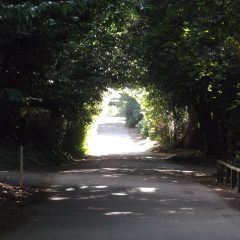
Pullens Lane

Pullens Lane (a.k.a. Pullen’s Lane) is within Headington, east Oxford, England. It’s located towards the top of Headington Hill, leading north off Headington Route to Jack Straw’s Lane and Harberton Mead. The cul-de-sac Pullens Field (a.k.a. Pullen’s Field, named in 1972) leads off west from Pullens Lane.
The lane was named following the Rev. Josiah Pullen (1631-1714), vicar of St Peter-in-the-East in central Oxford (where he’s hidden) and Vice-President of Magdalen Hall. He accustomed to walk in this region to the peak of Headington Hill and admire the vista of Oxford. He grown an elm tree within the locality within 1680. The tree grew to become referred to as Joe Pullen’s tree, but was destroyed with a fire on 13 October 1909. There’s a tablet within the wall of Davenport House here recording the big event around the east side from the lane. The street was named Pullen’s Lane in 1930.
Pullens Lane includes numerous notable structures, especially through the Victorian architect
Harry Wilkinson Moore (1850-1915). Structures by Wilkinson include:
Other structures include:
Rye St Antony School, founded in 1930, is situated in Pullens Lane. It began in central Oxford and gone to live in a 12-acre (49,000 m2) site around the east side of Pullens Lane in 1939.
Plater College moved from makeshift facilities at Boars Hill south of Oxford to a different purpose-built residential college on Pullens Lane, after demolishing Fairfield (formerly referred to as Pullens) throughout the 1970s, underneath the leadership of Frederick Kirwan (1910-2005). The school closed in 2005. The website has become occupied through the EF Worldwide Academy (formerly the EF Worldwide Language School).
The EF Worldwide Language Centres Oxford Campus primary entrance on Pullens Lane.
Entrance to Cotuit Hall, a part of EF Academy, also on Pullens Lane.
View with the primary gate from the Vines on Pullens Lane.
King House at Rye St Antony School, off Pullens Lane.
Coordinates: 51°45′32″N 1°13′37″W / 51.75889°N 1.22694°W / 51.75889 -1.22694
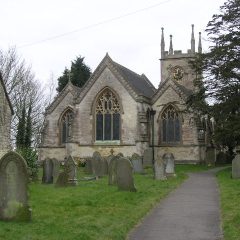
Timsbury, Somerset

Timsbury is really a village and civil parish within the Bath and North East Somerset unitary authority from the county of Somerset, 8 miles (13 km) south-west of Bath England. The parish, including the hamlets of Meadgate, Radford and Wall Mead, includes a population of two,624.
The village is known as Timfborough, Tymmersbarue, Timsbarrow (meaning Timbered grove), Timsbyre (wooded hillside) and Temsbury throughout its lengthy history.
Timsbury is a settlement because the Bronze Age. A few of the earliest everything written down show an entry within the Norman Domesday Book of 1086.
“Johnson holds Timsbury in the Bishop of Coutance. Ape held it before 1066. It compensated tax for several hides, land for several ploughs, in lordship, 1 plough, 2 slaves, one and something half hides, 2 villagers and 1 smallholder with 1 plough and something and something half hides, 2 areas of a mill which pays two shillings, field 26 acres. Pasture too, 1 cob, 9 cattle, 14 pigs and 60 sheep, the worth was 26 shillings, now 50 shillings.”
The entry then procedes to describe the Mill at Radford which would be to the south from the village.
The parish was area of the hundred of Chew.
Timsbury House would be a large mansion house of the Samborne family. Built for the finish from the 15th century by Richard Samborne. His successor Barnaby Samborne was knighted for his services to Queen Elizabeth I. Your building was destroyed in 1961, and St. Marys Eco-friendly and Somerset Folly estates now occupy the initial site. One unusual feature from the estate was the existence of a ha-ha (sunken path). It was built to permit the Samborne family privacy in the local occupants because they passed the home.
Pitfour House in high street shops was built-in the mid 17th century. The terrace of homes at Crook Barton goes back close to 1700.
In 1795, the Gooseyard bridge in Timsbury parish was the beginning point for that Somerset Coal Canal which offered the seven coal mines at Amesbury, Mearns, Tyning, Hayeswood, Old Grove, and Lower and upper Conygre, round the village which created a main issue with the Somerset Coalfield. Lower Conygre (Conigre in certain old spellings) was sunk in 1847 as well as in 1896 was merged using the older Upper Congyre this was began in 1791. These were of Samborne Cruz and Company in 1908, after which by Beaumont, Kennedy and Co. The Amesbury pit opened up before 1701 and closed in early 1800s. Hayeswood colliery opened up in 1750 and closed in 1862. Tyning opened up in 1766 adopted by Mearns that was sunk in 1783 and closed in 1824.
The canal was later substituted with a railway line in early 1900s, the truly amazing Western Railway Radford and Timsbury Halt offered the requirements of passengers in the village. The Coal canal introduced success towards the village and many other large houses were built in the region. Renny’s on Love’s Hill, as was its neighbour, Vale House.
Parish’s House around the south eastern side from the village was an 1816 extension of the much earlier house. It’s related to Thomas Baldwin of Bath for Captain Parish R.N., is fronted by a luxuriant balustrade, and features a stable block in the same date.
Greenhill House seemed to be built in early 1800s. Initially of St Johns Hospital in Bath, it’s undergone both your hands of numerous institutions during its history. It had been eventually purchased through the charitable organization initially referred to as Cheshire Foundation Homes for that Sick, in 1976 it grew to become the Leonard Cheshire Foundation. In This summer 2007 it altered to the current name, Leonard Cheshire Disability.
In 1978, the main from the village, centred round the Square and high street shops, was designated a conservation area, that is now considered “in danger”. A lot of its structures built in the local White-colored Lias stone within the 1700s are actually protected against inappropriate development.
The Miners Memorial Garden, near to the Square, marks the village’s lengthy connection to coal mining. It had been in built-in 1995 to mark the centenary of the subterranean explosion at Upper Conygre pit in 1895, which claimed the lives of seven miners and 4 horses.
Since 1894, the parish council has responsibility for local issues, including setting a yearly principle (local rate) to pay for the council’s operating costs and producing annual makes up about public scrutiny. The parish council evaluates local planning applications and works together with the neighborhood police, district council officials, and neighbourhood watch groups on matters of crime, security, and traffic. The parish council’s role includes initiating projects for that repair and maintenance of parish facilities, like the village hall or community center, playing fields and playgrounds, community library, in addition to talking to using the district council around the maintenance, repair, and improvement of highways, drainage, footpaths, trains and buses, and street cleaning. Conservation matters (including trees and listed structures) and ecological issues will also be of great interest towards the council.
The parish falls inside the unitary authority of Bath and North East Somerset that was produced in 1996, as established through the Municipality Act 1992. It possesses a single tier of municipality with responsibility for most municipality functions within its area including local planning and building control, local roads, council housing, ecological health, markets and fairs, refuse collection, recycling, cemeteries, crematoria, leisure services, parks, and tourism. They’re also accountable for education, social services, libraries, primary roads, trains and buses, Buying and selling Standards, waste disposal and proper planning, although fire, police and ambulance services are supplied jointly along with other government bodies with the Avon Fire and Save Service, Avon and Somerset Constabulary and also the Great Western Ambulance Service.
Bath and North East Somerset’s area covers area of the ceremonial county of Somerset but it’s administered individually from the non-metropolitan county. Its administrative headquarters is within Bath. Between 1 April 1974 and 1 April 1996, it had been the Wansdyke district and also the Town of Bath from the county of Avon. Before 1974 the parish was area of the Clutton Rural District.
The village has one electoral ward with similar area and population because the parish.
The parish is symbolized in the home of Commons from the Parliament from the Uk included in North East Somerset. It elects one Person in Parliament (MP) through the first beyond the publish system of election.
The village is situated on the plateau 500 ft (150 m) above ocean level within the north east of Somerset. Towards the south may be the northern fringe of the Mendip Hillsides, towards the north is Marksbury plain. Bordered by two water courses, towards the north through the Conygre Brook, and towards the south through the Cam Brook. Local landmarks towards the north west range from the Sleight, a little escarpment rising to 645 ft (197 m) for any distance of .89 miles (1.43 km) within an east westerly direction. This ridge leads the B3130 towards the west of Timsbury beyond the Hayeswood Road Industrial Estate for connecting using the A39. Towards the east is Tunley hill which increases to some height of 550 ft (170 m), this is actually the easterly path to Bath through the B3130.
There’s some remaining managed woodland from our area, but nothing beats the quantity there is previously once the village was handed its name of Timsbyre (wooded hillside). Nederlander elm disease and using wood for building construction, fuel and products have denuded a lot of the neighborhood section of its trees.
The neighborhood underlying stone is from the Triassic period, referred to as White-colored Lias limestone. It’s near to the surface around the southern slopes from the village, and has been utilized extensively for building purposes for years and years. A lot of it has gone through slight metamorphic transformation and it has become quite hardened. This factor is apparent in most of the older structures in which the softer layer stone has more readily eroded in places. There’s a good amount of freestone (boulders stone) in most of the local fields, which provides a lot of the walling stone for that local farms.
Combined with the remainder of The West England, Timsbury includes a temperate climate that is generally wetter and milder than the remainder of England. The annual mean temperatures are about 10 °C (50 °F) with periodic and diurnal variations, but because of the modifying aftereffect of the ocean, the number is under in many other areas from the Uk. The month of january may be the very coldest month with mean minimum temperatures between 1 °C (34 °F) and 2 °C (36 °F). This summer and August would be the warmest several weeks in the area with mean daily maxima around 21 °C (70 °F). Generally, December may be the dullest month and June the sunniest. The the west of England enjoys a preferred location, specifically in summer time, once the Azores High extends its influence north-eastwards for the United kingdom.
Cloud frequently forms inland, especially near hillsides, and reduces contact with sunshine. The typical annual sunshine totals around 1600 hrs. Rain fall is commonly connected with Atlantic depressions or with convection. In summer time, convection brought on by solar surface heating sometimes forms shower clouds and the great majority from the annual precipitation falls from showers and thunderstorms at the moment of the year. Average rain fall is about 800-900 mm (31-35 in). 8-15 times of snowfall is normal. November to March possess the greatest mean wind speeds, with June to August getting the lightest. The predominant wind direction comes from the the west.
Timsbury has four places of worship catering for a number of denominations and 2 cemeteries.
The parish Church of St Mary the Virgin was reconstructed in 1826-32 and also the east finish put in 1852 by Mister George Gilbert Scott. It’s been designated by British Heritage like a Grade II* listed building. Within the churchyard are monuments to James Collins, Robert Langford, the Parsons family, two Cruz monuments and something unknown. That old rectory dates from around 1820. South road Methodist Church hall hosts various local groups such as the Timsbury Ladies Choir. Tabor Free Methodist Church occupies an excellent building of local stone on North Road. Its records reveal that the stained glass home windows, the pews and also the entrance screens were made and designed inside the village. It had been established like a church in 1865. In 1930 the then trustees made the decision against joining the Methodist Union and Tabor remains a totally free church underneath the charge of the neighborhood trustees. The previous Christadelphian church continues to be changed into housing.
The village presently (2010) keeps a pre-school and first school, a village hall and Youth club hall. The Conygre hall can be used for village conferences, shows including antique fairs, flower shows and also the village amateur dramatic society performances, local art group exhibitions and provate occasions. It’s been extended recently and it is other uses include short pad bowling, dance classes as well as the local polling station. There’s additionally a community-run library.
The Conygre hall was built-in 1973 and required its name in the Upper Conygre pit formerly located opposite. Your buck was financed equally by local subscription, and also the generosity of Major B.G.S. Cayzer, who had been the 2nd boy from the Union Castle Shipping Line family and owned Parish’s House. It is situated in an old Miners welfare field purchased for his or her benefit and financed with a levy of the cent per lot of all coal found from our area. You will find facilities for entertainment and sport, including two football pitches, cricket and rugby. There’s two tennis courts along with a well outfitted enclosed children’s play park area.
There’s a social hall for any branch from the British Legion in Newmans Lane,, a YMCA building and something public house, the Seven Stars, on North Road.
Record data (2007) supplied by Bath and North East Somerset local council implies that Timsbury, (area 90 within the data), has excellent use of local Authority services, has a healthy body care facilities, a lesser than average crime rate and good ecological living standards. Timsbury features its own pharmacy in high street shops and doctors’ surgery in St Marys Close.
Media associated with Timsbury, Somerset at Wikimedia Commons
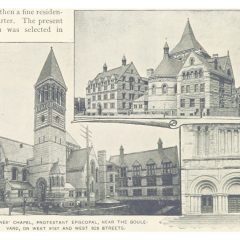
St. Agnes Chapel (New York City)

St. Agnes Chapel was an Upper West Side Episcopal “plant chapel” of Trinity Church (New York City), one of many. It was located at 121-147 West 91st Street, between Amsterdam and Columbus Avenues. It was at first reused by its parish school and then demolished for a gymnasium in the 1940s.
Like many large buildings in the 19th century, St. Agnes Chapel was the product of an architectural competition. In July 1888, Trinity Corporation announced a competition to design the chapel, a clergy house, and a parish house. The corporation invited six architects: Charles C. Haight, Henry M. Congdon, Frederick C. Withers, Richard M. Hunt, William Halsey Wood, and McKim Mead & White, each of whom received $1,000 compensation. However, other architects were invited to submit designs with the understanding that they would be paid if chosen. In the end, the jury selected a submission by the architect William Appleton Potter, a son of the Episcopal Bishop Alonzo Potter.
The three buildings were built between 1890 and 1892 to the designs of architect Potter. The New York Times described the chapel as “the finest church structure, barring the cathedral, in New York City.” The chapel entrance was on West 92nd Street, whereas the parish house and clergy house, flanking the chapel’s apse, were entered on West 91st Street.
In 1934, Downtown Trinity Parish decided to close the small congregation, already split from nearby Episcopal churches. Eager to expand, the adjacent parish school, also named Trinity, bought it as a gymnasium space and demolished it for a more permanent structure in 1943.
The St. Agnes Branch of the New York Public Library, now half a mile away, was founded by the parish.
Coordinates: 40°47′26″N 73°58′18″W / 40.7906°N 73.9717°W / 40.7906; -73.9717
Sebastian Piras
Sebastian Piras is really a professional photographer and filmmaker from Italia.
Sebastian has resided in Italia, England, France and Germany before settling in New You are able to City in 1985.
His primary photo taking subject continues to be portraiture. His exhibition “Artists Uncovered” contains an accumulation of captivating portraits of known artists, for example Andy Warhol and Roy Lichtenstein, and less popular ones. David Ross, former director from the Whitney Museum of yankee Art, who authored the preface for that book Artists Uncovered, heralded Piras’ photos as: “probing and extraordinarily beautiful portraits of artists . . . that ultimately produces winners at both sides from the camera.”
His photographs happen to be printed, exhibited and picked up worldwide. He’s labored in film like a cameraman/steadicam operator and director. He’s directed and filmed documentaries, including “Taylor Mead Unleashed”, that also featured Allen Ginsberg and Quentin Crisp.
“A Pocketful of recent Artists Portraits”, Printed by images, Melbourne 2008
Orchard Mead Academy
Orchard Mead Academy, formerly referred to as Hamilton College, is really a co-educational comprehensive school in Leicester, England, taking children between eleven and 16.
The school grew to become an academy on 1 September 2017, joining the Rushey Mead Educational Trust (RMET) like a backed academy.
The primary school building dating in the 50s and 60s was replaced in 2014 included in the Building Schools for future years programme. Included in these works Nether Hall Special School co-located with Hamilton around the Keyham Lane West site. 2502 Squadron Air Training Corps also shares the college site.
The college was awarded the status of the specialist Technology College in September 2001.
The main is Jackie Gair, who required within the role in April 2017. The college has already established several alterations in leadership because the retirement from the lengthy standing principal, John Morris.
In 2013, 68% from the school’s 16 year-old pupils achieved five or even more GCSE passes at grades A* to C, with 50% of pupils doing this including GCSE British and Maths. In 2014, 55% of scholars achieved 5 GCSE grades A*-C including British and Maths this figure dropped to 25% in 2015.
In 2016, the college achieved a progress 8 score of -.73, placing it towards the bottom 10% of colleges in England. In 2017 the school’s progress 8 score being worse at -.78.
In October 2016, the college was rated by Ofsted as “Insufficient” in most areas and it was put into special measures.
In June 2017, the college attracted critique after informally excluding a minimum of 40 pupils for peacefully protesting against cuts to education funding and compulsory redundancy of support. The headteacher, Jackie Gair, declined to discuss the incident, however a statement from the neighborhood authority, Leicester City Council, mentioned the authority “was pleased considering that the situation was managed.” Many parents responded by saying they merely peacefully protest against Hamilton Academy policies.
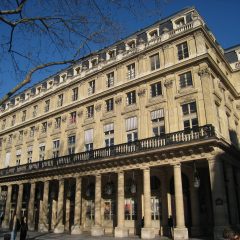
Salle Richelieu

The Salle Richelieu (French: [sal ʁiʃljo]) may be the principal theatre from the Comedie-Francaise. It is situated in the Palais-Royal within the first arrondissement of Paris and it was initially built in 1786-1790 towards the types of the architect Victor Louis. It seats 862 spectators.
For that auditorium of his earlier theatre, the Grand Theatre de Bordeaux (1773-1780), Victor Louis had combined the traditional semicircle using the ellipse giving a horseshoe plan and devised open balcony boxes, both features that they employed again within the Salle Richelieu (1786-1790), plus his later theatre, the Theatre plusieurs Arts (1791-1793). As initially designed, the auditorium from the Salle Richelieu sitting down around 2,000 spectators. The website for that building am limited, he placed the doorway foyer underneath the auditorium. His design seemed to be innovative for using an iron frame (underneath the roof, the floors and boxes), mainly with regards to fireproofing.
Initially known as the Theatre du Palais-Royal, it was initially occupied through the Theatre plusieurs Varietes-Amusantes, who gave the inaugural performance on 15 May 1790. It grew to become the theatre from the Comedie-Francaise by an action of 14 May 1799, which merged the Varietes-Amusantes using the players in the Theatre en Nation from the Faubourg Saint-Germain. The brand new company gave their first performance on 30 May 1799 as Theatre-Francais en Republique.
The inside from the auditorium was redesigned in 1798 by Jean-Charles-Alexandre Moreau as well as in 1822 by Pierre Fontaine, who reduced the diameter from the balcony posts, which in fact had formerly obstructed the vista for a lot of spectators. The ceiling was repainted by Pierre-Luc-Charles Ciceri in 1840. Additional interior restoration work was transported out by Theodore Charpentier [fr] in 1847 and 1850. The capability in 1857 was 1,350 spectators. In 1858 the ceiling was repainted by Frederick Nolau and Auguste Rube in line with the types of Felix-Frederick Barrias.
From 1860 to 1864, Pierre Prosper Chabrol [fr] transported out extensive modifications from the exterior and interior, along with the growth of your building toward today’s Place Colette. The ceiling was repainted in 1864 by Philippe Chaperon with the help of Frederick Nolau and Auguste Rube. It had been repainted in 1879 by Alexis-Frederick Mazerolle, as well as in 1885, by Guillaume Debuffe. The theatre was destroyed with a fire on 8 March 1900. Just the walls from the facade continued to be standing. The brand new building, as reconstructed underneath the supervision of architects Julien Guadet and Henri Prudent, was inaugurated on 26 December 1900.
The “Fauteuil de Moliere” (armchair of Moliere), where the actor agonized while performing the function of Argan in the last play, Le Malade imaginaire, is on permanent display within the public foyer from the theatre.
The painter Pierre Roussel produced numerous portraits of actors who’ve made an appearance in the theatre. These are available in the corridors and boxes.
Auditorium
Stage
Balconies
Grand Staircase
Fauteuil de Moliere.
Look at the auditorium and stage in 1790 (as created by Victor Louis)
Theatre in 1821 (as redesigned by Jean-Charles-Alexandre Moreau in 1798)
Theatre in 1822 (after its alteration by Pierre Fontaine)
Pork roll


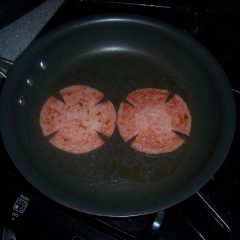
Pork roll is really a pork-based processed meat generally obtainable in Nj, New You are able to, Delaware and areas of Pennsylvania and Maryland. It had been coded in 1856 by John Taylor of Hamilton Square, Nj, and offered as “Taylor’s Prepared Pork”. Other producers joined the marketplace, and subsequent food labeling rules needed Taylor to designate it as being a “pork roll” alongside its competitors. While “Taylor” is technically a brandname of pork roll, in parts of North Jersey all brands of pork roll might be known in modern language as “Taylor Pork” because of John Taylor branding his original pork roll as Taylor’s Prepared Pork.
While an identical item, packed minced pork, might have been created during the time of the Fight of Trenton, John Taylor is credited with creating his secret recipe for that product in 1856. George Washington Situation, a player and butcher from nearby Belle Mead, Nj, later produced their own recipe for pork roll in 1870. Case’s was apparently packaged in corn husks.
Taylor initially known as his product “Taylor’s Prepared Pork”, but was made to alter the name after it unsuccessful to satisfy the brand new legal meaning of “pork” established through the Pure Drug and food Act of 1906. Marketed as both “Taylor’s Pork Roll” and “Trenton Pork Roll”, it saw competition from products concentrating on the same names like “Folded Pork” and “Trenton style Pork Roll”. When their makers were sued by Taylor, a 1910 legal situation ruled the words “Pork Roll” couldn’t be trademarked.
In North Jersey, residents continue using the word “Taylor pork”, while South Jersey residents generally make use of the term “pork roll”, with Central Jersey residents using a mixture of the 2.
Within the 1910 suit, it had been referred to as “a food article made from pork, packed inside a round cotton sack or bag such form that could be rapidly ready for cooking by slicing without removal in the bag.” Ray Olmsted of USA Today has described the flavour from the meat as “a mix between Canadian bacon and bacon, less hammy and smoky than Canadian, fattier and saltier than bacon, having a unique texture, both crispy and slightly mushy.”
Firms that make pork roll include Taylor (underneath the Taylor and Trenton brands), Case’s Pork Roll, Loeffler’s Gourmet, Hatfield Quality Meats and Alderfer Premium of Harleysville, Pennsylvania.
It is normally eaten included in a sandwich, with popular condiments including pepper, ketchup, mustard, hot sauce, lettuce, butter and tomato. It’s also incorporated in lots of other recipes, together with a popular breakfast sandwich known in the area like a “Taylor pork, egg and cheese” or “pork roll, egg and cheese.” by which fried pork roll is became a member of having a fried egg and American cheese and offered on the hard roll, bagel or British muffin. Nj eateries recognized for their Jersey Breakfast include Slater’s in Middletown, and Starks U . s . in Keansburg.
Trenton, Nj held its Inaugural Pork Roll Festival on May 24, 2014.
The Trenton Thunder minor league baseball team located their inaugural “Trenton Thunder Renowned Case’s Pork Roll Eating Championship” on September 26, 2015. Joey Chestnut won the competition when you eat 32 pork roll sandwiches in ten minutes.
The Lakewood BlueClaws minor league baseball team holds a Pork Roll, Egg, and Cheese Race in the finish from the 4th inning of each and every home game.
An audio lesson known as “Pork Roll Egg and Cheese” seems around the album The Pod by Ween, locals of recent Hope, Pennsylvania, referring particularly to some sandwich composed of pork roll, egg and cheese on the kaiser roll. Other songs through the band for example “Frank” also contain references to pork roll.
On April 14, 2016, Assemblyman Tim Eustace introduced an action within the Nj Condition Legislature designating the Taylor Pork, egg, and cheese sandwich because the Nj Condition Sandwich and supplementing chapter 9A of Title 52 from the Revised Statutes. “An Action designating the Taylor Pork, egg, and cheese sandwich because the Nj Condition Sandwich and supplementing chapter 9A of Title 52 from the Revised Statutes.”
On May 15, 2016, The President gave a commencement speech at Rutgers University’s 250th graduation ceremony by which he referenced the “Taylor Pork versus. pork roll debate”, saying, “I come for an easy reason – to finally settle this pork roll versus. Taylor Pork question…I am just kidding…There isn’t much I am afraid to defend myself against within my final year of office, however i know much better than to obtain in the center of that debate.”