
Relict leopard frog

Image by/from Mary Cynthia Dickerson (1866-1923)
Rana onca Cope, 1875
The relict leopard frog (Lithobates onca) is really a types of frog in the household Ranidae, endemic towards the U . s . States. It’s found across the Colorado river in extreme northwestern Arizona, and adjacent Nevada and southwestern Utah, although its present range appears to become limited to the river Mead National Entertainment Area. Its natural habitat is freshwater springs as well as their outlets. It’s threatened by habitat loss to agriculture and water development in addition to invasive species.

The Joey Bishop Show (Tv show)

The Joey Bishop Show is definitely an American sitcom starring performer Joey Bishop that aired on NBC from September 1961, to The month of january 1964. After NBC canceled the series because of low ratings, it had been selected up by CBS where it aired because of its 4th and final season.
Executive created by Danny Thomas, The Joey Bishop Show is really a spin-from Thomas’ series The Danny Thomas Show.
The series was created like a vehicle for performer Joey Bishop by Danny Thomas and Louis F. Edelman in 1960. At that time, Thomas was starring in the own series, Make Room for Father (later referred to as Danny Thomas Show), airing on CBS. Thomas’ series ended up being a high-20 hit and offered like a launching pad for that Joey Bishop Show. The series’ pilot episode, titled “Everything Transpires with Me”, aired on March 27, 1961, throughout the eighth season of Danny Thomas.
Within the pilot, an incompetent Hollywood “pr man” named Joey Mason (Bishop) forgets to create proper accommodations to have an exhausted Danny Johnson (Thomas) after he comes to La to experience a motion picture. Joey will be made to put Danny up in your home he explains to his colorful parents, Mr. and Mrs. Mason (performed by Billy Gilbert and Madge Blake) and 2 unmarried siblings, Gloria (Virginia Vincent) and ambitious actress Stella (Marlo Thomas).
When the series was selected up by NBC, Bishop’s character’s name was altered to Joey Barnes (Bishop had was adamant his character and that he share exactly the same initials) and also the character of Joey’s father was dropped. Two additional figures were added a more youthful brother named Ray, and Frank, the husband of Joey’s older sister Gloria. The series’ first incarnation features Joey, a properly-intending but new and trouble-prone youthful man, who works best for the Hollywood pr firm, Willoughby, Cleary and Johnson. The firm is headed by J.P. Willoughby (John Griggs), Joey’s demanding boss. Willoughby’s secretary, Barbara Simpson (Nancy Hadley), is Joey’s girlfriend. Joey lives with and supports his widowed mother, Mrs. Barnes (Madge Blake), more youthful sister Stella (Marlo Thomas) and more youthful brother Ray (Warren Berlinger), who’s a clinical student. Joey will also support his older sister Gloria (Virginia Vincent) and her proudly unemployed husband Frank (Joe Flynn).
The storylines throughout the first season typically center around Joey’s misadventures concerning his job. Problems also arise when family people, who frequently think he’s more influence in Hollywood than he really has, attempt to benefit from his nonexistent influence. Because the series would be a spin-from the Danny Thomas Show, Danny Thomas and Marjorie Lord made an appearance his or her Danny Thomas figures within the first season’s 4th episode titled “Here’s Your Existence”. Sid Melton, who made an appearance as Uncle Charley Halper on Danny Thomas, also made an appearance.
Upon its September 1961 premiere, the series battled within the ratings. In order to improve viewership, NBC made the decision to “readjust” the series. Several figures, including Joey’s older sister Gloria, brother-in-law Frank, and girlfriend Barbara Simpson, were dropped. Several crew people were also ignored. The alterations helped the series’ ratings and NBC restored it for any second season.
Following the first season, Bishop made the decision to alter the format from the series. Additionally towards the format altering, The Joey Bishop Show started filming before an active audience as well as featured a completely different supporting cast. Within the second incarnation, Joey Barnes may be the host of the New You are able to City talk/variety tv program. Abby Dalton became a member of the cast as Joey’s new wife Ellie (whom Joey known as “Texas” because she hailed from Texas) and also the two live in the Carlton Arms, a posh Manhattan apartment building. For the finish of season two, Ellie finds out she’s pregnant using the couple’s first child. Their boy, Joey Barnes, Junior. (performed by Dalton’s real boy Matthew David Cruz), was created within the season-two finale “The Infant Cometh”. Also joining the cast was Guy Marks, who portrayed Freddie, Joey’s manager. Marks left the series after 19 episodes and Corbett Monica became a member of the cast as Ray Corbett, Joey’s mind author. The supporting cast includes Mary Treen as Hilda, the Barnes’ maid and baby nurse, that Joey frequently trades insults. Joe Besser portrayed Mr. Jillson, the building’s goofy and henpecked super who resides in anxiety about his wife, Tantalia, who’s never witnessed but frequently heard.
Storylines through out the series’ run mainly concentrate on Joey’s home existence, but additionally feature storylines involving Joey’s job like a television host. As a result, various celebrities (who typically made an appearance as themselves) who have been visitors on Joey Barnes’ talk show made an appearance through the series’ run. Even though the second incarnation from the series was apparently unrelated towards the first incarnation, the series featured Danny Thomas in 2 season-three episodes: “Danny Gives Joey Advice” and “Andy Johnson Visits Joey”. Rusty Hamer, who made an appearance on Danny Thomas as Rusty Johnson, also made an appearance as his character in three season-four episodes: “Rusty Arrives”, “Rusty’s Education”, and “Joey Entertains Rusty’s Fraternity”.
The Joey Bishop Show featured many celebrity guest stars who made an appearance as themselves. One of the celebrity guest stars are:
Actors who made an appearance in guest starring roles include:
One Season 3 episode from the Joey Bishop Show has become considered lost. The episode, known only as #85, was filmed on November 15, 1963 and guest appeared comedian and impressionist Vaughn Meader. Meader rose to fame in early 1960s for his comedy impersonation of then-President John F. Kennedy featured around the popular comedy album The Very First Family. The episode focused on Meader performing his Kennedy impersonation in routines opposite Joey Bishop. Per week after filming, President Kennedy was assassinated in Dallas. President Kennedy’s dying quickly ended Meader’s career – his club bookings and tv appearances were rapidly canceled and the albums were pulled from stores. The episode featuring Meader was scheduled to air in Feb 1964, but was pulled by NBC. The episode never aired and it was apparently destroyed.
The series was produced by Louis F. Edelman and Danny Thomas who also offered because the executive producer. The series was created by Thomas’ company, Bellmar Enterprises. It had been filmed at Desilu Studios before an active studio audience, having a laugh track added during publish-production for “sweetening” purposes.
Upon its debut on NBC in 1961, The Joey Bishop Show was telecast in black-and-white-colored. One Season 1 episode, “A Windfall For Mother”, was shot and broadcast colored. During its second and third seasons, the series switched to paint. After it gone to live in CBS for that 1964-65 season, it reverted to black-and-white-colored.
Upon its premiere, The Joey Bishop Show battled within the ratings. Following the first re-tooling, ratings for that series improved and NBC restored it for any second season. The series’ second revamped season demonstrated to become well-liked by audiences and ratings elevated. Through the finish from the third season, the series had dropped within the ratings again and NBC announced it might be dropped from the selection in The month of january 1964 (the series’ third-season finale episode aired in May 1964). During this time period, Danny Thomas made the decision to finish his series after eleven years despite its still high ratings. To pay for Thomas’ absence, CBS immediately selected in the Joey Bishop Show for that 1964-65 television season.
The Growing Season 4 season opener, “Joey Would go to CBS”, premiered on Sunday night September 27, 1964 at 9:30 P.M. opposite NBC’s very popular western series Bonanza. Consequently, ratings for that Joey Bishop Show were low. By late fall 1964, ratings hadn’t improved. In order to save the series, CBS moved it to Tuesday nights. Ratings still continued to be low and CBS announced the series’ cancellation in The month of january 1965. The series finale aired on March 30, 1965.
Instances of The Joey Bishop Show aired on television Land in 1998. In 2016, the series started airing on Retro TV.
Antenna TV announced in October 2016 it might begin airing the series the next The month of january, such as the rarely seen first season.
In September 2004, Questar Entertainment released the entire second season from the Joey Bishop Display on Region 1 DVD within the U . s . States.
On March 13, 2018, SFM Entertainment (written by Allied Vaughn) released cooler months along with a “Complete Series” focused on DVD in Region 1 via Amazon . com.com’s CreateSpace program. They are Manufacture-on-Demand (MOD) releases, available solely through Amazon . com.

Program counter

This program counter (PC), generally known as the instruction pointer (IP) in Apple x86 and Itanium microprocessors, and often known as the instruction address register (IAR), the instruction counter, or simply area of the instruction sequencer,
is really a processor register that signifies in which a computer is within its program sequence.[note 1]
Usually, laptop computer is incremented after fetching an instruction, and supports the memory address of (“suggests”) the following instruction that might be performed.[note 2]
Processors usually fetch instructions sequentially from memory, but control transfer instructions alter the sequence by putting a brand new value within the PC. Included in this are branches (sometimes known as jumps), subroutine calls, and returns. A transfer that’s depending on the reality of some assertion lets the pc consume a different sequence under different conditions.
A branch provides the next instruction is fetched from elsewhere in memory. A subroutine call not just branches but saves the preceding items in laptop computer somewhere. Coming back retrieves the saved items in laptop computer and places it during the PC, resuming consecutive execution using the instruction following a subroutine call.
Inside a simple cpu (CPU), laptop computer is really a digital counter (the origin from the term “program counter”) that generally is one of several hardware registers. The instruction cycle starts with a fetch, where the CPU places the need for laptop computer around the address bus to transmit it towards the memory. The memory responds by delivering the items in that memory location around the data bus. (This is actually the stored-program computer model, where a single storage contains both executable instructions and ordinary data.) Following a fetch, the CPU proceeds to execution, a little action in line with the memory contents it acquired. At some stage in this cycle, laptop computer is going to be modified so the next instruction performed is another (typically, incremented so the next instruction may be the one beginning in the memory address rigtht after the final memory location of the present instruction).
Like other processor registers, laptop computer can be a bank of binary latches, each one of these representing one little bit of the need for laptop computer. The amount of bits (the width from the PC) pertains to the processor architecture. For example, a “32-bit” CPU could use 32 bits so that you can address 232 units of memory. When the PC is really a binary counter, it might increment whenever a pulse is used to the Total input, or even the CPU may compute another value and cargo it in to the PC with a pulse to the LOAD input.
To recognize the present instruction, laptop computer might be coupled with other registers that identify a segment or page. This method permits your personal computer with less bits by presuming that many memory units of great interest are inside the current vicinity.
Utilization of your personal computer that normally increments assumes that exactly what a computer does is perform usually straight line sequence of instructions. This type of PC is the central von Neumann architecture. Thus programmers write a consecutive control flow for algorithms that don’t have to become consecutive. The resulting “von Neumann bottleneck” brought to analyze into parallel computing, including non-von Neumann or dataflow models that didn’t make use of a PC for instance, instead of indicating consecutive steps, our prime-level programmer might specify preferred function and also the low-level programmer might specify this using combinatory logic.
These studies also brought to methods to making conventional, PC-based, CPUs improve your speed, including:
Modern high-level programming languages still stick to the consecutive-execution model and, indeed, a typical method of identifying programming errors is by using a “procedure execution” where the programmer’s finger identifies the purpose of execution like a PC would. Our prime-level language is basically the device language of the virtual machine, too complex to become built as hardware but rather emulated or construed by software.
However, new programming models transcend consecutive-execution programming:

William Mead (merchant)

William Mead (1628-1713) would be a London merchant, along with a prominent early Quaker, connected by marriage to George Fox.
Mead grew to become a wealthy linen draper of Fenchurch Street within the Town of London, and person in the organization of Merchant Taylors. He was captain of the train-band, before joining the Quakers in 1670. On 14 August of this year he was present in a crowded meeting in Gracechurch Street, where William Penn was the preacher both were arrested and dedicated to Newgate Gaol.
The trial of Penn and Mead, where they defended the best of free worship, started in the Old Bailey on 1 September 1670. These were charged with disturbing the peace by unlawfully assembling together by agreement, and pleaded not liable. The jury pronounced on 5 September that Penn wasn’t responsible for disobeying the law, which Mead wasn’t guilty at basically jury and prisoners were dedicated to Newgate. Penn’s father, Mister William Penn, was mentioned by Gerard Croese to possess compensated fines to secure their release. An in depth account from the trial, underneath the title The People’s Ancient and merely Liberties asserted, was printed (London, 1670) by Penn and Mead, which is also related in more detail by Frederick Besse in the Assortment of the Sufferings of those known as Quakers.
The handling from the trial gave rise to Bushel’s Situation. Thomas Vere, the jury foreman, compensated an excellent and it was released. Edward Bushel(l), certainly one of several four jurors who disputed their treatment, effectively put on a legal court of Common Pleas for any writ of habeas corpus, plus they were released, carrying out a ruling by Mister John Vaughan.
Mead later resided at Highgate, and entertained George Fox there in 1677. He held a number one position one of the Quakers, and many occasions anxiously waited around the king with George Whitehead yet others. He purchased about 1684 the estate of Goosehays (also Goosehayes, Gooses), in Hornchurch parish, Kent, where Fox would be a customer. He died at Goosehays 3 April 1713, aged 86, and it was hidden within the Friends’ graveyard at Barking having a headstone.
Mead authored, with Whitehead yet others, several vindications of “the folks known as Quakers”. One of these simple was sent to home of Lords, 21 Feb 1701.
Mead married and lost his first wife, Mary Lawrence, in 1679. A young child, Jonathan, died in 1680.
In 1681 Mead married Sarah Fell, 4th daughter of Thomas (died 1658) and Margaret Fell Margaret married George Fox as her second husband. Sarah Fell would be a preacher, Hebrew scholar, manager from the large household at Swarthmoor, along with a correspondent of William Penn and Robert Barclay. She’d been searched for in marriage by Richard Lower, court physician, whose brother Thomas married her sister Mary.
Sarah Fell acquired in the king in 1670 an order for that discharge of her mother (then Mrs. Fox) from prison, which she herself communicated to Lancaster. She was the very first clerk from the Lancashire Women’s Quarterly Meeting, and before she left Swarthmoor came up on her siblings Instructions the way you may order the company within the Quarterly Women’s Meeting Book. Her account-book of family expenditure and lots of letters were preserved within the Swarthmoor Manuscripts. She died at Goosehays, 9 June 1714, and it was hidden together with her husband at Barking.
To Nathaniel Mead, an attorney and politician who had been knighted, his “dear and onely child”, Mead left by will his estates working in london, Middlesex, Kent, Kent, and Surrey. He left also legacies towards the poor among Quakers yet others.
Attribution
This article incorporates text from the publication now within the public domain: Lee, Sidney, erectile dysfunction. (1894). “Mead, William”. Dictionary of National Biography. 37. London: Cruz, Elder & Co.

William De Witt Hyde

Image by/from Unknown
William De Witt Hyde (September 23, 1858 – June 29, 1917) was a united states college president, born at Winchendon, Mass.
He finished Phillips Exeter Academy in 1874, from Harvard College in 1879 and from Andover Theological Seminary in 1882. Ordained towards the Congregational ministry in 1883, he would be a pastor at Newark, N. J., in 1883-85, and after that was president of Bowdoin College, also holding the chair of mental and moral philosophy. In 1906, he penned “The Sale from the College,” that was provided to each student until 1969. It had been subsequently edited to mirror the altering census from the student body.
This short article incorporates text from the publication now within the public domain: Gilman, D. C. Peck, H. T. Colby, F. M., eds. (1905). New Worldwide Encyclopedia (first erectile dysfunction.). New You are able to: Dodd, Mead. Missing or empty title= (help)
Stacey Knecht
Stacey Knecht (born 1957 in New You are able to City) is definitely an award-winning translator. She mainly translates literary works in the Czech and Nederlander (or Flemish) languages into British.
She won the James S. Holmes Translation Award (1993) on her translation of To the Congo by Lieve Joris, and also the inaugural Vondel Prize (1996) on her translation from the Great Longing by Marcel Moring. She seemed to be a jogger-up for that 2015 Best Converted Book Award on her translation of Harlequin’s Millions by Bohumil Hrabal.
Additionally to her translation work, Stacey continues to be an enthusiastic teacher of Nederlander like a second language, and remedial teacher, since 2010. She resides in The Hague, within the Netherlands.

Robert Hartig

Image by/from Unknown
Robert Hartig (born: Heinrich Julius Adolph Robert Hartig, 30 May 1839, in Braunschweig – died 9 October 1901, in Munich) would be a German forestry researcher and mycologist.
He was educated in the Collegium Carolinum of Braunschweig, and also at Berlin. In 1878 he was hired professor of botany at Munich. Hartig made significant contributions to understanding of vegetable pathology. Just before his investigations around the progressive stages of disease in trees, little or free have been done in this region, to ensure that Hartig might be considered the founding father of arboreal pathology.
Hartig labored in Eberswalde (1867-1878) and Munich (1878-1901), mainly in forest pathology.
He was the boy of Theodor Hartig (1805-1880) and grand son of Georg Ludwig Hartig (1764-1837).

Volcanic Repeating Arms

The Volcanic Repeating Arms Company was a united states company created in 1855 by partners Horace Cruz and Daniel B. Wesson to build up Walter Hunt’s Rocket Ball ammunition and lever action mechanism. Volcanic made a better form of the Rocket Ball ammunition, along with a carbine and pistol form of the lever action gun to fireplace it. As the Volcanic Repeating Arms Company was short-resided, its descendants, Cruz & Wesson and Winchester Repeating Arms Company, grew to become major firearms manufactures.
The initial 1848 Volition Repeating Rifle design by Search was revolutionary, presenting an earlier iteration from the lever action repeating mechanism and also the tubular magazine still common today. However, Hunt’s design was not even close to perfect, and only a few prototypes were developed the only person known is presently within the Firearms Museum in Cody, Wyoming. Lewis Jennings patented a better form of Hunt’s design in 1849, and versions from the Jenning’s patent design were built by Robbins & Lawrence Co. (underneath the direction of shop foreman Benjamin Tyler Henry) and offered by C. P. Dixon. Horace Cruz seemed to be hired by Courtlandt Palmer to enhance the Jennings Rifle, patenting the Cruz-Jennings in 1851. It’s believed that less than 2000 of the models were created until 1852, when financial troubles stopped production.
In 1854, partners Horace Cruz and Daniel B. Wesson became a member of with Courtlandt Palmer, the businessman who’d purchased the Jennings and Cruz-Jennings patent legal rights, and additional improved around the operating mechanism, developing the Cruz & Wesson Lever pistol, along with a new Volcanic cartridge. Production is at the store of Horace Cruz in Norwich, Connecticut. The brand new cartridge enhanced the Search Rocket Ball with the help of a primer. Initially while using name “Cruz & Wesson Company”, the name was altered to “Volcanic Repeating Arms Company” in 1855, with the help of new investors, one of these was Oliver Winchester. The Volcanic Repeating Arms Company acquired all legal rights for that Volcanic designs (both rifle and pistol versions were being produced by now) along with the ammunition, in the Cruz & Wesson Company. Wesson continued to be as plant manager for 8 several weeks before rejoining Cruz to found the “Cruz & Wesson Revolver Company” upon acquiring the licensing from the Rollin White-colored rear loading cylinder patent.
Winchester forced the insolvency from the Volcanic Arms Company at the end of 1856, required over possession and moved the guarana plant to New Haven, Connecticut, where it had been reorganized because the New Haven Arms Company in April 1857. B. Tyler Henry was hired as plant superintendent when Robbins & Lawrence endured financial hardships and Henry left their employ. While ongoing to help make the Volcanic rifle and pistol, Henry started to test out the brand new rimfire ammunition, and modified the Volcanic lever action design for doing things. The end result was the Henry rifle. By 1866, the organization once more reorganized, this time around because the Winchester Repeating Arms company, and the Winchester grew to become symbolic of lever action rifles.
The Rider, the title character of Edward M. Erdelac’s Judeocentric Lovecraftian weird west series Merkabah Rider, has a Volcanic pistol inlaid with silver and gold and bearing various Solomonic talismans and wards, together with a jeweled Tree of Sephiroth around the handle.
Within the game titles Red Dead Redemption and Red Dead Redemption 2 as well as their online modes Red Dead Online, the protagonists can wield the Volcanic pistol.
A Cruz & Wesson Volcanic pistol, c. 1855, in .31 caliber
The Jennings (top) and Volcanic (bottom) rifles
Volcanic pistol .41 caliber
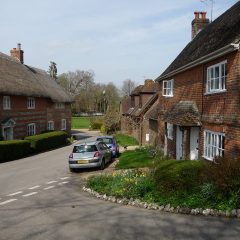
St. Mary Mead

St Mary Mead was the imaginary village produced by popular crime fiction author Dame Agatha Christie.
The quaint, sleepy village was the place to find the famous detective spinster Miss Marple. However, Christie first described a village of this name just before Marple’s introduction, within the 1928 Hercule Poirot novel The Mystery from the Blue Train. For the reason that novel, St Mary Mead hosts the book’s protagonist Katherine Gray. The village was initially pointed out inside a Miss Marple book in 1930, if this was the setting for that first Marple novel, The Murder in the Vicarage.
Miss Marple’s St Mary Mead is described within the Murder in the Vicarage to be within the imaginary county of Downshire, however in the later novel Your Body within the Library Downshire is becoming Radfordshire. Within the BBC Miss Marple TV adaptation of Enemy, instructions from Mr Rafiel’s solicitors indicate that St Mary Mead is situated in the (also) imaginary county of Middleshire. The St Mary Mead of Katherine Gray is within Kent.
Miss Marple resides in Danemead Cottage, the final cottage in Old Pasture Lane. Her phone number is “three five” on the manual exchange.
Once it’s been fully established as Miss Marple’s home village, St Mary Mead should be in East England, 25 mi (40 km) from London. It is only outdoors the city of great importance and Benham and it is near to Market Basing (which seems like a name of the town in lots of of Agatha Christie’s novels and short tales), 12 mi (19 km) in the fashionable seaside resort of Danemouth, as well as 12 mi (19 km) in the seaside capital of scotland- Loomouth. Other towns stated to become near by include Brackhampton, Medenham Wells, and Milchester. The neighbourhood of St Mary Mead is offered by trains coming at Paddington railway station, indicating an area west or the west based in london. It’s been recommended that Market Basing is Basingstoke and Danemouth is Bournemouth. Within the BBC Miss Marple television adaptations the Hampshire village of Nether Wallop was utilized because the setting for St Mary Mead. Brackhampton might be Bracknell, just north of Basingstoke.
Before The Second World War, the village itself wasn’t particularly large. The only real road of significance passing with the village was High-street. Here were the well-established purveyances of Mr Petherick, the solicitors Mrs Jamieson, the hairdressers Mr Thomas’s basket-weavers Nowhere Boar Pub Mr Footit’s butchers, Mr Jim Armstrong’s dairies, Mr Berks’s bakers and Mr Baker’s grocery shop. The small-trafficked railway station, featured within the book The Murder in the Vicarage, can also be found at the finish of High-street although the station might have closed when from the novel 4.50 from Paddington as Mrs McGillicuddy includes a taxi arranged for that 9 mi (14 km) from Milchester station to overlook Marple’s house.
Then, slightly further up Lansham Road, was the fine Victorian structure of Gossington Hall. Before the 1950s, it was the place to find the exaggerated upon the market military man, Colonel Arthur Bantry and the wife Mrs Dolly Bantry (Miss Marple’s best buddies within the village). However, after Colonel Bantry died, Mrs Bantry offered the estate, but ongoing to reside on within the grounds within the East Lodge. The Hall was later after a couple of changes of possession purchased through the film star Marina Gregg. One mile lower Lansham Road would be a very modern cottage known as Chatsworth. It had been also referred to as the “Period Piece” and “Mr Booker’s home”. You purchased it , in early 1930s by Tulsi Blake, part of the skill department at Lemville film studios. It had been also lived on by Basil’s wife, Dinah Lee an actress.
In the other finish of Lansham Road, a little lane known as Old Pasture Lane broke from the primary street. Nestled within this lane were three Queen Anne or Georgian houses, which belonged to 3 spinsters. The very first house belonged towards the lengthy-nosed, gush and excitable Miss Caroline Wetherby. The 2nd was Miss Amanda Hartnell, a proud, decent lady having a deep voice. The final cottage was known as Danemead Cottage also it belonged to overlook Jane Marple, the famous spinster who solved numerous cases between 1930 and 1976. The Publish Office, and also the dressmakers owned by Mrs Politt, can be found while watching lane .
The center from the village was the Vicarage, the grand Victorian structure in the finish from the Lane. The Vicarage was the place to find The Vicar Leonard Clement and the pretty youthful wife, Griselda using their nephew: Dennis, and then their two sons, Leonard and David.
Close to the gardens from the Vicarage would be a back lane which brought to some small cottage known as Little Gates. Until 1930, it had been lived on by an Anglo-Indian colonel who moved away and briefly rented it to Mrs Lestrange.
Past the Vicarage were two more houses. The very first was the residence from the village GP, Physician Gerard Haydock. He ongoing to reside on within the village beyond 1960. Another cottage was much bigger than Dr Haydock’s. It belonged to Mrs Martha Cost-Ridley, a wealthy and dictatorial widow, and also the most vicious gossip of all of the old ladies within the village. There is additionally a large estate, Old Hall, of the despised local justice of the peace, Colonel Lucius Protheroe. He was murdered in 1930 in Mr Clement’s study within the Vicarage. After his dying, the mansion was switched right into a block of flats, towards the great disapproval from the villagers. The flats housed Mrs Carmichael, a wealthy and eccentric old lady who had been bullied by her maid, the Larkins, two siblings named Skinner, certainly one of whom would be a supposed hypochondriac, along with a youthful husband and wife, along with a robbery was later committed through the Skinner siblings.
Finally, just beyond the house of the dreaded Cost-Ridley (as she’s known by other villagers) would be a small stream, resulting in the fields of Player Giles. However, world war ii required its toll around the village, and shortly following the war Player Giles’s fields were bought and tarmacked over along with a new housing estate was built on there. It was known as ‘The Development’ through the villagers who survived world war 2. A really large hospital seemed to be built near, manned by many people nurses and doctors. In addition to this there have been some large hotels and three film studios: Lemville, Elstree and Hellingforth.

Ortigueira

Image by/from PepedoCouto
Ortigueira is really a seaport and town within the province of the Coruna the autonomous community of Galicia in northwestern The country. It is one of the comarca of Ortegal. It’s on the northern slope from the Serra da Faladoira, the forest Mera as well as on the eastern shore from the Ria de Santa Marta—a winding, rock-bound and far indented inlet from the Bay of Biscay, between Capes Ortegal and Bares, the northernmost headlands from the Peninsula. The city is recognized for its romantic surroundings and ocean bathing possibilities.
The industries are fishing and farming. The harbour is well sheltered. Because of its shallowness, large vessels cannot enter, but there’s an essential coasting trade, regardless of the harmful character from the coast and also the prevalence of fogs and gales.