Wilhelm Freund
Wilhelm Freund (The month of january 27, 1806 – June 4, 1894) would be a German Jewish philologist, born at Kempen.
He received his education at Berlin and Breslau, and it was chiefly occupied in teaching until 1870, as he upon the market to be able to devote themself to his literary pursuits. Besides classical school-books and a few creates philology, he compiled a more sophisticated Latin dictionary in 4 volumes, the Worterbuch der Lateinischen Sprache (1834-45), that has been the foundation from the standard British-Latin dictionaries within the 1800s. It had been converted into British by Ethan Allen Andrews in 1850 and revised (with Freund’s own assistance) because the grounds for Lewis and Short’s A Latin Dictionary. Also, he authored:
Additionally to his operate in philology, Freund was involved with Jewish education as well as in political activism for that legal rights from the Jewish community within the Kingdom of Prussia. He died in Breslau.
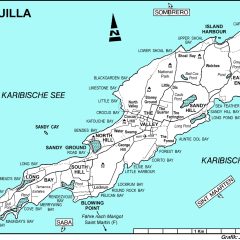
Meads Bay Pond

Meads Bay Pond is really a wetland in Anguilla, an english Overseas Territory within the Caribbean Ocean. It is among the territory’s Important Bird Areas (IBAs).
Water-feature is really a narrow, 21 ha brackish lagoon alongside Lengthy Bay Village, close to the south-western finish from the primary island. Its north-western shore is separated from Meads Bay with a thin strip of land, an old dune, that has a road and tourism developments. The substrate is marl around the northern side and limestone around the southern. Plant life round the pond consists mainly of stands of buttonwood mangroves, with a few longspine acacia and gray nicker in the western finish.
The IBA was recognized as such by BirdLife Worldwide since it supports a little breeding colony of least terns in addition to non-breeding royal terns.
Coordinates: 18°10′45″N 63°08′12″W / 18.17917°N 63.13667°W / 18.17917 -63.13667
Peter Souter
Peter Souter (born 1962) may be the chairman and chief creative officer of TBWA London and former executive creative director of Abbott Mead Vickers BBDO.
Throughout his career being an advertising creative, Souter produced a really many campaigns.
Peter Souter is another author, and it has written plays for theatre and radio, such as the screenplay for ITV’s television drama Married Single Other.
Souter started his career in advertising like a copywriter at Abbott Mead Vickers BBDO in 1991, where he labored alongside Paul Brazier for four years. Then he managed to move on to get deputy creative director in 1995, then executive creative director in 1997, overtaking for David Abbott. In 2005 he labored around the ‘Make Poverty History’ campaign, that they stated was the job which he’s most proud.
Souter has written plays for radio, theatre and tv. His radio plays for BBC Radio 4 include Puddle, Fish Girl, Stream River Ocean, That’s Mine, This really is Yours, What Love Seems like and “13a, 13b”.
Souter’s television drama, Married Single Other, is really a series in line with the lives of group who’re either married, single or “other”, other being understood to be inside a relationship. It had been aired on ITV in Feb 2010.
For theatre, Souter authored the play Hello/Goodbye, that was offered out in the Hampstead Theatre in the first run in 2013, and it is playing again from 21 The month of january to twenty-eight Feb 2015.
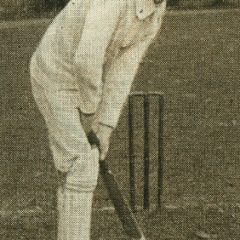
Phil Mead

Image by/from Unknown
Charles Phillip Mead (9 March 1887 – 26 March 1958) was an British first-class cricketer. He performed like a left-handed batsman for Hampshire and England between 1905 and 1936. He was created at 10 Ashton Structures (since pulled lower), second oldest of seven children. Growing up he performed for South London Schools, attending Shillingstone Street School.
His extremely straight bat and quick hard work (surprising for men of heavy build because he was) made him probably the most difficult batsmen to dismiss throughout his career. His mastery within the best county spin bowlers even around the most treacherous pitches is outstanding, but he may be excellent from the fastest bowling while he might get closer into line than almost any batsman in cricket history.
Mead holds many batting records, particularly those of scoring probably the most runs within the County Championship and also the 4th-greatest total in most first-class matches. His quantity of runs for Hampshire, 48,892, may be the finest number any batsman has scored for any single team. Also, he exceeded one 1000 runs in each and every season of first-class cricket except his first – as he only performed one match. He seemed to be an excellent fieldsman, holding 675 catches.
C. B. Fry spotted Mead playing like a schoolboy in the Oblong and encouraged him to become professional he became a member of the Surrey ground staff in 1902.
Mead first trialled for Surrey, but qualified for Hampshire because Surrey’s batting strength was such that they are not able to provide him an agreement. It’s possible that Fry’s Hampshire connections (he’d an exercise Ship Mercury around the River Hamble) helped bring Mead to Hampshire. Throughout his residence qualification period Mead labored in coaching naval trainees, and can make his first-class debut at 17 for Players from the South from the Gentleman, but was vetoed by W G Elegance who objected due to his age.
After one match from the touring Australians if not qualified in 1905, Mead immediately grew to become a normal with Hampshire, but faltered following a promising beginning including 109 against Yorkshire.
However, from 1907 onwards Mead, at this time a dent batsman, advanced very quickly, together with his average reaching 39 within the very wet summer time of 1909. In 1911, he moved lower an order to his familiar position of # 4, and thus effective was this move he was the key run-scorer in 1911 and 1913, and toured Australia in 1911/1912 and Nigeria in 1913/1914. He wasn’t nearly so effective as may have been expected around australia, however in Nigeria he hit an evaluation century and performed particularly well throughout. In 1912 he’d been unbeaten (160* and 33*) in Hampshire’s historic make an impression on the Australians at Southampton.
After The First World War stopped county cricket (Mead was rejected from service due to spider veins), Mead’s listing of achievements increased, as his always-outstanding watchfulness and superb hard work made him the entire master of bowlers for example Tich Freeman who have been deadly against batsmen of poorer technique. In 1921, after missing the very first three Tests against Australia, Mead hit 182 not out in the Oblong within the last Test – showing that England seriously erred in not selecting him for that earlier games when Jack Gregory and Ted McDonald were built with a complete mastery over their batsmen. Also, he hit his greatest score of 280 not out that year against Nottinghamshire. Hampshire, remarkably, lost the match as they were bowled out cheaply on the good wicket within their first innings!
Between 1922 and 1928, Mead was consistently among the top batsmen in county cricket, but England’s outstanding batting strength – with men like Herbert Sutcliffe, Wally Hammond, Jack Hobbs and Frank Woolley – meant Mead had couple of possibilities at Test level. After scoring over 3000 runs in 1928, Mead toured Australia for that second time, but was dropped after one Test in order to make room for an additional bowler.
In 1929, impacted by injuries, Mead declined substantially, neglecting to achieve 2000 runs the very first time because the war. However, despite no more being right in front rank of British batsmen, Mead was still being feared for his great technical skill and arrived at a 1000 runs each year until, at age forty-nine in 1936, he wasn’t re-engaged by Hampshire. In the last innings, Mead performed a wonderfully skilful 52 against Hedley Verity on the badly putting on wicket, and that he performed for Suffolk within the Minor Counties Championship with considerable success in 1938 and 1939 while cricket coach at Framlingham College.
He’d foreseeable mannerisms – getting reached the crease together with his “moving, self-reliant” walk, he required guard, twirled his bat, drawn on his bat within the crease and required several shuffling steps as much as it. Before every ball he’d tug his cap. His batting wasn’t slow, but completely unhurried a spectator once described him as getting ‘stone-walled’ from the quarter to 1 to half past six for 200.
Right after The Second World War, issues with his eyes which in fact had begun in 1941-2 brought to Mead becoming totally blind, but he never were not impressed with this. His financial worries were assuaged with a fund elevated by Herbert Sutcliffe for Mead and Len Braund. He retained a curiousity about cricket and frequently attended Hampshire matches at Dean Park up to his dying on 26 March 1958.
In 1907, Mead signed for Southampton for just one season to help the club’s reserve team like a helpful inside-forward, but he’d no aim of taking on football like a full-time occupation. On 21 December 1907, he what food was in Fratton Park, Portsmouth for any reserve fixture as he was called towards the Dell in which the Saints had an urgent situation as both regular goalkeepers, Herbert Lock and Tom Burrows were unavailable through injuries. Mead therefore performed in goal inside a Southern League match against West Pork U . s .. Based on Holley & Chalk’s “The Alphabet from the Saints” he “formed up well but was just needed in order to save two shots and stored an empty sheet inside a – draw.”
Married to Beatrice Englefield in 1908, he’d two sons, Ronald and Frank. Beatrice’s brother, Frank Englefield, seemed to be an expert footballer, playing for Southampton and Fulham.
Wolio language
Wolio is definitely an Austronesian language spoken around Baubau on Buton Island, Southeast Sulawesi, Indonesia. It is one of the Wotu-Wolio branch from the Celebic subgroup. Also referred to as Buton, it’s a trade language and also the former court language from the Sultan at Baubau. Today it’s an official regional language street signs are designed in the Buri Wolio alphabet, in line with the Arabic script.
Stress is around the penultimate syllable. The 5 vowels are /i e a o u/.
/b, d, f/ are located in loans, mostly from Arabic. /b/ is transcribed w, /tʃ/ c. /r/ is really a trill.
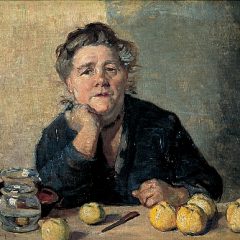
Rose Mead

Image by/from St Edmundsbury Borough Council
Emma Rose Mead (4 December 1867 – late March 1946) would be a British born portrait painter who exhibited in the Royal Academy summer time exhibition and it was a friend of Augustus John. Mead would be a prolific artist who labored in a variety of fields – landscapes, street scenes, still lifes and flower studies alongside her portrait work, using both oil on canvas and watercolour in writing.
Mead was created in Bury St Edmunds, the daughter of the plumber, glazier and house painter. She was aged 20 before she’d any formal artistic training when she attended the Lincoln subsequently School of Art. She left there to review in the Westminster School of Art, working in london in 1892, underneath the tutorship of Ernest Brown before his appointment as Professor in the Slade School of proper Art. During this period she colored a self-portrait in the process of cooking. A business that made similar cookers offered £500.00 (£38,961.00 in 2007) to include their name, a sum she declined because she was reluctant to “prostitute” her art. Mead’s remain at Westminster was brief before getting to come back the place to find nurse her father. After his dying Mead studied under Auguste-Frederick Delecluse in Paris, in which a pastel portrait was exhibited in the Paris Salon. This same portrait was exhibited in the Royal Academy in 1896.
Mead came back to Bury St Edmunds in 1897 never, aside from the rare holiday, to depart again. Within the same year Cuisine en Boheme was proven in the Royal Academy summer time exhibition. Two painting Friday Morning at St Mary’s and My Mother were proven within the 1899 exhibition. Rose Mead nursed her mother until her dying in 1919, although earning money portrait painting, mainly commissioned by local dignitaries. In 1929 she visited Newlyn in Cornwall going to the existing Newlyn School of artists of this time. One figure study entitled Colored in Dod Procter’s studio in Newlyn a known consequence of the visit. In c. 1933 she visited the South of France, a watercolour of St Paul de Vence an eye on that point. The artist was known by locals to approach women and youthful women if she was attracted by a few characteristic, and would inquire if, using their parents permission, they’d gladly pose on her. Although painting she counselled them to not get wed, advocating these to find fulfilment inside a career, one sitter remembering that when the artist had discovered she’d married – “She felt which i had quite altered which were built with a harmful impact on my personality”. The artist never achieved the promise proven at the beginning of her career, it’s thought mainly due to the breaks brought on by the dying of her father and the necessity to take care of her mother until she was aged 52. She was discovered dead at the end of her studio stairs in Crown Street, Bury St Edmunds in the finish of March 1946 at age 78.
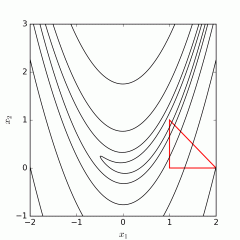
Nelder-Mead method

Nelder-Mead simplex search within the Rosenbrock blueberry function (above) and Himmelblau’s function (below)
The Nelder-Mead method (also downhill simplex method, amoeba method, or polytope method) is really a generally applied statistical method used to obtain the minimum or more a goal function inside a multidimensional space. It’s a direct search method (according to function comparison) and it is frequently put on nonlinear optimization trouble for which derivatives might not be known. However, the Nelder-Mead strategy is a heuristic search way in which can converge to non-stationary points on problems that may be solved by various ways.
The Nelder-Mead technique was suggested by John Nelder and Roger Mead in 1965, like a growth and development of the technique of Spendley et al.
The technique uses the idea of a simplex, that is a special polytope of n + 1 vertices in n dimensions. Types of simplices incorporate a line segment on the line, a triangular on the plane, a tetrahedron in three-dimensional space and so on.
The technique approximates a nearby optimum of an issue with n variables once the objective function varies easily and it is unimodal. Typical implementations minimize functions, so we maximize
f
(
x
)
)
by minimizing
−
f
(
x
)
)
.
For instance, a suspension bridge engineer needs to select how thick each strut, cable, and pier should be. These components are interdependent, but it’s not easy to visualise the outcome of altering any sort of element. Simulation of these complicated structures is frequently very computationally costly to operate, possibly taking up to hrs per execution. The Nelder-Mead method requires, within the original variant, a maximum of two evaluations per iteration, aside from the shrink operation described later, that is attractive when compared with another direct-search engine optimization methods. However, the general quantity of iterations to suggested optimum might be high.
Nelder-Mead in n dimensions maintains some n + 1 test points arranged like a simplex. After that it extrapolates the behaviour from the objective function measured each and every test point to find a brand new test point and also to replace among the old test points using the brand new one, so the technique progresses. The easiest approach would be to switch the worst point having a point reflected with the centroid from the remaining n points. If the point is preferable to the very best current point, only then do we can try stretching tremendously out along this line. However, if the new point is not a lot better than the prior value, only then do we are walking across a valley, therefore we shrink the simplex perfectly into a better point. An intuitive explanation from the formula from “Statistical Recipes”:
The downhill simplex method now takes a number of steps, most steps just moving the purpose of the simplex in which the function is largest (“highest point”) with the opposite face from the simplex to some lower point. These steps are known as glare, and they’re built to save the level of the simplex (and therefore maintain its nondegeneracy). If this can perform so, the technique expands the simplex in one or two direction to consider bigger steps. If this reaches a “valley floor”, the technique contracts itself within the transverse direction and attempts to ooze lower the valley. If there’s a scenario in which the simplex is attempting to “pass with the eye of the needle”, it contracts itself everywhere, pulling itself in around its cheapest (best) point.
Unlike modern optimization methods, the Nelder-Mead heuristic can converge to some non-stationary point, unless of course the issue satisfies more powerful conditions than are essential for contemporary methods. Modern enhancements within the Nelder-Mead heuristic happen to be known since 1979.
Many variations exist with respect to the actual nature from the problem being solved. A typical variant utilizes a constant-size, small simplex that roughly follows the gradient direction (which provides steepest descent). Visualize a little triangular with an elevation map switch-flopping its way lower a valley to some local bottom. This process is also referred to as the flexible polyhedron method. This, however, has a tendency to perform poorly from the method described in the following paragraphs since it makes small, unnecessary stages in regions of little interest.
(This approximates the process within the original Nelder-Mead article.)
We are attempting to minimize the part
f
(
x
)
)
, where
x
∈
R
n
in mathbb ^
. Our current test points are
x
1
,
…
,
x
n
+
1
_,ldots ,mathbf _
.
1. Order based on the values in the vertices:
2. Calculate
x
o
_
, the centroid of points except
x
n
+
1
_
.
3. Reflection
4. Expansion
5. Contraction
6. Shrink
Note:
a
,
g
,
r
and
s
are correspondingly the reflection, expansion, contraction and shrink coefficients. Standard values are
a
=
1
,
g
=
2
,
r
=
1
/
2
and
s
=
1
/
2
.
For that reflection, since
x
n
+
1
_
may be the vertex using the greater connected value one of the vertices, don’t be surprised to locate a lower value in the reflection of
x
n
+
1
_
within the opposite face created by all vertices
x
i
_
except
x
n
+
1
_
.
For that expansion, when the reflection point
x
r
_
may be the new minimum across the vertices, don’t be surprised to locate interesting values across the direction from
x
o
_
to
x
r
_
.
In regards to the contraction, if
f
(
x
r
)
>
f
(
x
n
)
_)>f(mathbf _)
, don’t be surprised that the less expensive is going to be within the simplex created by all of the vertices
x
i
_
.
Finally, the shrink handles the rare situation that contracting from the largest point increases
f
, something which cannot happen sufficiently near to a non-singular minimum. For the reason that situation we contract for the cheapest reason for the expectation to find a less complicated landscape. However, Nash notes that finite-precision arithmetic can occasionally neglect to really shrink the simplex, and implemented a cheque the dimensions are really reduced.
The first simplex is essential. Indeed, a not big enough initial simplex can result in a nearby search, consequently the NM could possibly get easier stuck. Which means this simplex usually depends on the character from the problem. However, the initial article recommended a simplex where a preliminary point is offered as
x
1
_
, using the others generated having a fixed step along each dimension consequently. Thus the technique is responsive to scaling from the variables that comprise
x
.
Criteria are necessary to break the iterative cycle. Nelder and Mead used the sample standard deviation from the function values of the present simplex. If these fall below some tolerance, then your cycle is stopped and also the cheapest reason for the simplex came back like a suggested optimum. Observe that a really “flat” function might have almost equal function values more than a large domain, so the solution is going to be responsive to the tolerance. Nash adds the exam for shrinkage as the second termination qualifying criterion. Observe that programs terminate, while iterations may converge.
Poimandres

Aleister Crowley
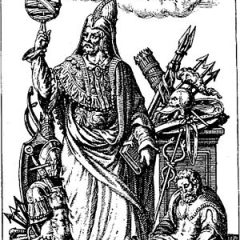
Poimandres (Greek: Poimandris also referred to as Poemandres, Poemander or Pimander) may be the first tractate within the Corpus Hermeticum.
Initially designed in Greek, the title was formerly understood to mean “Man-Shepherd” in the words poimin and anir, but recent reports on its etymology allege that it’s really produced from the Egyptian phrase Peime-nte-re meaning “Understanding of Re” or “Knowledge of Re”.
It’s also a kind of deity, or attribute of God as nous or “mind” as expressed within the following translations
John Everard translation:
G. R. S. Mead translation:
Salaman, Van Oyen and Wharton translation:
The Company Council
The Company Council is definitely an organization of economic leaders headquartered in Washington, D.C. It holds conferences several occasions annually for top-level policy discussions.
The Company Council may be the only venue for that world’s top CEOs to collect and interact in professional, intellectual, and leadership development. The business is led by the fact that the company community’s contributions to public discourse and governance have been in the eye from the common good from the United states citizens.
Marlene Colucci can serve as executive director from the Business Council. Hired in 2013, Colucci has held leadership positions in public places policy in the White-colored House, U.S. Department at work, and American Hotel and Lodging Association. She describes the business as “an essential voice for that world of business with an advanced of private engagement by its people.”
The Company Council began by Secretary of Commerce Daniel C. Roper and investment banker Sidney Weinberg because the Business Advisory Council for that U . s . States Department of Commerce in 1933, under President Franklin D. Roosevelt. It created the commercial Advisory Board for that National Recovery Administration throughout the Great Depression. Additionally, it established committees to go over the Securities Exchange Act of 1934, the Banking Act of 1935 and also the Social Security Act.
It had been renamed The Company Council being an organization independent in the Department of Commerce in 1961, under President John F. Kennedy.
Membership is restricted to 200 active people, all whom are CEOs of leading multinational companies personally selected by fellow people from the Business Council.
The business is just nonpartisan. It’s headquartered in Washington, D.C.
Role theory
Role theory is really a perspective in sociology as well as in social psychology that views the majority of everyday living is the acting from socially defined groups (e.g., mother, manager, teacher). Each role is some legal rights, responsibilities, expectations, norms and behaviors a thief needs to face and fulfill. The model is dependant on the observation that individuals behave inside a foreseeable way, which a person’s behavior is context specific, according to social position along with other factors. The theatre is really a metaphor frequently accustomed to describe role theory.
Even though the word role (or roll) has been in existence in European languages for hundreds of years, like a sociological concept, the word only has existed because the 1920s and 1930s. It grew to become more prominent in sociological discourse with the theoretical works of George Herbert Mead, Jacob L. Moreno, Talcott Parsons, and Rob Linton. A couple of Mead’s concepts – your brain and also the self – would be the precursors to role theory.
With respect to the general outlook during the theoretical tradition, there are lots of ”types” of role theory. The idea posits the next propositions about social conduct:
When it comes to variations among role theory, somewhere there’s a far more functional perspective, which may be contrasted using the more micro level approach from the symbolic interactionist tradition. This kind of role theory dictates how carefully related individuals’ actions will be to the society, in addition to how empirically testable a specific role theory perspective might be.
Role theory is split into two major kinds of theories, Structural Functionalism Role Theory and Dramaturgical Role Theory. Structural Functionalism Role Theory is basically understood to be everybody getting a location within the social structure and each place were built with a corresponding role, that have an equal group of expectations and behaviors. Existence is much more structured, and there’s a particular spot for everything. However, Dramaturgical Role Theory requires a different approach by defining existence as an endless play and we’re all actors in this particular play. The essence of the role theory would be to role-play within an acceptable manner in society.
A vital insight of the theory is the fact that role conflict takes place when one is likely to concurrently act up multiple roles that carry contradictory expectations.
Substantial debate exists within the field within the concept of the “role” in role theory. A job can be explained as a social position, behavior connected having a social position, or perhaps a typical behavior. Some theorists have submit the concept that roles are basically expectations about how exactly a person must behave inside a given situation, while some contemplate it means how individuals really behave inside a given social position. Others have recommended that the role is really a characteristic behavior or expected behavior, a component to become performed, or perhaps a script for social conduct.
In sociology there are various groups of social roles:
Within their existence people need to face different social roles, sometimes they need to face different roles simultaneously in various social situations. There’s an evolution of social roles: some disappear and a few new develop. Role conduct is affected by following aspects:
These 3 aspects are utilized to evaluate a person’s own conduct along with the conduct of others. Heinrich Popitz defines social roles as norms of conduct that the special social group needs to follow. Norms of conduct are some behaviours that are presently typical among group people in situation of deviance, negative sanctions follow.
Cultural roles are noticed as few course and therefore are mostly stable. In cultural changes new roles can be cultivated and old roles can disappear – these cultural changes are influenced by political and social conflicts. For instance, the feminist movement initiated a general change in men and women roles in Western societies.
Social differentiation got lots of attention because of the growth and development of different job roles. Robert K. Merton distinguished between intrapersonal and interpersonal role conflicts. For instance, a foreman needs to develop their own social role facing the expectations of his team people and the supervisor – it is really an interpersonal role conflict. Also, he needs to arrange his different social roles as father, husband, club member – it is really an intrapersonal role conflict.
Rob Dahrendorf distinguished between must-expectations, with sanctions shall-expectations, with sanctions and rewards and may-expectations, with rewards. The foreman needs to avoid corruption he should satisfy his reference groups (e.g. team people and supervisors) and that he could be supportive. He argues another element of role theory is the fact that people accept their very own roles within the society which is and not the society that imposes them.
Situation-specific roles develop random inside a given social situation. Nonetheless, the expectations and norms are predetermined through the social role.
The central weakness of role theory is within describing and explaining deviant behavior.
Defining Role theory inside the workforce: Role Theory is really a perspective that views everyday living to become acting out socially defined groups. Split up into two narrower definitions. Status, is a position inside a social system or group. Role, is a person’s pattern of behavior connected having a status. Business Role is understood to be “recurring actions of the individual, appropriately interrelated using the repetitive activities of others in order to yield a foreseeable outcome.” (Katz & Kahn, 1978). Inside an organization you will find three primary topologies.
Despite variations within the terms used, the central component of all the formulations is incompatibility.
Role conflict is really a conflict one of the roles akin to several statuses, for instance, teenagers who suffer from pregnancy (statuses: teen, mother). Role conflict is stated to exist when you will find important variations one of the ratings given for a number of expectations. By evaluating the level of agreement or disagreement one of the ranks, a stride of role conflict was acquired.
Role strain or “role pressure” may arise when there’s a conflict within the demands of roles, when a person doesn’t accept the assessment of others concerning their performance in their role, or from accepting roles which are beyond a person’s capacity.
Role making is determined by Graen as Leader-member exchange.
Simultaneously, you might have limited capacity to negotiate from accepting roles that create strain, because they’re restricted by societal norms, or has limited social status by which to bargain.