Mead yeast
The Mystery from the Blue Train
The Mystery from the Blue Train is really a work of detective fiction by Agatha Christie, first printed within the Uk by William Collins & Sons on 29 March 1928 as well as in the U . s . States by Dodd, Mead and Company later within the same year. The United kingdom edition retailed at seven shillings and sixpence (7/6) and also the US edition at $2.00. It features her detective Hercule Poirot.
Poirot boards Le Train Bleu, bound for that French Riviera. The same is true Katherine Gray, who’s getting her first winter from England, after lately getting a relatively large inheritance. Aboard the train Gray meets Ruth Kettering, a united states heiress departing her unhappy marriage to satisfy her lover. The following morning, though, Ruth is located dead in her own compartment, a target of strangulation. The famous ruby, “Heart of fireside”, which in fact had lately received to Ruth by her father, is seen to be missing. Ruth’s father, the American uniform Rufus Van Aldin, and the secretary, Major Knighton, persuade Poirot to defend myself against the situation. Ruth’s maid, Ada Mason, states she saw a guy in Ruth’s compartment but tend to avoid seeing who he was. Law enforcement suspect that Ruth’s lover, the Comte en Roche, wiped out her and stole the ruby, but Poirot doesn’t think he’s guilty. He’s concered about Ruth’s husband, Derek Kettering, who had been on a single train but claims to not have seen Ruth. Katherine states she saw Derek enter Ruth’s compartment. Further suspicion is tossed on Derek whenever a cigarette situation using the letter “K” is located there.
Poirot investigates and discovers the murder and also the jewel thievery may not be connected, because the famous jewel crook The Marquis is attached to the crime. Eventually, the dancer Mirelle, who had been around the train with Derek, informs Poirot she saw Derek leave Ruth’s compartment at about the time the murder would occured. Derek will be arrested. Everybody thinks the situation is solved, but Poirot isn’t sure. He is doing more investigating and learns more details, speaking to his buddies and also to Katherine, eventually visiting the reality. He asks Van Aldin and Knighton in the future with him around the Blue Train to recreate the murder. He informs them that Ada Mason is actually Cat Kidd, a famous male impersonator and actress. Katherine saw what she thought would be a boy moving away from the train, however it really was Mason. Poirot realized that Mason was alone who saw anybody with Ruth within the compartment, which means this might have been wrong. He reveals the killer and Mason’s accomplice is Knighton, who is usually the Marquis. Also, he states the cigarette situation using the K on it doesn’t are a symbol of ‘Kettering’, however for ‘Knighton’. Since Knighton was supposedly in Paris, nobody might have suspected him. Derek did enter in the compartment to speak to Ruth once he saw she was around the train, but he left as he saw she was asleep. Law enforcement then arrest Knighton and also the situation is closed.
The novel’s plot is dependant on the 1923 Poirot short story “The Plymouth Express” (later collected in book form in america in 1951 within the Under Dog along with other Tales as well as in the United kingdom in 1974 in Poirot’s Early Cases).
This novel features the very first description from the imaginary village of St. Mary Mead, which may later be the house of Christie’s detective Miss Marple. Additionally, it features the very first appearance from the minor recurring character, Mr Goby, who’d later come in Following the Funeral and Third Girl. It also features the very first appearance of Poirot’s valet, George.
Mere several weeks following this novel was printed, prolific French novelist Arthur Bernede printed “Le mystere du train bleu” at the end of 1928. A murder mystery adventure featuring Bernede’s own popular detective, Chantecoq, the storyline is placed in Paris and also the plot is totally different. It appears likely, however, that Bernede was wishing to profit from Poirot’s recognition.
The Occasions Literary Supplement gave a far more positive response to it than Christie herself in the issue of three May 1928. After recounting the set-from the storyline the reviewer concluded: “The readers won’t be disappointed once the distinguished Belgian on mental grounds declines to suspect the arrested husband and, by functioning on the suggestion of the ugly girl who consistently derides her crazy mother, accumulates inferences almost from the air, supports them with a masterly variety of negative evidence and lands his fish towards the surprise of everybody”.
The Brand New You are able to Occasions The Review of 12 August 1928 stated, “Nominally Poirot has upon the market, but retirement means forget about to him of computer gives a prima d. Let a great murder mystery come within his ken, and that he cannot be stored from it.”
British crime author and critic Robert Barnard declared: “Christie’s least favourite story, which she battled with only pre and post the disappearance. The worldwide setting creates a great varied read, but there’s an array of sixth-form schoolgirl French and a few unhealthy influences in the thrillers. There are many fruitier candidates for that title of ‘worst Christie’.”
Among the figures in Dying around the Earth recognises Poirot due to his participation within the Mystery from the Blue Train: “Miss Van Schuyler stated: ‘ I’ve only realized what you are, Monsieur Poirot. I might tell you just how I have come across you against my old friend Rufus Van Aldin.” Ironically, that line was retained within the television film, despite the fact that Dying around the Earth was broadcast first.
The novel was televised in the year 2006 like a special episode from the series Agatha Christie’s Poirot, and it was aired by ITV on 1 The month of january starring David Suchet as Poirot, Roger Lloyd-Pack as Inspector Caux, James D’Arcy as Derek Kettering, Lindsay Duncan as Lady Tamplin, Alice Eve as Lenox and Elliott Gould as Rufus Van Aldin.
The tv film The Mystery from the Blue Train includes several changes in the original novel. Within the film, Ruth’s lover is travelling around the train together with her, and they’re both fleeing her husband. Lady Tamplin, Corky and her daughter Lenox also travel around the blue train. Ruth becomes buddies with Katherine Gray. They switch train compartments, so when Ruth is bludgeoned to dying, making her features unrecognisable, Poirot speculates the intended victim might have been Katherine. Rufus, Ruth’s father, includes a wife within the film, who grew to become insane after Ruth’s birth, and Rufus has ensured her (his wife’s) safekeeping in a convent, where she has turned into a nun. New figures were put into the show at some point, among the other passengers, who is actually Rufus’s mistress, visits Rufus’s wife, who mistakes the passenger on her daughter Ruth. Within the movie Ada Mason attempts to kill Katherine (because Knighton falls deeply in love with Katherine and Ada is jealous), but Lenox jumps on her behalf and bites her around the neck. In the finish from the film, the killer, Major Richard Knighton, commits suicide by getting themself go beyond by an oncoming train, rather of just being arrested through the French police as with the novel. The tv film also shows Lady Tamplin’s 4th husband (Corky by name) obtaining a ruby on her. Within the novel, Lady Tamplin’s 4th husband is known as “Chubby”, and that he is not related to the ruby.
In the finish, Katherine expresses a wish to visit, stating that she intends to accept Orient Express from Vienna. She asks Poirot if he’s taken that train, and that he states he’s not. However, in a little bit of ironic foreshadowing, Poirot states that, he want to go ahead and take Orient Express at some point, while Katherine discusses the romance from the train.
As opposed to it, the setting from the film seems is the late 1930s, because of the music styles performed, such as the song “Sing, Sing, Sing (Having a Swing)”, along with the clothing and hair fashions portrayed.
The Mystery from the Blue Train was adapted for radio by BBC Radio 4, with Maurice Denham as Poirot. It had been broadcast in six parts weekly, 29 December 1985 – 2 Feb 1986. It was the very first from the adaptations of Poirot novels by BBC Radio.
The Mystery from the Blue Train was launched by HarperCollins like a graphic novel adaptation on 3 December 2007, adapted and highlighted by Marc Piskic (.mw-parser-output cite.citation.mw-parser-output .citation q.mw-parser-output .id-lock-free a,.mw-parser-output .citation .cs1-lock-free aeco-friendly.svg/9px-Lock-eco-friendly.svg.png”)no-repeatbackground-position:right .1em center.mw-parser-output .id-lock-limited a,.mw-parser-output .id-lock-registration a,.mw-parser-output .citation .cs1-lock-limited a,.mw-parser-output .citation .cs1-lock-registration agrey-alt-2.svg/9px-Lock-grey-alt-2.svg.png”)no-repeatbackground-position:right .1em center.mw-parser-output .id-lock-subscription a,.mw-parser-output .citation .cs1-lock-subscription a.mw-parser-output .cs1-subscription,.mw-parser-output .cs1-registration.mw-parser-output .cs1-subscription span,.mw-parser-output .cs1-registration span.mw-parser-output .cs1-ws-icon aemblem.svg/12px-Wikisource-emblem.svg.png”)no-repeatbackground-position:right .1em center.mw-parser-output code.cs1-code.mw-parser-output .cs1-hidden-error.mw-parser-output .cs1-visible-error.mw-parser-output .cs1-maint.mw-parser-output .cs1-subscription,.mw-parser-output .cs1-registration,.mw-parser-output .cs1-format.mw-parser-output .cs1-kern-left,.mw-parser-output .cs1-kern-wl-left.mw-parser-output .cs1-kern-right,.mw-parser-output .cs1-kern-wl-rightISBN 0-00-725060-6). It was converted in the edition first printed in France by Emmanuel Proust editions in 2005 underneath the title of Le Train Bleu.
The writing of the book (a part of which required put on the Canary Islands at the begining of 1927) was a challenge for Christie. The occasions of 1926, using the dying of her mother, her husband’s infidelity, and her breakdown and ten-day disappearance, had created a deep mental scar and, now separated from Archie Christie and looking for funds, she switched to writing. The storyline didn’t come easily to her and she or he known this novel in her own life story proclaiming that she “always hated it”. Her biography recounts the way the final amount of words within the book were carefully tallied up, showing how much of an ordeal Christie found it. It later had an impact on her in the middle of wartime when, nervous that at some future point she might require funds and want a fallback, she authored Sleeping Murder and locked it safely inside a bank vault for future publication. Curtain was written simultaneously together with locked away, but publication of the latter book wouldn’t be possible before the finish of her writing career, because it recounts the dying of Poirot.
The Mystery from the Blue Train was initially serialised within the London evening newspaper The Star in thirty-eight united nations-highlighted instalments from Wednesday 1 Feb to Thursday 15 March 1928. The whole first couple of chapters were overlooked in the serialisation also it therefore contained only thirty-four chapters. There have been slight amendments towards the text, with the idea to understand the openings of the instalment (e.g. altering “She then…” to “Katherine then…”), or omitting small sentences or words, mainly in the opening instalment where several sentences were overlooked. A mention of continental Daily Mail at the beginning of chapter six (chapter eight within the book) was altered to “the newspaper” to prevent mentioning a rival towards the Star. Three chapters received different names: chapter nine (eleven within the book) was known as Something Good rather of Murder, chapter twenty-six (twenty-eight within the book) was known as Poirot hedges rather of Poirot plays the Squirrel and chapter twenty-eight (chapter thirty within the book) was known as Katherine’s letters rather of Miss Viner gives judgement. The ultimate chapter, known as Through the Ocean within the book, was unnamed within the serialisation.
This is actually the only major work by Agatha Christie where the United kingdom first edition carries no copyright or publication date.
Christie’s dedication within the book reads: “Towards the two distinguished people from the O.F.D. – Carlotta and Peter”.
This dedication is really a direct mention of occasions of 1926 which incorporated the dying of Christie’s mother on 5 April, the introduction to her marriage to Archibald Christie, and her famous ten-day disappearance in December that year. They were occasions which disturbed her through out her existence and Christie found that people she likely to be allies in her own duration of need switched from her. One individual who did not was Charlotte now Fisher (born c. 1901 – died 1976), who was simply utilized by Christie in 1924 as both her very own secretary so that as a governess to her daughter Rosalind. Once the occasions of 1926 were beginning to recede, Christie claims that she “needed to size up my buddies”. She and Fisher (with whom Christie referred passionately as both “Carlo” and “Carlotta”) divided her acquaintances into two separate groups an order of Rats and also the Order of Faithful Dogs (O.F.D.) – chief one of the latter group, Christie put Charlotte now Fisher on her steadfast support. Also named within this latter group, and also the second subject from the dedication from the book, is Peter, Christie’s beloved terrier, who was simply purchased for Rosalind in 1924. Peter’s devotion to Christie at the moment never was forgotten by her and she or he came back that affection, conntacting her second husband, Max Mallowan, in 1930 that “You haven’t experienced a very bad time without a penny however a dog to keep.” Peter seemed to be the topic of the dedication of Dumb Witness (around the dustjacket which he’s pictured), printed in 1937, twelve months before his dying. Charlotte now Fisher, along with her sister Mary, also received another dedication inside a book in Its Keep Were None in 1939.
The blurb from the first edition (that is transported on the rear of the jacket and opposite the title page) reads:Forever in history, jewels have worked out a baneful spell. Murder and violence have adopted within their wake. So using the famous Heart of fireside ruby. It passes in to the having the gorgeous American lady, Ruth Kettering, and disaster follows quick on there. Whose hands could it have been that struck her lower? Were the jewels the motive for that murder, or were they merely taken like a blind? What part did the gorgeous foreign dancer play? These are the questions that has to be clarified, and also the story informs also how these strange and dramatic happenings effect the existence of the quiet British girl that has felt believing that “nothing exciting is ever going to occur to me.” She uses very nearly individuals words to some chance acquaintance around the Blue Train – just a little man by having an egg-formed mind and fierce moustaches whose response is curious and unpredicted. But Hercule Poirot, for this is he, doesn’t guess how quickly he’ll be known as upon to solve an elaborate and complex crime once the Blue Train steams into Nice the next morning which is learned that murder continues to be done.
Rancho Carbonera
Rancho Carbonera would be a 2,225-acre (9.00 km2) Mexican land grant in present-day Santa Cruz County, California succumbed 1838 by Governor Juan B. Alvarado to William Buckle (Bocle). The grant was north of present-day Santa Cruz between your San Lorenzo River and Branciforte Creek. The southern portion of Henry Cowell Redwoods Condition Park is inside the Rancho.
The Englishman William Buckle (1803-1859), captain from the whaler “Daniel” in Hawaii, found California in 1823. He moved together with his brother, Samuel Buckle (1795-1872), to Branciforte. He married Maria Antonia Castro. He was naturalized as Jose Guillermo Bocle, but had many aliases – Bocle, Boc, Bocle, Bucle, Thompson, and Mead were a couple of names he used. William Bocle claimed one-half square league Rancho Carbonero in 1838 and built a sawmill there. William and the brother, Samuel, altered their names to Thompson. He was among the people from other countries arrested within the 1840 Graham affair.
Using the cession of California towards the U . s . States following a Mexican-American War, the 1848 Agreement of Guadalupe Hidalgo so long as the land grants could be honored. As needed through the Land Act of 1851, claims for Rancho Carbonera was filed using the Public Land Commission in 1852, and also the grant was patented to William Buckle in 1873.
A boundary conflict between Rancho Carbonera and also the adjoining Rancho Canada del Rincon dentro del Rio San Lorenzo visited the united states Top Court in 1894.
Coordinates: 37°00′00″N 122°01′48″W / 37.000°N 122.030°W / 37.000 -122.030
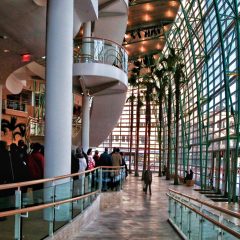
Schuster Performing Arts Center

The Schuster Performing Arts Center is situated in Dayton, Ohio and it was built-in 2003 for everyone as Dayton’s principal core lively arts. It’s managed through the Victoria Theatre Association and occupies the previous site of Rike’s mall. The Middle opened up yet another venue to accommodate the Association’s bigger touring Broadway productions and presentations. The Dayton Philharmonic, the Dayton Opera, and also the Dayton Ballet rent your building for his or her performances. The Schuster Center and also the Metropolitan Arts Center, occupying the previous Metropolitan mall building near the Victoria Theatre, stage a number of performances associated with a size and make up the foundation of the performing arts district in downtown Dayton.
The Schuster Center comprises restaurants, a sizable Winter Garden, a 15-story office and residential tower, along with a blackbox theater and wedding rehearsal space.
Architect Cesar Pelli, in designing the center’s 2,300 seat Mead Theatre, incorporated a fiber-optically illuminated domed ceiling depicting the Dayton sky because it made an appearance around the eve from the Wright Brothers’ first flight – December 16, 1903. The Wintertime Garden houses exotic palms along with a coffee shop having a large glass and steel wall that appears out onto downtown Dayton.
Since its opening, the Schuster Center has located numerous top musical shows, including Wicked, Jersey Boys, Frederick and also the Amazing Technicolor Dreamcoat and sweetness and also the Animal.
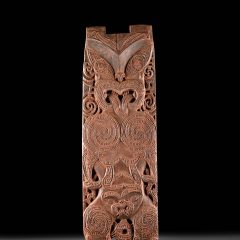
Poupou (architecture)

A poupou is really a wall panel located beneath the veranda of the Maori wharenui (meeting house). It’s generally created to represent the spiritual link between the tribe as well as their ancestors and therefore each poupou is created with emblems from the tohunga whakairo’s (carver’s) particular lineage. The poupou can also be decorated with representations from the tribe’s ancestral history, legends and migration tales to Nz. As a result each wharenui, by extension the poupou, therefore are given the most respect, as though it were an ancestor.
For Maori the opportunity to carve wooden crafts is both a spiritual and intellectual endeavour.
The tohunga whakairo needed to be well experienced in the tribal lineage and history to carve something which was commemorative of his ancestors. Simultaneously particularly among the traditionalists, he needed to be aware from the proper protocols. For instance, in traditional occasions, the tohunga whakairo never blew the shavings of his work or even the ancestors would curse the piece. In other instances, if he permitted women or food near his work the mana (spiritual power) could be destroyed.
Within the contemporary period Maori carvers have battled to keep exactly the same traditional protocol inside a condition that is more and more Westernised. Consequently, today, many Maori make an effort to resurge traditional patterns and carvings within mainstream art through programs such as the Maori Crafts and arts Institute. They’ve managed to get their pursuit to preserve traditional toi whakairo, and also have opened up various programs and classes to pass through their traditions to more youthful generations.
Based on Sidney Mead’s The skill of Carving, you will find three classical styles typically utilized in Maori carvings:
The poupou in the Royal Ontario Museum is made within the nineteenth century. It had been built-in design for the Te Ati Awa people from the North Island of recent Zealand. It features a brownish complexion as opposed to the traditional black, white-colored and red pigments.
It’s presently being displayed within the Oceania exhibit around the third floor from the Royal Ontario Museum. It’s housed among many other Polynesian, Micronesian, and Australian indigenous artifacts like tapa or siapo cloths and Polynesian weaponry.
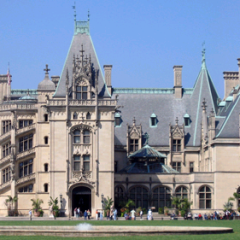
Vanderbilt houses

In the late 1870s towards the 1920s, the Vanderbilt family employed a few of the U . s . States’s best Beaux-Arts architects and decorators to construct an unequalled string of recent You are able to townhouses and New England castles within the U . s . States. Most of the Vanderbilt houses are actually National Historic Landmarks. Some photographs of Vanderbilt’s residences in New You are able to are incorporated within the Photo taking number of American Architecture by Albert Levy (1870s).
Their email list of architects utilized by the Vanderbilts is really a “who’s who” from the New You are able to-based businesses that embodied the syncretic (frequently ignored as “eclectic”) types of the American Renaissance: Richard Morris Search George B. Publish McKim, Mead, and White-colored Charles B. Atwood Carrere and Hastings Warren and Wetmore Horace Trumbauer John Russell Pope and Addison Mizner counseled me utilized by the descendants of Cornelius Vanderbilt, who built only very modestly themself.
The Breakers, Newport (1895), Rhode Island
Vanderbilt Mansion National Historic Site (1899)
Cornelius Vanderbilt II house (1883), largest home ever in New You are able to City.
Marble House (1892), Newport, Rhode Island
“Petit Chateau” (1886), the William K. Vanderbilt mansion
The Vanderbilt Triple Palace on fifth Avenue (1878)
Florham (1897), Madison, Nj. Home of Florence Adele Vanderbilt Twombly
Elm Court (1887), the Lenox cottage of Emily Thorn Vanderbilt Sloane
Rough Point (1892), the Newport cottage of Ernest Vanderbilt
Vinland Estate (1882, 1896) in Newport, RI
Pine Tree Point (1901) on Upper St. Regis Lake
Biltmore Estate, Asheville, New York (1895)
Woodlea (1895) in Briarcliff Manor, NY
Eastover (1929), Manalapan, FL
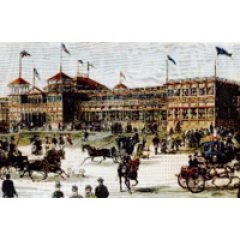
Piedmont Exposition

Image by/from Unknown
The Piedmont Exposition of 1887 was the very first exposition ever locked in Piedmont Park in Atlanta, Georgia.
The Piedmont Exposition Company began in June 1887 by several men that met within the offices from the Atlanta Metabolic rate. The business’s chief purpose ended up being to organize the Piedmont Exhibition with regards to exhibiting natural sources from the Piedmont region, including Georgia, New York, Sc, Tennessee, and Alabama.
Planning from the exposition required only 104 days from the moment the organization was created. The primary plan known as for that cleaning of the 189-acre (.76 km2) forest, a place now referred to as Piedmont Park, along with the construction of countless costly structures along with a horse race track.,
The primary building built for that Exposition was 570 ft (170 m) lengthy, 126 ft (38 m) wide, and 2 tales high.
The Piedmont Exposition of 1887, the very first exposition ever locked in Piedmont Park, opened up on October 10. The very first day opened up with 20,000 visitors. Opening orations were done by Governor Gordon and Hon. Samuel J. Randall of Pennsylvania. Randall opened up the Exposition having a speech on the prosperity of the resurrected publish-civil war south. When his speech concluded, General Pierce M. B. Youthful and the men fired cannons to signal the outlet from the occasions.
Exhibitors demonstrated off a number of products including pieces of art, local recycleables like manganese marble, and woodwork. Many prominent figures during the day were attending to determine the displays. Governor David B. Hill of recent You are able to spoke in the event in addition to President Grover Cleveland who attended together with his youthful wife, Frances Folsom, on October 19. 50 Plus,000 everyone was attending for Cleveland’s speech. The big event closed on October 22 having a total attendance of approximately 200,000. Once the exposition was over, social leaders stated it had effectively expanded Atlanta’s status like a spot to visit and also to work.
The Exposition seemed to be a way for Atlanta to demonstrate it had become prepared to host the earth’s Fair. The Manager Committee from the Fair was asked to go to the big event underneath the putting in a bid of Charles Reynolds, Secretary from the Piedmont Exposition Company.
Meads

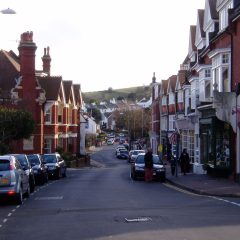
Meads is a part of the capital of scotland- Eastbourne within the British county of East Sussex. It’s situated in the westerly finish from the town underneath the South Downs.
The neighborhood government ward of Meads is extensive, stretching from Birling Gap in the western world to just about the pier within the east it encompasses the famous coves of Beachy Mind and also the former fishing town of Holywell. Recently, the unofficial terms ‘Upper Meads’ and ‘Lower Meads’ happen to be created to distinguish between that portion of the ward on greater ground towards the west, and also the lower part closer to the city center. Although there aren’t any official limitations, it may be stated that ‘Upper Meads’ (the part initially recognized to locals as Meads) lies roughly inside the bounds from the Meads Conservation Area.
The ward is presently symbolized on Eastbourne Borough Council by three councillors – all whom are Conservative. Among the councillors also represents the Meads division on East Sussex County Council.
A 1783 map of Eastbourne shows but a few farms with what ended up being the town of Meads. However, you are able to there were three within the 1800s: Place Farm, whose farmhouse survives because the listed building now referred to as Meads Devote Gaudick Road, Colstocks Farm, which was on the website of St Andrew’s School and Sprays Farm, that was at a corner of Meads Street and Matlock Road. In 1859, Henry Currey, the agent from the seventh Duke of Devonshire, came up plans for big residences with gardens of commensurate proportions. In 1871, the populace from the town getting trebled to 11,000, the Eastbourne Chronicle describes Meads as ‘the unrivalled Belgravia of the salubrious and flourishing health resort’. The spiritual requirements of the occupants were catered for using the consecration from the parish church focused on St John the Evangelist in 1869.
By 1890, imposing houses in neat tree-lined roads was on which have been grazing land and cornfields – Meads took over as smart finish of town. Its residents were the well to complete, and incorporated professionals, self-made men, upon the market officials and former people from the Colonial Civil Service.
The absence today of street directories, causes it to be hard to look for the social standing of householders but the 1940 street list of Eastbourne (prepared in 1939) lists Lady Foley, Mister John Alexander Hammerton and Admiral Mister Robert John Prendergast KCB all living within 100 metres of one another towards the top of Meads hill.
Many domestic servants resided in other people made their way for you to use other areas from the town, or occupied cottages clustered round the three pubs – the Pilot, the Ship and also the Blacksmith’s Arms, the second destroyed prior to the turn from the century.
In 1894, a little square of cottages was designed for working class occupation. Initially referred to as Wallis’s Cottages, the square was subsequently named The Village. (Presumably deriving in the latter, the businesses along Meads Street have recently confusingly been dubbed Meads ‘Village’.) Coachmen and grooms, adopted in the end by chauffeurs, resided over the stables of De Walden Mews, the home of Lady Howard de Walden. Her mansion, De Walden Court (1884), in Meads Road has become a listed building. The occupants of Meads were typically referred to as ‘Meadsites’, the word residing in current use until a minimum of the 1950s.
All Saints Hospital was built between 1867 and 1869 on land provided by the seventh Duke of Devonshire its chapel was put in 1874. All Saints was built being an Anglo-Catholic nunnery and convalescent home and created by Henry Woodyer. The listed chapel in design for High Victorian Medieval Revival is recognized for polychrome effects, geometric tiling as well as an unusual gallery, supported on marble support beams.
Most of the roads in Meads owe their names to villages and towns in Derbyshire around Chatsworth House, the seat from the seventh Duke of Devonshire, who developed the city within the 1800s. One apparent example is Chatsworth Gardens, the terrace of homes erected in 1891 on King Edward’s Parade. Baslow Road dates from 1907 and it is named following a village just north of Chatsworth House. Chesterfield Road (1888) owes its name towards the important coal and iron town in Derbyshire, and Derwent Road (1895) is really a indication from the River Derwent which flows with the grounds from the Duke’s residence. Others within the same category include: Bolsover (1891), Buxton, (1891), Darley (1890), Edensor (1906), Matlock (1897), Rowsley (1903) and Staveley (1890) Roads. Meads Road and Meads Street be a consequence of the specific original town whose earlier spellings include ‘Mades’ (1196) and ‘Medese’ (1316). The town developed around a manor house later referred to as Colstocks.
Little of significance happened in Meads throughout the Phoney War, however with nov France in June 1940, lots of people departed for safety further north. Large houses were shut as their proprietors left the anticipated invasion zone and schools were closed. Eastbourne College was evacuated to Radley College in Oxfordshire on 20 June.
At approximately 5.30 pm on Friday 16 August 1940, the very first German aircraft to become introduced lower within that which was then your County Borough of Eastbourne crashed in Meads. A Messerschmitt Bf 110 from the Luftwaffe unit referred to as ZG 2 had left the previous French aerodrome at Guyancourt included in an escort for bombers raiding RAF airfields at Feltham, Heston and Heathrow. Within the South Downs, the Messerschmitt was engaged with a British fighter – probably the Hurricane traveled by Pilot Officer H N E Salmon of No. 1 Squadron. The German aircraft split up in mid-air, and also the pilot, Hauptmann Ernst Hollekamp, was wiped out as he fell on the top of Hill Brow School in Gaudick Road, his parachute unopened. Area of the nose fell to the Royal Eastbourne course, near to the finish of Gaudick Road. The trunk gunner, Feldwebel Richard Schurk, came lower within the ocean off Holywell and it was drowned. The majority of the aircraft crashed within the grounds of Aldro School in Darley Road — the remains was incorrectly identified from our press to be what Heinkel He 111. Simultaneously, a lorry was hit in Hampden Park with a explosive device which in fact had most likely been jettisoned by among the German bombers coming back in the raid on RAF airfields. Three Council tradesmen were killed – two instantly, another dying the very next day from burns.
On 4 May 1942, the very first raid on Eastbourne by fighter-bombers required place. Among the casualties was the Meads parish church of St John, that was set ablaze and seriously broken. Before the church was reconstructed in 1957, services were held in the parish hall in Meads Street. The tower, which initially were built with a steeple, survived the raid but wasn’t connected to the nave once the latter was reconstructed.
At lunchtime on Sunday 7 March 1943, a raid by Messerschmitt Bf 109 and Focke-Wulf Fw 190 aircraft caught Eastbourne unawares. With what has become referred to as ‘Upper Meads’, a explosive device destroyed 22 – 28 Meads Street yet others fell within the gardens of three Staveley Road and 41 St John’s Road. There have been 14 civilian fatalities 50 persons were hurt. Houses utilized as billets through the Canadian army were broken in Milnthorpe Road. The next evening, the German Home Service (and not the broadcasts in British by Lord Haw Haw) transported interviews with two pilots who’d played within the raid. The aircrew clearly described the results of the explosive device on the large block of structures (“it appeared to disintegrate right into a cloud of blue-black smoke”) because they were creating the city.
The very first major increase of Canadian troops towards the Eastbourne area is at This summer 1941 with the appearance of three regiments from the fifth Canadian Infantry Brigade: The Black Watch (Royal Highland Regiment) of Canada, Le Regiment de Maisonneuve, and also the Calgary Highlanders. Throughout world war 2, a large number of Canadians from lots of units would go through the city.
So far as Meads was concerned, The Black Watch showed up from Willingdon on 18 December 1941. It had been, however, a short stay for they came back to Willingdon in Feb 1942. Canadian light anti-aircraft units were located in Meads at various occasions, establishing fixed and mobile gun positions around the Downs and seafront. August 1943 saw the appearance of The 23rd Field Regiment, RCA from the Royal Canadian Artillery using their Sexton self-propelled guns. There have been three gun batteries: the 31st was centred on Milnthorpe Road, the 36th and 83rd were around Edensor Road. The HQ battery was located behind the Grand Hotel. The regiment remained in Meads until it gone to live in Pippingford Park in March 1944 when preparing for Operation Overlord.
The Canadians were welcomed through the locals, who asked them to their homes and organised entertainment. At the same time, the troops playing happy recollections. Roughly 150 Eastbourne women traveled the world to Canada as war brides, a number of them from Meads.
Meads Street continues to have its shops, but there has been considerable changes towards the trades recently. The sub-publish office has came back towards the premises it formerly occupied within the 1950s once the shop would be a traditional grocer’s — today it’s a self-service store. To compare, the 1940 street directory lists 21 kinds of business premises in Meads Street: a baker, three banks, two boot repairers, two builders, two butchers, three garages, two grocers (one with sub-publish office), a vehicle hire firm, a chemist, a confectioner, two dairies, a fishmonger, a fruiterer, a greengrocer, a hairstylist, an ironmonger, two pubs, a stationer, a tobacconist, a wine merchant along with a made of woll shop.
In 1965, the 19-floor South High cliff Tower was built around the seafront in the junction of Bolsover Road and South High cliff. The storm of protest which adopted brought towards the formation from the Eastbourne and District Upkeep Committee, which in the end grew to become Eastbourne Social Society and it has subsequently been renamed The Eastbourne Society.
Despite demolitions through the years, Meads still maintains a lot of its large Victorian and Edwardian houses, many of which happen to be changed into flats. A effective lobby within the latter regard may be the Meads Community Association, that was produced in 1990. With a few 540 people, its two principal aims are ‘to preserve the initial character from the Meads section of Eastbourne in line with change which doesn’t hinder this aim’, and ‘to alert the residents of Meads to plans for development or redevelopment of property that the Committee are of the perception ought to be resisted’. The association also organizes social activities to promote a residential area spirit and liaises with local traders.
The previous All Saints Hospital, a Grade II listed building, is presently being changed into 53 flats, having a further 52 recently built apartments within three separate structures within the grounds. The listed chapel, however, is going to be retained.
The entire population of Meads is 10,725.
Meads comes with an average chronilogical age of 71.1 and also the national average is 39.7, that’s a difference of 31.four years.
In 1947, an instructor training college opened up in Meads, the very first students being troops who’d lately came back to civilian existence. The school was centred on Darley Road at two schools which in fact had evacuated due to the war – Queenwood Ladies’ College and Aldro. And in 1947, Chelsea College of Sports And Physical Eduction moved from London, creating itself in the former Hill Brow School in Denton Road. In 1966, a brand new building was opened up on the website through the Queen. The structures and grounds of both above colleges now form area of the Eastbourne campus (in Meads — Darley Road Site, Hillbrow and Welkin Site) from the College of Brighton.
In Victorian occasions, Meads grew to become a preferred position for private boarding schools — a convention which endured until economic factors introduced regarding their gradual demise. Types of the second include Clovelly-Kepplestone girls’ school which closed in Meads in 1934 and St. Christopher’s Women School which closed exactly the same year.
Pike’s Eastbourne List of 1911-12 shows five ‘Ladies’ Schools situated in Bolsover Road, along with Hill Brow boys’ school which subsequently required within the premises of St. Christopher’s women school in Denton Road when that college closed in 1934.
A street directory for 1940 (prepared in 1939) lists ten private schools in ‘Upper Meads’ alone. However, world war 2 signalled the ultimate phase web hosting schools, and just eight of individuals which evacuated in the town came back to Eastbourne. Among the publish-war returners was Ascham St Vincent’s School, a preparatory school for boys in Meads which subsequently closed in 1977. The website was offered for property development along with a merger with St. Andrew’s required place. The ‘Ascham Memorial Arch’ in Carlisle Road commemorates students who died in ww 1.
Three independent schools now stay in ‘Upper Meads’ – St Andrew’s Prep, St Bede’s Preparatory School (now known as Bede’s Prep School) and Moira House Women School. The general public school, Eastbourne College is within ‘Lower Meads’.
St. John’s Meads is really a Church of England Aided Primary School, with roughly 215 children on its roll. Undergoing many additions and changes through the years, the college continues to be found on its present site for more than a hundred years.

Nevada Condition Route 146


Condition Route 146 (SR 146) is really a 6.673-mile-lengthy (10.739 km) major east-west condition highway in southeast the U.S. condition of Nevada. It begins in the exit 27 interchange on Interstate 15 (I-15) south from the Vegas Strip and ends in the Pecos Road (exit 6) interchange on I-215 in Henderson. The highway is presently referred to as Saint Rose Parkway, but was referred to as Lake Mead Drive just before 2001.
The initial segment of SR 146 was referred to as Condition Route 41 (Lake Mead Drive) before the early-1980s. Initially, it had been a 19 mi (31 km) route that started in the current western terminus at Interstate 15 and entered Boulder Highway in Henderson before ending in the intersection of Northern Coast Road near Lake Mead.
Construction of I-215 through southeast Vegas and Henderson altered the routing of SR 146. Clark County made the decision to construct I-215 between Mile 6 (St. Rose Parkway/Pecos Road) and Mile (the Interstate 515/U.S. Route 93/U.S. Route 95 interchange) around the SR 146 alignment. Because the Nevada Dot (NDOT) doesn’t co-sign condition routes along Interstate highways, the choice is made in 1999 to formally truncate SR 146 to the current eastern terminus. The area of the highway east of I-515/US 93/US 95 was recommissioned as Condition Route 564 (and it has since been renamed Lake Mead Parkway). Clark County published SR 146 signs across the 6-mile (9.7 km) overlapping portion of I-215, although the condition highway designation no more existed within this section once the freeway was finished in 2001—Many SR 146 signs still continued to be on I-215 in 2007, but have since been removed.
The whole route is within Clark County.
Route map:
Street suffix
A street suffix may be the word that follows the a street to help describe that street. Sometimes it might be used only for naming, not for description, such as, Street is easily the most common, Avenue being second.
Within the Uk, councils maintain lists of in your area approved suffixes for brand new roads. For instance, Haringey Council working in london provides this guidance:
Permitted
Disallowed
Their list consists of 211 suffixes recognised through the U . s . States Postal Service. Generally
used street abbreviations within brackets.
Guidelines for street and building naming and numbering
Orra White-colored Hitchcock

Image by/from John L. Lovell
(Life time: 1825-1903)
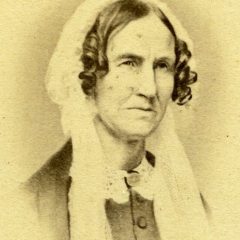
Orra White-colored Hitchcock (March 8, 1796 – May 26, 1863) was certainly one of America’s earliest women botanical and scientific illustrators and artists, most widely known for illustrating the scientific works of her husband, geologist Edward Hitchcock (1793-1864), but additionally notable on her own artistic and scientific work.
Orra White-colored was created to some prosperous farming family (Jarib and Ruth Sherman White-colored) in South Amherst, Massachusetts. She was educated with a tutor and also at two “ladies” schools, demonstrated herself a young child prodigy in several scientific and classical subjects, and demonstrated early promise in drawing and painting. From 1813 to 1818 she trained youthful women natural sciences, and also the fine and ornamental arts at Deerfield Academy. Her early training grounded her both in art and science, and she or he continues to be known as the Connecticut River Valley’s “earliest and many frequently printed lady artist.”
On May 31, 1821 Orra White-colored married geologist Edward Hitchcock, principal of Deerfield Academy, minister, professor and third president of Amherst College. Hitchcock’s art was integral towards the work of her husband. She made countless illustrations for Edward Hitchcock’s scientific publications, including detailed landscapes from the Connecticut River Valley for his Massachusetts geological survey volumes, and custom-designed charts that highlighted his local breakthroughs and the classroom lectures. Additionally, she made detailed sketches of native flowers and grasses and small precise watercolors of small local mushrooms. Her jobs are a period-focused chronicle from the scenic, botanically and geologically diverse Connecticut River Valley in western Massachusetts. Orra White-colored Hitchcock, a researcher in their right, had the contemporary status among the valley’s “most distinguished naturalists.”
Between 1817 and 1821 Hitchcock and her husband collected native plants for any conventional herbarium. Simultaneously, she produced a 64-page album of watercolors of approximately 175 local flower and grass examples on her Herbarium parvum, pictum. This colored herbarium is incorporated in the Deerfield Academy Archives.
Within the summer time and fall, she produced a little watercolor album of native mushrooms and lichens, Fungi selecti picti. Edward Hitchcock labeled and catalogued the examples. This colored album is incorporated in the Cruz College Archives a facsimile continues to be printed through the Mortimer Rare Book Room, Cruz College.
Hitchcock made sketches in excess of 200 plates and 1,000 wood-engraved or woodcut illustrations for Edward’s professional publications. The topics incorporated landscapes, geologic strata, examples, and much more. The renowned come in her husband’s seminal works, the 1833 Set of the Geology, Mineralogy, Botany, and Zoology of Massachusetts and it is successor, the 1841 Final Report created as he was Condition Geologist. For that 1833 edition, Pendleton’s Lithography (Boston) lithographed nine of Hitchcock’s Connecticut River Valley sketches and printed them as plates for that work. In 1841, B. W. Thayer and Co., Lithographers (Boston) printed revised lithographs as well as an additional plate. The hands-colored plate “Autumnal Scenery. View in Amherst” Hitchcock’s most often seen work.
Between 1828 and also the 1840s, Hitchcock made countless large and dramatic classroom charts of geologic mix-sections, prehistoric monsters (such as the Megatherium), fossils and ichnological (later known as dinosaur) footprints. She copied scientific illustrations from contemporary works making original illustrations of her husband’s new ideas or breakthroughs, like Ornithichnites, He considered them “indispensable aids” for his lectures. The Amherst College Archives and Special Collections holds a comprehensive assortment of classroom charts.
Hitchcock’s first documented printed drawing comes from an 1818 article by her husband within the periodical Port Folio. On rare occasions, she produced illustrations for other scientists. Hitchcock’s last documented work was her symbolic illustrations on her husband’s Religious Lectures on Peculiar Phenomena within the Four Seasons, including an representational representation of spring along with a stylized rainbow.
Hitchcock elevated 6 surviving children, trained them science and art and it was Edward Hitchcock’s partner in the scientific projects. She traveled together with her husband within the U . s . States and also to England and Europe (in 1850). She’s mom of geologist Charles Henry Hitchcock (1836-1919) and sports and physical eduction and hygiene pioneer Edward Hitchcock, Junior. (1828-1911).
Edward acknowledged his wife’s essential contributions to his operate in the dedication from the Religion of Geology, citing her sketches as increasing numbers of effective than his pen.
Orra White-colored Hitchcock died at 67 on May 26, 1863 from consumption.
Though she wasn’t an experienced professional, Hitchcock’s scientific intellect and also the artistic capability to visually transcribe key scientific concepts and natural phenomena, plants and creatures, enabled her to create substantial contributions towards the knowledge of geology and botany within the first 1 / 2 of the nineteenth century within the U . s . States.[based on whom?]
While printed illustrations exist, only a small amount of Hitchcock’s original works survives. The Amherst College Archives and Special Collections has got the most extensive documentation of her existence and work, within the Edward and Orra White-colored Hitchcock Papers and copies famous Edward Hitchcock’s scientific publications.
The Mead Art Museum at Amherst College held the very first major retrospective exhibition of her operate in 2011, “Orra White-colored Hitchcock (1796-1863): An Amherst Lady of Science and art,” having a catalogue. In 2018, a solo exhibition of her work was featured in the American Folk Art Museum, titled Charting the Divine Plan: The skill of Orra White-colored Hitchcock (1796-1863)