Mead yeast
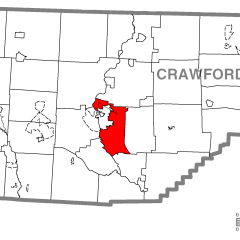
West Mead Township, Crawford County, Pennsylvania

West Mead Township is really a township in Crawford County, Pennsylvania, U . s . States. The populace was 5,249 in the 2010 census.
The Bridge in West Mead Township was on the National Register of Historic Places in 1988.
West Mead Township is situated slightly southwest from the geographic center of Crawford County. It borders the town of Meadville towards the north, east, and south. French Creek forms the western boundary from the township towards the south and north of Meadville. Tamarack Lake is incorporated in the southeast.
Based on the U . s . States Census Bureau, the township includes a total section of 18.8 square miles (48.6 km2), which 18.3 square miles (47.4 km2) is land and .50 square miles (1.3 km2), or 2.65%, is water.
By the census of 2000, there have been 5,227 people, 2,098 households, and 1,525 families surviving in the township. The populace density was 286.9 people per square mile (110.8/km²). There have been 2,184 housing units in an average density of 119.9/sq mi (46.3/km²). The racial makeup from the township was 96.52% White-colored, 2.07% Black, .23% Native American, .55% Asian, .08% using their company races, and .55% from several races. Hispanic or Latino associated with a race were .50% of people.
There have been 2,098 households, of that 31.6% had children younger than 18 coping with them, 59.5% were married people living together, 9.4% were built with a female householder without any husband present, and 27.3% were non-families. 22.6% of households were comprised of individuals, and 11.1% had someone living alone who had been 65 years old or older. The typical household size was 2.49 and also the average family size was 2.92.
Within the township the populace was disseminate, with 24.6% younger than 18, 7.2% from 18 to 24, 26.6% from 25 to 44, 26.6% from 45 to 64, and 14.9% who have been 65 years old or older. The median age was 4 decades. For each 100 females, there have been 93.1 males. For each 100 females age 18 and also over, there have been 88.9 males.
The median earnings for any household within the township was $41,793, and also the median earnings for any family was $47,156. Males were built with a median earnings of $38,144 versus $22,254 for women. The per person earnings for that township was $19,241. About 6.8% of households and eight.2% of people were underneath the poverty line, including 15.5% of individuals under age 18 and three.2% of individuals age 65 or higher.
Coordinates: 41°40′00″N 80°08′59″W / 41.66667°N 80.14972°W / 41.66667 -80.14972
Webster Wells
Webster Wells (4 September 1851 in Boston – 23 May 1916) would be a U . s . States math wizzard known mainly for his authorship of a number of mathematical textbooks.
Wells graduated in 1873 in the Massachusetts Institute of Technology, where he was a teacher from 1873 to 1880, and then grew to become successively a helper professor (1883), an affiliate professor (1885), along with a full professor (1893-1911) of mathematics.
Wells’ textbooks were utilized in many schools and colleges within the U . s . States. One of the titles were:

Syd Little

Syd Little (born Cyril John Mead on 19 December 1942) is definitely an British comedian and it was when the straight man within the double act Little and enormous, with Eddie Large.
Born in Blackpool, Little increased in Manchester. After departing Yew Tree Secondary Modern School, Wythenshawe, and dealing being an interior decorator, Little began like a singer and guitarist in Manchester pubs before teaming track of Large. Initially entitled Cyril Mead and Friend, then Mead and McGinnis, after altering their name to Little and enormous their double act won Chance Knocks in 1971 which eventually brought to some effective 20 year television career. The duo’s first television pilot was filmed in 1976, which brought to some regular series in 1977. The show was cancelled 14 years later, in 1991.
Following the cancellation from the Little and enormous Show, Little made an appearance from time to time on shows for example Shooting Stars, until 2005 as he required part within the reality tv program Believe Me I am A Vacation Repetition. Also, he made an appearance within the Bob Monkhouse Show, Wogan and Comedy Map of england.
In 2015, Little required part in BBC A person’s Celebrity MasterChef making it right through to the 3rd round.
In 2018, he made an appearance within the fly-on-the-wall documentary The Actual Marigold Hotel.
Taylor Mead
Taylor Mead (December 31, 1924 – May 8, 2013) was a united states author, actor and artist. Mead made an appearance in a number of of Andy Warhol’s subterranean films filmed at Warhol’s Factory, including Tarzan and Jane Obtained… Kind of (1963) and Taylor Mead’s Ass (1964).
Born in Detroit, Michigan and elevated by divorced parents mostly within the wealthy suburb of Grosse Pointe, he made an appearance in Ron Rice’s beat classic The Flower Crook (1960), by which he “traipses with elfin glee via a lost Bay Area of smoke-stuffed North Beach cafes …” Film critic P. Adams Sitney known as The Flower Crook “the purest expression from the Beat sensibility in cinema.” Village Voice film critic J. Hoberman known as Mead “the very first subterranean superstar.”
In 1967, Taylor Mead performed a component within the surrealistic play Desire Caught through the Tail by Pablo Picasso if this was set the very first time in France in a festival in Saint-Tropez, amongst others with Ultra Purple.
Within the mid-1970s, Gary Weis made some short films of Mead speaking to his cat in the kitchen area of his Ludlow Street apartment on Manhattan’s Lower East Side known as Taylor Mead’s Cat. One film of Mead extemporizing around the benefits of constant television watching aired throughout the second season of Saturday Night Live.
In 1995, Mead spent eight hrs each day for any week in the Bon Temps bar, New Orleans, being documented within the photobooth costumed as a number of Warholian figures for Blake Nelson Boyd’s documentary Photobooth Trilogy. Figures incorporated Superman and Donald Duck from Warhol’s Myth series and references to Mead’s performances in Lonesome Cowboys and Nude Restaurant.
While living on Ludlow Street, Mead read his poetry regularly in the Bowery Poetry Club. His First book of poems “Taylor Mead on Amphetamines as well as in Europe” was designed in 1968 (Republished through the Taylor Mead Estate, September 2015)
His last book of poems (printed by Bowery Poetry Books) is known as An Easy Country Girl. He was the topic of a documentary titled Excavating Taylor Mead, by Jim Jarmusch which debuted in the Tribeca Film Festival in 2005. The show shows him participating in his nightly practice of feeding stray cats within an East Village graveyard after bar-hopping, featuring a cameo by Jim Jarmusch, by which Jarmusch explains that when, when Mead visited Europe, he enlisted Jarmusch’s brother to give the graveyard cats in Mead’s absence.
Mead made an appearance within the final segment of Jarmusch’s 2003 film Coffee and Cigarettes. He’s been “a beloved icon from the downtown New You are able to art scene because the 60s.”
Mead was displaced from Ludlow Street in April 2013, getting a settlement to maneuver out, after a period of the dispute together with his landlord. He resided together with his niece, Priscilla Mead, in Denver and it was planning to go back to New Orleans on May 21 to organize for that opening of his exhibition in the Boyd Satellite Gallery on Julia Street for the reason that city, but he died on May 8, 2013 in Denver. He was 88.

Steven Mead

Steven Mead (born 1962 in Bournemouth, England) is definitely an British virtuoso euphonium soloist and teacher that has performed a huge role in achieving worldwide recognition from the instrument. He’s performed solo concerti with lots of symphony orchestras, including: the Stuttgart Philharmonic Orchestra, the Trondheim Symphony Orchestra, Lahti Symphony Orchestra and Helsinki Philharmonic, Capella Cracoviensis, the Minneapolis Pops Orchestra and also the Japan Chamber Orchestra. He’s premiered functions by Martin Ellerby, Torstein Aagaard-Nilsen, Vladimir Cosma, Goff Richards, John Reeman, Rolf Rudin and Philip Sparke, among others. Goff Richards’ Pilatus, Aagaard-Nilsen’s Concerto for Euphonium and Orchestra, Reeman’s Sonata for Euphonium and Ellerby’s Euphonium Concerto counseled me written specifically for Mead.
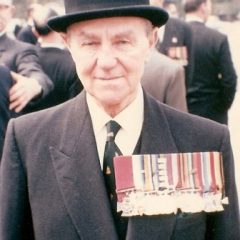
Mister John Smyth, first Baronet

Image by/from Jack1956
Brigadier Mister John George Smyth, first Baronet, VC, MC, PC (25 October 1893 – 26 April 1983), frequently known as Jackie Smyth, will be a British Indian Army officer plus a Conservative Part of Parliament. Although an individual finding the Victoria Mix, his military career brought to talk about.
Smyth was produced in 1893 in Teignmouth, Devon, the boy of William John Smyth (1869-1893), area of the Indian Civil Service, and Lilian May Clifford. His grandfather was Army officer Henry Smyth, who was simply the second boy of John Henry Smyth (1780-1822), of Heath Hall, Warmfield cum Heath, Yorkshire, a Whig MP for Cambridge College (1812-1822) and lady Elizabeth Anne FitzRoy, daughter of George FitzRoy, 4th Duke of Grafton. His great-uncle John George Smyth was an MP for your Capital of scotland- You’ll be able to.
Smyth was educated at Dragon School, Repton, as well as the Royal Military College, Sandhurst.
After fainting from Sandhurst, Smyth was commissioned just like a second lieutenant round the unattached list for your British Indian Army on 24 August 1912, also it was commissioned to the 15th Ludhiana Sikhs on 5 November 1913. He was promoted to lieutenant on 24 November 1914, three several days following a outbreak of ww 1.
He was 21 years old, plus a lieutenant inside the 15th Ludhiana Sikhs, 3rd (Lahore) Division, Indian Army during ww 1, when his actions earned him the Victoria Mix (VC). In June 1915, Smyth was awarded the VC, the united states . Kingdom’s finest award for bravery in combat. The citation with this particular award, printed inside the London Gazette read:
For a lot of conspicuous bravery near Richebourg L’Avoue on 18 May 1915. Getting a bombing party of 10 men, who of your accord started this duty, he conveyed a method to obtain 96 bombs to within 20 yards in the enemy’s position over very dangerous ground, following a attempts of two more occasions had unsuccessful. Lieutenant Smyth been effective in making use of the bombs for the preferred position using a few his men (another eight getting been easily wiped out or wounded), also to effect his purpose he’d to visit swimming a stream, being uncovered whole time for you to howitzer, shrapnel, machine-gun and rifle fire.
Additionally to Smyth’s VC, the Indian Distinguished Service Medal was posthumously awarded for the men easily wiped in this incident. Smyth appeared to become awarded the Russian Order of St. George, fourth Class, in 1915, also it was promoted to captain on 24 August 1916.
Smyth ongoing his war service in Egypt and also on north of manchester-West Frontier.
In September 1920, when brigade major in the 43rd Indian Brigade, Smyth was awarded the Military Mix (MC) for distinguished service inside the field in Waziristan. The citation with this particular award, printed inside the London Gazette, read:
For gallantry and initiative at Khajuri, Tochi Valley, round the 22nd October, 1919, when, getting been sent forward from Idak to apparent within the situation, his quick appreciation, dispositions and leadership averted a substantial disaster and contributed largely for that saving from the valuable convoy attacked with the enemy. He shown great gallantry under heavy fire, inspired his command, and introduced the convoy safely to Idak.
In 1923, while serving in India, Smyth performed two first-class cricket matches for your Europeans team.
Returning to England, he attended employees College, Camberley from 1923 to 1924, and also the fellow students incorporated a number of men who’d later achieve high command, including Arthur Percival, Dudley Manley (another VC recipient), Arthur Wakely, Colville Wemyss, Montagu Stopford, John Halsted, Ernest Pile, Gordon Macready, Roderic Petre, Alastair MacDougall, Edmond Schreiber, Michael Gambier-Parry, Richard Dewing, Leslie Hill, Kenneth Loch, Douglas Pratt, Balfour Hutchison, Robert Pargiter, Robert Stone and Henry Verschoyle-Campbell. Smyth received a brevet promotion to major on 1 The month of the month of january 1928, locating the substantive promotion to major on 24 August 1929. Right now, he will be a General Staff Officer Grade 3 (GSO3) while using 3rd Battalion, eleventh Sikh Regiment, a consultation he vacated on 22 November 1929. An early on appointment since the Indian Army instructor within the Staff College, Camberley in 1930 further revealed that Smyth’s career was round the steps for achievement, borne out by his appointment just like a GSO2 within the Staff College on 16 The month of the month of january 1931, while using local rank of lieutenant colonel. He received a brevet promotion to lieutenant colonel on 1 This summer time 1933, and relinquished his appointment within the Staff College on 16 The month of the month of january 1934.
On 16 This summer time 1936, Smyth was promoted for the substantive rank of lieutenant colonel, manifestation of methods rapidly his career had to date progressed. He could persuade General Lord Gort, your Chief in the Imperial General Staff (CIGS) plus a former instructor within the Staff College inside the mid-1920s, additionally to being another fellow VC recipient, to supply him an undertaking he’d get yourself a brigade to command inside the United kingdom should hostilities use.
Getting could engineer leave from India for the United kingdom inside the summer time duration of 1939, shortly before the outbreak of the second world war, he referred to as within the debt but was disappointed to get seconded with a United kingdom-based staff job, as GSO1 in the second London Division, another-line Territorial Army (TA) formation, then commanded by Major General John Willans, that have only recently been produced.
In February 1940, after further lobbying, Smyth was hired to command the 127th Infantry Brigade, part of the 42nd (East Lancashire) Infantry Division, another TA formation, then commanded by Major General William Holmes, which from April he introduced in France incorporated within the British Expeditionary Pressure (BEF). Following a evacuation from Dunkirk in the finish of May, he ongoing to command the brigade in the uk until he was known as to return to India in March 1941. He was promoted to colonel on 23 December 1940.
After briefly commanding 36th Indian Infantry Brigade in Quetta along with a length of sick leave, Smyth needed command of 19th Indian Infantry Division becoming an acting major general in October, but was reassigned to command 17th Indian Infantry Division in December. Debate surrounds his handling of 17th Indian Division in February 1942, during its retreat within the Sittang River in Burma. It absolutely was mentioned he unsuccessful to expedite a effective bridgehead round the enemy’s side in the river also it was forced, if the received threat within the Japanese, to purchase the blowing in the bridge while two-thirds of his division continued to be as round the far affiliate with few other method of crossing the forest and so dooming them. 17 Division were really the only formation standing involving the Japanese and Rangoon, which loss therefore introduced right to losing Rangoon minimizing Burma. The Commander-in-Chief, India, General Mister Archibald Wavell was furious and sacked Smyth round the place.
Smyth received no further posts and returned for the United kingdom to retire getting a substantive rank of colonel and honorary rank of brigadier. It needed 16 many revision in the official history before his type of the affair versus individuals of General Hutton, his corps commander, was clarified. Smyth’s book, Milestones, 1979, gives his version through which he relates he’d made representations to General Hutton 10 days formerly recommending a withdrawal for the west bank in the Sittang River, thus permitting a effective defence line to get established. His recommendation was declined.
Smyth joined politics and it was unsuccessfully against Ernest Bevin in Wandsworth Central within the 1945 general election. Within the 1950 election, he defeated the sitting Work MP for Norwood. He’s designed a baronet 23 The month of the month of january 1956 while using style Mister John George Smyth, VC, MC, first Baronet Smyth of Teignmouth inside the County of Devon plus a privy counsellor in 1962. He outdated from Parliament within the 1966 general election as at 2015 he was the ultimate VC recipient to sit down lower inside the Commons.
Smyth appeared to become a author, a playwright, a journalist plus a broadcaster. His two brothers and sisters were distinguished soldiers, among whom also increased to become brigadier. He married two occasions: to begin with Margaret Dundas on 22 This summer time 1920, later dissolved, that he’d three sons plus a daughter then Frances Chambers on 12 April 1940. Among his sons, Captain John Lawrence Smyth in the first Battalion, Queen’s Royal Regiment (West Surrey), was easily wiped on 7 May 1944, through the first attack on Jail Hill within the Fight of Kohima.
Smyth was cremated at Golders Eco-friendly Crematorium. His Victoria Mix is displayed within the Imperial War Museum.
Among Brigadier Smyth’s uniforms is displayed within the armory in the Artillery Company of Newport in Newport, Rhode Island, USA.
Smyth will be a cat lover and authored three books on cats, Beloved Cats (Ernest Muller, 1963), Blue Magnolia (Ernest Muller, 1964) and Ming: The Tale from the Cat Family (Ernest Muller, 1966).
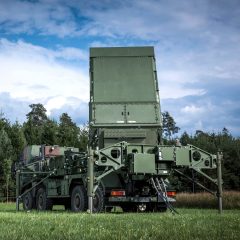
Medium Extended Air Immune System

The Medium Extended Air Immune System (MEADS) is really a ground-mobile air and missile immune system meant to switch the Patriot missile system via a NATO-managed development. This program is really a growth and development of the U . s . States, Uk, Germany and France.
Developed and created by the U . s . States, Uk, Germany and France. MEADS is really a ground-mobile air and missile defense (AMD) system meant to replace German and U . s . States Patriot systems and Italian Nike Hercules systems. Germany chose MEADS to exchange their MIM-104 Patriot systems in June 2015. MEADS is made to address the shortcomings of fielded systems and also to permit full interoperability between U.S. and allied forces. It’s the only medium-range AMD system to supply full 360-degree coverage against tactical ballistic missiles, cruise missiles, unmanned aerial vehicles, aircraft, and enormous-caliber rockets.
MEADS provides ground-mobile air and missile defense with expanded coverage. The machine provides enhanced pressure protection against an extensive variety of third-dimension threats. Improved interoperability, mobility, and full 360-degree defense capacity from the evolving threat represent are key aspects. MEADS may be the first air and missile defense (AMD) system that gives continuous on-the-move protection for maneuver forces. MEADS offers area defense, homeland defense, and weighted asset protection.
MEADS incorporates the Lockheed Martin hit-to-kill PAC-3 Missile Segment Enhancement (MSE) missile inside a system including 360-degree surveillance and fire control sensors, netted-distributed tactical operations centers, and light-weight launchers. Just one MEADS battery has the capacity to defend as much as 8 occasions the region of the Patriot battery by way of advanced 360-degree sensors, near-vertical launch capacity, and also the longer-range PAC-3 MSE missile. The MEADS radars – using active phased arrays and digital beam developing – enable full utilisation of the PAC-3 MSE missile’s extended range.
Truck-mounted MEADS elements drive or roll off and on C-130 and A400M transport aircraft so that they are rapidly deployed to some theater of operations. Because MEADS uses less system assets, it permits a considerable decrease in deployed personnel and equipment. MEADS reduces interest in airlift, therefore it can deploy to theater faster.
The minimum MEADS engagement capacity requires just one launcher, one fight manager, and something fire control radar to supply 360-degree defense of troops or critical assets. As increasing numbers of system elements arrive, they instantly and seamlessly join the MEADS network and make out capacity.
The best contractor, MEADS Worldwide, is really a multinational partnership headquartered in Orlando, Florida. Its participating information mill MBDA Italia, MBDA Deutschland GmbH, and Lockheed Martin. The organization initially won an aggressive downselect to build up the MEADS system in 1999, however the program couldn’t be began since the losing competitor filed two successive suits. In 2001, a $216 million Risk Reduction Effort contract was awarded to include a brand new interceptor approach. In May 2005, MEADS Worldwide signed a definitized contract worth $2 billion plus €1.4 billion for MEADS development and design. This development contract was finished in 2014. The U.S. funded 58 percent from the MEADS Development and design program, with European partners Germany and Italia supplying 25 % and 17 % correspondingly.
The German Bundeswehr completed an analysis of air defense alternatives this year and strongly suggested MEADS because the grounds for improving Germany’s missile defense shield so that as Germany’s contribution towards the European Phased Adaptive Approach. In Feb 2011, the U.S. Dod announced it meant to fulfill its dedication to complete the development and design effort, however that it wouldn’t procure the MEADS system for budgetary reasons. Lockheed Martin developed an interactive existence cycle cost and abilities application according to their Dynamic Comparative Analysis Methodology (DCAM) method of more fully evaluate and communicate the performance and price benefit of MEADS when compared with alternative systems. The DCAM application further reinforced the need for MEADS and it is credited with helping ensure ongoing funding.
In October 2011, the nation’s Armaments Company directors of Germany, Italia, and also the U.S. approved an agreement amendment to finance two flight intercept tests, a launcher/missile portrayal test, along with a sensor portrayal test conducted to accomplish the planned development scope.
In September 2013, MEADS received operating certification because of its Mode 5 Identification Friend or Foe (IFF) system. Mode 5 is much more secure and offers positive line-of-sight identification of friendly platforms outfitted by having an IFF transponder to higher safeguard allied forces.
In June 2015, MEADS was selected because the foundation for the German Taktisches Luftverteidigungssystem (TLVS), a brand new generation of air and missile defense that needs flexible architecture according to strong networking abilities. MEADS would be a candidate for Poland’s Wisla medium range air immune system procurement, but was eliminated in June 2014 when competition was downselected towards the US Patriot system and also the French/Italian SAMP/T system. However, Lockheed Martin started restored discussions using the Polish Secretary of state for Defense in Feb 2016 resulting in a proper request information in September 2016. MEADS remains an applicant for Poland’s Narew short range air immune system procurement.
The MEADS air and missile immune system consists of six major equipment products. The MEADS radars, fight manager, and launchers are equipped for high reliability so the system can maintain sustained operations considerably longer than legacy systems, leading to overall lower operation and support costs.
Multifunction Fire Control Radar (MFCR) – an X-band, solid-condition, phased array radar using element-level transmit/receive modules coded in Germany. The active digitally scanned array (AESA) radar provides precision tracking and wideband discrimination and classification abilities. For very rapid deployments, the MEADS MFCR can offer both surveillance and fire control abilities until a surveillance radar joins the network. The MFCR uses its primary beam for uplink and downlink missile communications. A sophisticated Mode 5 identification friend-or-foe subsystem supports improved threat identification and typing.
Surveillance Radar (SR) – the UHF MEADS Surveillance Radar is really a 360-degree active digitally steered array radar that gives extended range coverage. It offers threat recognition capacity against highly maneuverable low-signature threats, including short- and medium-range ballistic missiles, cruise missiles, along with other air-breathing threats.
Fight Management, Command, Control, Communications, Computers, and Intelligence (BMC4I) Tactical Operations Center (TOC) – the MEADS TOC controls a sophisticated network-centric open architecture that enables any mixture of sensors and launchers to become organized right into a single air and missile defense fight element. The machine is netted and distributed. Every MEADS fight manager, radar, and launcher is really a wireless node around the network. Due to multiple communications pathways, the network could be expanded or contracted because the situation dictates and precludes anchorman failure if a person node becomes inoperable. Additionally, it includes a plug-and-fight capacity that enables MEADS launchers and radars to seamlessly enter and then leave the network without shutting it lower and interrupting ongoing operations. MEADS uses open, non-proprietary standardized interfaces to increase plug-and-battle to non-MEADS elements. This versatility is totally new for ground-based AMD systems.
Launcher and Reloader – the lightweight MEADS launcher is definitely transportable, tactically mobile, and able to rapid reload. It carries as much as eight PAC-3 Missile Segment Enhancement (MSE) Missiles and achieves launch readiness in minimum time. A MEADS reloader is comparable but lacks launcher electronic systems.
Certified Missile Round (PAC-3 Missile Segment Enhancement and canister) – The PAC-3 Missile Segment Enhancement (MSE) missile may be the baseline interceptor for MEADS. The interceptor boosts the system’s range and lethality within the baseline PAC-3 missile, that was selected because the primary missile for MEADS once the development and design program started in 2004. The MSE missile boosts the engagement envelope and defended area by utilizing more responsive control surfaces along with a more effective rocket motor.
In Germany, the PAC-3 MSE missile is anticipated to become supplemented by IRIS-T SLS as secondary missile for ground-based medium range air defense. It is dependant on the IRIS-T air-to-air missile. The shorter range IRIS-T SLS system uses unmodified IRIS-T air-to-air missiles launched from standard LAU-7 aircraft launchers, four which are mounted onto an exciting-terrain launch vehicle, as the medium-range IRIS-T SL missile is outfitted by having an enlarged rocket motor, datalink, and jettisonable drag-reducing nose cone.
Within the BMC4I TOC, plug-and-fight versatility lets MEADS exchange data with non-MEADS sensors and shooters. Exactly the same capacity lets MEADS move with ground forces and interoperate with allied forces. Through interoperability features designed in to the system, MEADS will dramatically improve combat effectiveness and situational awareness, reducing the potential of friendly fire occurrences. MEADS system elements can seamlessly integrate into each nation’s, or NATO’s, combat architecture as needed.
Units could be spread more than a wide area. Command and charge of launchers and missiles could be paid to some neighboring fight management unit as the initial systems are moved, maintaining maneuver pressure protection. Plug-and-fight connectivity lets MEADS elements affix to and remove in the network when needed, with no reason to shut the machine lower.
The MEADS plug-and-fight capacity enables command and control of other air and missile immune system elements through open, non-proprietary standardized interfaces. MEADS implements a distinctive ability to utilize secondary missile systems if selected, and also to evolve as other abilities are developed.
In This summer 2010, the MEADS BMC4I shown its interoperability using the NATO Air Command and Control System (ACCS) during tests while using Active Layer Theatre Ballistic Missile Defense (ALTBMD) Integration Test Bed being produced by NATO. The exam was an earlier maturity demonstration for that MEADS BMC4I capacity.
In August 2010, the MEADS program completed a comprehensive number of Critical Design Review (CDR) occasions having a Summary CDR at MEADS Worldwide. Reviewers from Germany, Italia, the U.S., and also the NATO Medium Extended Air Immune System Management Agency (NAMEADSMA) evaluated the MEADS design criteria inside a comprehensive number of 47 reviews.
In December 2010, the very first MEADS launcher and Tactical Operations Center were displayed in events in Germany and Italia before initiating system integration tests at Pratica di Mare Air Pressure Base in Italia.
In November 2011, it had been announced the MEADS Multifunction Fire Control Radar have been integrated having a MEADS TOC and launcher at Pratica di Mare Air Pressure Base. The objectives from the integration test series would show the MEADS TOC could control the MEADS MFCR in coordination using the MEADS Launcher as initial operational evidence of the plug-and-fight capacity. The MFCR shown key functionalities including 360-degree target acquisition and track using both dedicated flights along with other air traffic. Then, at White-colored Sands Missile Range, MEADS shown an initial-ever over-the-shoulder launch from the PAC-3 MSE missile against a simulated target attacking from behind. It needed a distinctive sideways maneuver, demonstrating a 360-degree capacity. The missile performed an organized self-destruct sequence in the finish from the mission after effectively engaging the simulated threat.
In November 2012 at White-colored Sands Missile Range, MEADS detected, tracked, intercepted, and destroyed an aura-breathing target within an intercept flight test. The exam configuration incorporated a networked MEADS Tactical Operations Center, lightweight launcher firing a PAC-3 MSE, along with a 360-degree MEADS Multifunction Fire Control Radar, which tracked the MQM-107 target and led the missile to some effective intercept.
Several progress milestones were shown during 2013, culminating inside a 360-degree dual-intercept test that went beyond initial contract objectives. In April, the MEADS Surveillance Radar acquired and tracked a little test aircraft and relayed its place to a MEADS TOC, which generated cue search instructions. The MFCR, entirely 360-degree rotating mode, looked the cued area, acquired the prospective, and established a passionate track.
In June 2013, during six times of testing, MEADS shown network interoperability with NATO systems during Joint Project Optic Windmill (JPOW) exercises. MEADS shown fight management capacity to deliver, receive, and process Link 16 messages and also to conduct threat engagements.
In November 2013, MEADS intercepted and destroyed two synchronised targets attacking from opposite directions throughout a stressing illustration showing its 360-degree AMD abilities at White-colored Sands Missile Range, Boise State Broncos. All aspects of the MEADS system were tested, such as the 360-degree MEADS Surveillance Radar, a networked MEADS fight manager, two lightweight launchers firing PAC-3 Missile Segment Enhancement (MSE) Missiles along with a 360-degree MEADS Multifunction Fire Control Radar (MFCR). The flight test achieved all criteria for achievement.
The very first target, a QF-4 air-breathing target, contacted in the south like a Lance missile, flying a tactical ballistic missile trajectory, attacked in the north. The Surveillance Radar acquired both targets and provided target cues towards the MEADS fight manager, which generated cue instructions for that MFCR. The MFCR tracked both targets effectively and led missiles from launchers within the Italian and German configurations to effective intercepts.
At White-colored Sands Missile Range, Lockheed Martin and Northrop Grumman also shown plug-and-fight connectivity between MEADS and also the U.S. Army’s Integrated Fight Command System (IBCS). IBCS shown capability to plug-and-fight a 360-degree MEADS Surveillance Radar and Multifunction Fire Control Radar.
In This summer 2014, MEADS completed an extensive system demonstration at Pratica di Mare Air Base, Italia. The tests, including operational demonstrations operated by German and Italian military personnel, specified for to seamlessly add and take away system elements under representative combat conditions, and also to blend MEADS along with other systems inside a bigger system architecture. All criteria for achievement were achieved.
Throughout the test, plug-and-fight capacity to quickly attach and control an exterior Italian deployable air defense radar was shown. Also shown was engage-on-remote versatility, which enables operators to focus on threats at greater distances despite being masked by terrain. Through reassigning workload, MEADS shown capability to maintain defense abilities or no system element sheds or fails.
Interoperability with German and Italian air defense assets was shown through exchange of standardized NATO messages. Italian air-defense assets were built-into an evaluation bed in an Italian national facility, as the Surface to Air Missile Operations Center and Patriot assets were built-into an evaluation bed in the German Air Pressure Air Defense Center in Fort Bliss, Texas. MEADS further shown capacity to do engagement coordination along with other systems, which fielded system are not able to complete.
In September 2014, MEADS MFCRs completed a six-week performance test at Pratica di Mare Air Base, Italia, and MBDA Deutschland’s air defense center in Freinhausen. Throughout the tests, the MEADS MFCR effectively shown several advanced abilities, a few of which are crucial for ground-mobile radar systems. Abilities tested include tracking and canceling of jamming signals searching, cueing and tracking in ground clutter and effectively classifying target data using kinematic information.
On 9 June 2015, Defense Minister Ursula von der Leyen announced that Germany had selected MEADS because the foundation because of its Taktisches Luftverteidigungssystem (TVLS), that is planned to exchange Germany’s Patriot systems. In The month of january 2017, MEADS Worldwide presented an up-to-date offer for Poland’s medium-range air defense (Wisla) program to Poland’s Secretary of state for National Defense.
PRL-8-53
PRL-8-53 is really a nootropic research chemical produced from benzoic acidity and phenylmethylamine (Benzylamine) that’s been proven to do something like a hypermnesic drug in humans it was initially synthesized by medical chemistry professor Nikolaus Hansl at Creighton College within the 1970s within his focus on amino ethyl meta benzoic acidity esters.
PRL-8-53 isn’t a treatment for disease or illness, although a nootropic effect in healthy individuals continues to be claimed. Just one study in humans was reported in 1978. The double-blind trial of PRL-8-53 in 47 healthy volunteers measured its effects on a number of cognitive measures. 5 mg from the drug was administered orally 2-2.5 hrs prior to the study tasks. Overall enhancements in recollection differed according to the number of words were remembered under placebo, using the poor performers (six words or less) experiencing an 87.5-105% rise in recollection and also the high performers (eight or even more words) a 7.9-14% increase which unsuccessful to achieve record significance when controlling for subjects older than 30 only, a 108-152% increase was noted. They noted this was likely a direct result a ceiling effect because of a lot of their subjects scoring near to 100% around the recall test even on placebo. No negative effects were reported throughout the trial.
The precise mechanism of action of PRL-8-53 remains unknown. Doses as much as 200 mg/kg aren’t observed to possess stimulant qualities, along with a dosage of 20 mg/kg doesn’t potentiate the results of dextroamphetamine in rats. It displays possible cholinergic qualities, and potentiates dopamine while partly inhibiting serotonin. PRL-8-53 reverses the catatonic and ptotic results of reserpine.
PRL-8-53 is comparatively non-toxic, by having an dental LD50 in rodents of 860 mg/kg, giving the drug a higher therapeutic index. Doses above 8 mg/kg have brief hypotensive effects within the canine. High doses depress motor activity within the rat and mouse, using the ED50 for any 50% decrease in motor activity of rodents at 160 mg/kg. PRL-8-53 displays spasmolytic effects.
Methyl 3-(2-(benzylmethylamino)ethyl)benzoate hydrochloride
3-(2-benzylmethylaminoethyl) benzoic acidity methyl ester hydrochloride
3-(2-(Methyl(phenylmethyl)amino)ethyl)benzoic acidity methyl ester hydrochloride
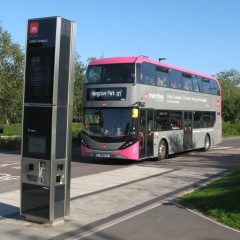
MetroBus (Bristol)

MetroBus (stylised as metrobus) is really a bus rapid transit system in Bristol, England. It’s a joint project between Bristol, North Somerset and South Gloucestershire councils. The very first route, service m3, started operations on 29 May 2018, adopted by m2 on 3 September and m1 on 6 The month of january 2019.
MetroBus belongs to a bundle of transport infrastructure enhancements in the western world of England that have been made to help unlock economic growth, tackle poor trains and buses links in South Bristol, lengthy bus journey occasions and vehicle use within its northern border Side of the town and M32 freeway corridor.
MetroBus vehicles have priority over other traffic at junctions and employ a mix of segregated busways and bus lanes. They’re double-decker Alexander Dennis Enviro400 bodied Scania biogas buses with two doorways, one for boarding and something for exiting, to shorten stop occasions.
Three routes is going to be initially offered by MetroBus:
The m3 route is going to be extended later on from Emersons Eco-friendly to Bristol Parkway railway station, following works in the station to improve access for buses along with other vehicles.
The South Bristol Link section, between Lengthy Ashton park & ride and Hengrove Park, isn’t presently operated as no operator will run services with no subsidy. It’s anticipated that whenever a sizable growth and development of new homes is made close to the route, the service will end up commercially viable.
In central Bristol, The Center was re-modelled and partially pedestrianised included in the project.
The £200 million project began in the year 2006, produced by free airline of England Partnership, a partnership between South Gloucestershire, Bristol and North Somerset and Bath and North East Somerset councils. Three routes were initially suggested:
From the announcement, MetroBus (initially known as ‘BRT’) demonstrated questionable. Answering an offer, described below, in 2014 incoming directly elected mayor George Ferguson made the decision to alter the path from the Ashton Vale to Temple Meads service. Rather of travelling along Bristol Harbour and also over Prince Street Bridge it might now follow Cumberland Road and Redcliff Hill, calling near Temple Meads station and round the inner ring road before reaching the town center. This transformation might have important implications for that route and it is potential patronage. Because the city center was forecasted is the most typical destination, journey occasions for many passengers were considerably lengthened. Consequently the revised economic evaluation in 2014 forecasted considerably lower passenger figures compared to original evaluation this year.
An accessory for its northern border Fringe package was suggested in 2015. The Cribbs Patchway MetroBus Extension (CPME) will give you a far more direct route from Bristol Parkway railway station to Cribbs Causeway, via housing developments at Filton Airfield.
The scheme’s promoters claimed in 2014 it would cut back journey occasions by as much as 75% between Lengthy Ashton park & ride and Hengrove Park. In 2015, services were likely to come from 2017, even though this date subsequently tucked. The very first route (M3) commenced on 29 May 2018.
Route M2 commenced on 3 September 2018 and route M1 in The month of january 2019.
The entire believed price of the plan initially was £200 million. The Ashton Vale to Temple Meads route was £49.6 million, which the Department for Transport (DfT) would lead £34.5 million. DfT would lead £27.6 million, over fifty percent of the all inclusive costs, towards the south Bristol Link Road plan which extends the A4174 ring road, with Bristol City Council adding £8.4 million and North Somerset Council adding £5.3 million. The price of its northern border Fringe to Hengrove package was believed to become £102 million, with DfT adding £51 million, £30.5 million from South Gloucestershire Council and £20.5 million from Bristol City Council.
In 2016 believed costs had elevated to £216 million, as well as in 2017 to £230 million.
MetroBus has faced opposition from ecological groups who claim a brand new bus-only junction within the M32 (North Fringe to Hengrove section) means losing 12 smallholdings, lack of lengthy-held allotments, expansion into eco-friendly belt land, and lack of Grade 1 soil and land at Feed Bristol, a residential area food growing project.
The plan proposes minimization for lack of allotments, soils etc however the Are accountable to the event Control Committee for that meeting of 27 August 2014 states, “Regardless of the suggested off-site minimization, the NFHP plan would increase the risk for lack of 1.79 hectares of best and many versatile farming land.”
The ‘Alliance to Re-think Metrobus’ created a ‘Metrobust Eco-friendly Capital 2015’ calendar along with a map showing planned destruction of eco-friendly spaces across Bristol for that Metrobus plan.
The campaign in order to save the allotments was ultimately unsuccessful but an early on campaign did flourish in altering the path from the Ashton Vale to Temple Meads Metrobus. This campaign focussed on the declare that buses could be routed while watching M-Shed museum, damaging the atmosphere from the waterfront. Actually, because this video produced in 2008 makes obvious, the claim was inaccurate. The buses might have run behind M-Shed, on which has become a road available to all traffic (although a no through road). The claim was repeated more often than not through the media assisting to sway public opinion against Metrobus within the run-to the Mayoral elections this year. This led to the choice from the mayor to alter the path, as described above.
All planning permissions for that MetroBus network have finally been granted. The Ashton Vale to Temple Meads route was authorized by the DfT in November 2013. The South Bristol Link area of the MetroBus plan was approved in The month of january 2015.
By April 2016, construction had begun on the 3 routes.
Construction began at the begining of 2015 around the Ashton Vale to Temple Meads route. Works best for the Ashton Vale to Temple Meads MetroBus route include:
Work started around the Stoke Gifford Transport Link (SGTL) and Bradley Stoke Means by August 2015 included in the North Fringe to Hengrove Package. The job includes the making of new roads, widening the carriageway, a bus only junction around the M32 and the development of new bus lanes around the A4174, Coldharbour Lane, Stoke Lane and SGTL.
The widening from the A4174 needed the substitute from the Church Lane bridge for pedestrians and horses, near Emersons Eco-friendly. The concrete bridge was destroyed in December 2015 and substituted for a steel truss bridge in June 2016. And in June 2016, the M32 was closed to permit installing a bus-only bridge.
Focus on this westward extension from the A4174 started in summer time 2015 and involved the making of:
The South Bristol Link Road was completed and opened up to traffic at the begining of The month of january 2017. The first Metrobus network won’t, however, run across the buslanes from the Link Road, even though the road can be used by services between your city center and Bristol Airport terminal.
By Feb 2017, an operator for MetroBus services was not found. An operator should will be in place 12 several weeks just before commencement of services (planned for Spring 2017), but bus companies were reluctant to purchase new buses to satisfy the needs for MetroBus, although getting a cap on fares. They recommended the services wouldn’t be viable on the commercial basis. MetroBus had stated in 2016 that public subsidy may be required to attract an operator.
In June 2017, it had been announced that First West of England would run services around the first path to open – in those days expected is the M2 from Lengthy Ashton – and wouldn’t get any public funding. In April 2018, it had been announced the M1 route could be run by Bristol Community Transport, under contract to First West of England, using the M2 and M3 services run by First.
Free Airline of England Combined Authority’s Joint Local Transport Plan has outlined the ambition for future growth of the MetroBus network to link Bristol city center to Bath via Keynsham, and link Clevedon to Nailsea, Yate, Thornbury and Avonmouth with an orbital service linking Emersons Eco-friendly to South Bristol. Something in Weston-super-Mare can also be suggested.
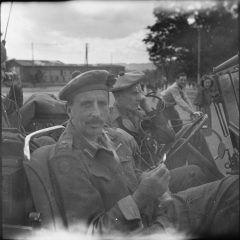
Tom Rennie

Image by/from No 5 Army Film & Photographic Unit, Wilkes (Sgt)
Major-General Thomas Gordon Rennie CB DSO MBE (3 The month of january 1900 – 24 March 1945) would be a British Army officer who commanded the next Infantry Division and then the 51st (Highland) Infantry Division during The Second World War and it was later wiped out for action during Operation Plunder, the crossing from the River Rhine in March 1945.
Educated at Loretto School and also the Royal Military College, Sandhurst, Rennie was commissioned like a second lieutenant in to the Black Watch (Royal Highland Regiment) on 16 This summer 1919. Attending employees College, Camberley from 1933 to 1934, he saw service in world war ii, was taken prisoner at Saint-Valery-en-Caux throughout the final stages from the Fight of France in June 1940, however steered clear of nine days later. He is made Commanding Officer (CO) from the fifth Battalion, Black Watch (Royal Highland Regiment) in 1942, leading the battalion in the Second Fight of El Alamein in October 1942, after which becoming Commander from the 154th Infantry Brigade and leading that formation for that Allied invasion of Sicily in This summer 1943.
In December 1943 he was hired General Officer Commanding 3rd Infantry Division by which role he required part within the Normandy landings in June 1944. He ended up being made General Officer Commanding 51st (Highland) Infantry Division however in March 1945, after crossing the Rhine, he was wiped out by mortar fire.
He’s hidden in Reichswald Forest War Graveyard.