Mead yeast
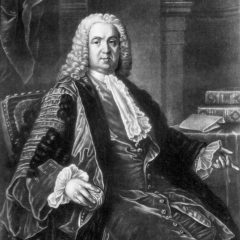
Richard Mead

Image by/from Mezzotint by R. Houston after A. Ramsay
Richard Mead (11 August 1673 – 16 Feb 1754) was an British physician. His work, A Brief Discourse concerning Pestilential Contagion, and also the Method for use to avoid it (1720), was of historic importance within the knowledge of transmissible illnesses.
The eleventh of 13 kids of Matthew Mead (1630-1699), a completely independent minister, Richard was created at Stepney, London. He studied at Utrecht for 3 years under JG Graevius. Getting made the decision to follow along with this sort of profession, then he visited Leiden and attended the lectures of Paul Hermann and Archibald Pitcairne. In 1695 he graduated in philosophy and physic at Padua, as well as in 1696 he came back to London, entering at the same time on the effective practice.
His Mechanical Account of Poisons made an appearance in 1702, and, in 1703, he was accepted towards the Royal Society, to whose Transactions he contributed for the reason that year a paper around the parasitic nature of scabies. Within the same year, he was elected physician to St. Thomas’ Hospital, and hired to see physiological lectures in the Surgeon’s Hall. Around the dying of John Radcliffe in 1714, Mead grew to become the recognised mind of his profession he attended Queen Anne on her behalf deathbed, as well as in 1727 was hired physician to George II, getting formerly offered him for the reason that capacity as he was prince of Wales.
Whilst in the service from the king, Mead got active in the development of a brand new charitable organization, the Foundling Hospital, both like a founding governor so that as an consultant on everything medical. The Foundling Hospital would be a home for abandoned children as opposed to a medical hospital, but it’s stated that through Dr. Mead’s participation, the Foundling was outfitted with an ill room along with a pharmacy. He’s even designed to have influenced the architect, Theodore Jacobsen, into incorporating a sizable courtyard to advertise the kids exercising. A complete-size portrait of Dr Mead, donated through the artist Allan Ramsay in 1747, helps to ensure that his contribution won’t be forgotten, and it is permanently displayed in the Foundling Museum.
Dr Richard Mead seemed to be another from the Royal Society along with a Freemason (although not recognized to which lodge he belonged).
Mead would be a collector of works of art, rare books, classical sculpture, gems and zoological examples, that they provided for attend the library in the Bloomsbury house. His collection contained 10,000 volumes. In 1752 he received instructions from Camillo Paderni, in regards to the progress in the excavations from the Rental property from the Papyri. After his dying, it required 56 days to auction these to book collectors from England and abroad. His “Genuine and whole Assortment of Valuable Gems, Bronzes, Marble along with other Busts and Antiquities” was auctioned by Abraham Langford at his house within the Great Piazza, Covent Garden on 11-15 March 1755.
Mead’s country estate what food was in Old Windsor in Berkshire, but he died at his house in Bloomsbury in 1754. His London home later created the foundation of effective Ormond Street Hospital.
Mead was hidden in Temple Church. A monument to him was put into its northern border aisle of Westminster Abbey, having a bust by Peter Scheemakers.
In 1755 was printed (posthumously) Mead’s Medica Sacra Or, A commentary around the most outstanding illnesses, pointed out within the Holy Scriptures. He utilized the job of his supposed relative Frederick Mede’s Doctrine of Demons as well as of his once patient Isaac Newton’s Chronology to reason that questionnable ideas regarding demons had joined Christianity. Like Arthur Ashley Sykes yet others, Mead understood individuals suffering from demons within the New Proof of refer only to individuals struggling with a number of illnesses:
Mead is satirised in Laurence Sterne’s novel, Tristram Shandy, where he briefly seems as Dr Kunastrokius: “—Did not Dr. Kunastrokius, exceptional man, at his leisure hrs, go ahead and take finest delight imaginable in combing of asses’ tails, and plucking the dead hairs by helping cover their his teeth, though he’d tweezers forever in his pocket?” The name Kunastrokius is clearly an intimate pun, possibly referencing Voltaire’s Cunegund of Candide (1759). Certainly one of Sterne’s correspondents later complained he was reviving prevalent rumours that Mead choose to go bankrupt because of having to pay for elaborate sexual favours. Sterne defended themself for the reason that he did was “most distantly hint in a droll foible in the character…known before by every chamber-maid and footman inside the bills of mortality”.
Aside from the Mechanical Account of Poisons (second erectile dysfunction, 1708), Mead printed:
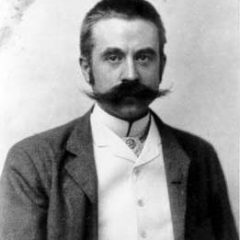
Stanford White-colored

Image by/from George Cox
Stanford White-colored (November 9, 1853 – June 25, 1906) was a united states architect. He seemed to be someone within the architectural firm McKim, Mead & White-colored, the frontrunner among Beaux-Arts firms. He designed many houses for that wealthy in addition to numerous social, institutional, and non secular structures. His design concepts embodied the “American Renaissance”.
In 1906, White-colored was shot and wiped out through the psychologically unstable uniform Harry Kendall Thaw, who’d become deeply in love with White’s previous relationship with Thaw’s wife, actress Evelyn Nesbit. This brought to some court situation that was dubbed “The Trial from the Century” by contemporary reporters.
White-colored was created in New You are able to City, the boy of Shakespearean scholar Richard Grant White-colored and Alexina Black Mease (1830-1921). His father would be a dandy and Anglophile without any money, but a lot of connections in New York’s art world, including painter John LaFarge, Louis Comfort Tiffany, and Ernest Law Olmsted.
White-colored didn’t have formal architectural training he started his career at age 18 because the principal assistant to Henry Hobson Richardson, the finest American architect during the day and creator of the style recognized today as “Richardsonian Romanesque”. He continued to be with Richardson for six years. In 1878, White-colored embarked for any year . 5 tour of Europe, so when he came back to New You are able to in September 1879, he became a member of Charles Follen McKim and William Rutherford Mead to create McKim, Mead and White-colored. Included in the partnership, all commissions created by the architects were identified as the work from the collective firm, no individual architect.
In 1884, White-colored married 22-year-old Bessie Springs Cruz. His wife hailed from the socially prominent Lengthy Island family her ancestors were early settlers from the area, and Smithtown, New You are able to, was named on their behalf. Their estate, Box Hill, was not just a home, but additionally a showplace illustrating the luxe design aesthetic White-colored offered prospective wealthy clients. A boy, Lawrence Grant White-colored, was created in 1887.
In 1889, White-colored designed the triumphal arch at Washington Square, which, based on White’s great-grand son, architect Samuel G. White-colored, may be the structure White-colored ought to be best appreciated for. White-colored was the director from the Washington Centennial celebration and produced a brief triumphal arch that was very popular, money was elevated to create a lasting version.
Elsewhere in New You are able to City, White-colored designed the Villard Houses (1884), the 2nd Madison Square Garden (1890 destroyed in 1925), the Cable Building – the cable vehicle power station at 611 Broadway – (1893), the baldechin (1888 to mid-1890s) and altars of Fortunate Virgin and St. Frederick (both finished in 1905) at St. Paul the Apostle Church the brand new You are able to Herald Building (1894 destroyed) the IRT Powerhouse on eleventh Avenue and 58th Street the very first Bowery Savings Bank, in the intersection from the Bowery and Grand Street (1894) Judson Memorial Church on Washington Square a lifetime Club and Madison Square Presbyterian Church, along with the Gould Memorial Library (1903), initially for brand new You are able to College, now around the campus of Bronx College and the position of the Hall of Fame for excellent Americans.
Outdoors of recent You are able to City, White-colored designed the very first Methodist Episcopal Church in Baltimore, Maryland (1887), now Lovely Lane U . s . Methodist Church. Also, he designed the Cosmopolitan Building, a 3-story Neo-classical Revival building capped by three small domes, in Irvington, New You are able to, built-in 1895 because the headquarters of Cosmopolitan Magazine. Also, he designed Cocke, Rouss, and Old Cabell halls in the College of Virginia, and reconstructed The Rotunda (College of Virginia) in 1898, 3 years after it’d burned lower (his re-creation was later reverted to Thomas Jefferson’s original the perception of the U . s . States Bicentennial in 1976). Furthermore, he designed the Blair Mansion at 7711 Eastern Ave. in Silver Spring, Maryland (1880), now getting used like a violin store. He was accountable for designing the Boston Public Library and also the Boston Hotel Buckminster, both still standing today. In 1902, he designed the Benjamin Walworth Arnold House and Carriage House in Albany, New You are able to, and that he helped to build up Nikola Tesla’s Wardenclyffe Tower, his last design.
Just like his Washington Square Arch still stands (in Washington Square Park), so a lot of White’s clubhouses, that have been points of interest of recent You are able to society: a lifetime, Colony, Harmonie, Lambs, Metropolitan, and Players clubs. His Shinnecock Hillsides Golf Clubhouse design is stated is the earliest golf clubhouse in the usa and it is now an legendary golf landmark. However, his clubhouse for that Atlantic Yacht Club, built-in 1894 overlooking Gravesend Bay, burned lower in 1934. Sons of society families also resided in White’s St. Anthony Hall Chapter House at Johnson College, now occupied by college offices.
Within the division of projects inside the firm, the interpersonal and gregarious White-colored arrived nearly all commissions web hosting houses. His fluent draftsmanship was highly convincing to clients who may not get much visceral understanding from the floorplan, and the intuition and facility caught the atmosphere. White’s Lengthy Island houses have survived well, despite losing Harbor Hill in 1947, initially focused on 688 acres (2.78 km2) in Roslyn. White’s Lengthy Island houses have three types, based on their locations: Gold Coast chateaux neo-Colonial structures, especially individuals locally of their own house at “Box Hill” in Smithtown, New You are able to (White’s wife would be a Cruz) and also the South Fork houses from Southampton to Montauk Point. Also, he designed the Kate Annette Wetherill Estate in 1895.
White-colored designed many other New You are able to mansions too, such as the Iselin family estate “All View” and “Four Chimneys” in New Rochelle. White-colored seemed to be active designing country estate homes in Greenwich, Connecticut. Examples there range from the Seaman-Brush House (1900), the Stanton House Inn, a bed and breakfast. In New York’s Hudson Valley, he designed the 1896 Mills Mansion in Staatsburg. Among his “cottages” in Newport, Rhode Island, at Rosecliff (for Mrs. Hermann Oelrichs, 1898-1902) he adapted Mansart’s Grand Trianon, but provided this house designed for receptions, dinners, and dances with fluent spatial planning and well-contrived dramatic internal views en filade. His “informal” shingled cottages usually featured double corridors for separate circulation, to ensure that a guest never noticed a laundress having a basket of bedding. Bedrooms were usually separated from hallways with a dressing-room foyer lined with closets, to ensure that an inner door as well as an outer door give superb privacy.
One the couple of surviving urban residences created by White-colored may be the Ross R. Winans Mansion in Baltimore’s Mount Vernon-Belvedere neighborhood, the headquarters for Agora, Corporation.. Designed for Ross R. Winans, heir to Ross Winans, in 1882 the mansion is premier illustration of French Renaissance revival architecture. Since Winans residence, it offered like a women preparatory school, hospitals, along with a funeral parlor prior to being acquired by Agora Publishing. In 2005, Agora completed an award-winning renovation project.
White-colored resided exactly the same existence as his clients, although less than so lavishly, and that he understood the way the house needed to perform: just like a first-rate hotel, theater foyer, or perhaps a theater set with appropriate historic references. He was a designer, who had been prepared to perform a cover Scribner’s Magazine or design a pedestal for uncle Augustus Saint-Gaudens’ sculpture. He extended the boundaries of architectural services to incorporate interior decoration, getting art and antiques, as well as planning and designing parties. He collected works of art, pottery, and tapestries, and when White-colored couldn’t procure the best antiques for his interiors, he’d sketch neo-Georgian standing electroliers or perhaps a Renaissance library table. His the perception of elaborate picture framing, the Stanford White-colored frame, still bears his name today. Outgoing and social, he possessed a sizable circle of buddies and acquaintances, a lot of whom grew to become clients. White-colored were built with a major influence within the “Shingle Style” from the 1880s, on Neo-Colonial style, and also the Newport cottages that he’s celebrated.
He designed and decorated Fifth Avenue mansions for that Astors, the Vanderbilts (in 1905), along with other high society families.
His Washington Square Arch still stands in Washington Square Park, and thus do a lot of his clubs, that have been points of interest of recent You are able to society: a lifetime, Metropolitan, Players, Lambs, Colony and Harmonie clubs. His clubhouse for that Atlantic Yacht Club, built-in 1894 overlooking Gravesend Bay, burned lower in 1934. Sons of society families also resided in White’s St. Anthony Hall Chapter House at Johnson College, now occupied by college offices.
White-colored, a tall, flamboyant man with red hair along with a red mustache, impressed others as witty, kind, and generous. The newspapers frequently described him as “masterful”, “intense”, “burly yet boyish”. He would be a sophisticated collector of the things rare and pricey, for example artwork and antiquities. He maintained a multi-story apartment having a rear entrance on 24th street in Manhattan. One eco-friendly-hued room was outfitted having a red velvet swing, which hung in the ceiling suspended by ivy-twined ropes. You will find conflicting accounts of whether this swing is at the “Giralda” tower in the old Madison Square Garden, or perhaps in the encompassing building at 22 West 24th Street, but sources appear to concur the swing would be a feature from the 24th Street location.
From evidence in letters, including individuals of Augustus Saint-Gaudens to White-colored, recent biographers have figured that White-colored was, at the minimum, bisexual, which work of McKim, Mead & White-colored was greatly a part of this type of social circle. According for this, White’s daughter has written that Stanford’s oldest boy (her father) was “unflinching in the understanding of Stanford’s nature”.
White’s presence in the roof garden theatre of Madison Square Garden around the nights June 25, 1906, have been an impromptu decision. White-colored had initially planned to stay in Philadelphia on business he postponed the trip when his boy, Lawrence, made an unpredicted trip to New You are able to. Supported by New You are able to society figure James Clinch Cruz, they dined at Martin’s, close to the theatre, where Harry Kendall Thaw and the wife Evelyn Nesbit also dined. Thaw apparently saw White-colored there.
That evening’s theatrical presentation was the premiere performance of Mam’zelle Champagne. Throughout the show’s finale, “I Possibly Could Love Millions Of Women”, Thaw contacted White-colored, created a pistol, standing some two ft from his target, stated, “You’ve destroyed my spouse”, and fired three shots at White-colored, hitting him two times hard and when in the upper left shoulder, killing him instantly. A part of White’s face was torn away, and the remainder of his features were unrecognizable, blackened by gunpowder. The crowd’s initial reaction was certainly one of good cheer, as elaborate party methods one of the upper echelon of recent You are able to society were common at that time. However, if this grew to become apparent that White-colored was dead, hysteria ensued.
Thaw, a Pittsburgh uniform with past severe mental instability, would be a jealous husband who saw White-colored as his rival. White-colored had first inebriated after which sexually assaulted an unconscious Nesbit when she was 16 and White-colored was 47 years of age. Within the years following, White-colored had continued to be a powerful presence in Nesbit’s existence. However, when he was murdered, White-colored had lengthy since managed to move on with other enthusiasts, which is conjectured that White-colored was not aware of Thaw’s lengthy-standing vendetta against him. White-colored considered Thaw a poseur of little consequence, categorized him like a clown, and many tellingly, known as him the “Pennsylvania pug” – a mention of the Thaw’s baby-faced features. The truth is, Thaw both respected and resented White’s social stature. More considerably, he recognized he and White-colored shared a love for similar lifestyles. However, unlike Thaw, who’d to function within the shadows, White-colored could keep on without censure, and apparently, with impunity.
19-year-old Lawrence Grant White-colored was guilt ridden after his father was slain, blaming themself for his dying. “If perhaps he’d gone [to Philadelphia]!” he lamented. Years later, he’d write bitterly, “Around the nights June 25th, 1906, while attending a performance at Madison Square Garden, Stanford White-colored was shot from behind [by] a crazed profligate whose great wealth was utilized to besmirch his victim’s memory throughout the number of well known trials that ensued.”
White-colored was hidden in St. James, New You are able to.
As soon as the morning following a murder, news coverage grew to become both chaotic and single-minded, also it ground forward with unrelenting momentum. William Randolph Hearst’s newspapers performed in the murder, and also the connected court proceedings grew to become referred to as “The Trial from the Century”. The rampant curiosity about the White-colored murder and it is key players was utilized by the defense and prosecution in Thaw’s murder trial to give malleable reporters any “scoops” that will give their particular sides a benefit within the public forum.
Anyone, place or event, regardless of how peripheral to White’s murder, was grabbed on by reporters and hyped as newsworthy copy. Details were thin, but sensationalist reportage was plentiful within this, the heyday of tabloid journalism. Hard-steamed male reporters were bolstered with a contingent of female counterparts, christened “Sob Siblings”, also referred to as the “Pity Patrol”. Their stock in trade was a persons-interest piece, heavy on sentimental tropes and melodrama, crafted to drag around the feelings and punch them as much as fever pitch.
White-colored, in dying, wasn’t able to escape the craze of printed invective, which not just excoriated him like a man, but asked his professional achievements being an architect too. The Night Standard concluded he was “much more of a painter than architect”, and stated his work spoke of his “social dissolution”. The Country seemed to be critical: “He adorned many a united states mansion with irrelevant plunder.” The yellow press used lurid language to demonize White-colored as “a sybarite of debauchery, a guy who abandoned high enterprises for vicious revels.”
Couple of buddies or associates came toward openly defend White-colored. His good friend, sculptor Augustus Saint-Gaudens, was seriously ill and not able to talk out.
Richard Harding Davis, a war correspondent and reputedly the model for that “Gibson Man”, was angered through the tabloid press, which, he was adament, had distorted the details. An editorial, which made an appearance in Vanity Fair, lambasting White-colored and shredding his status, motivated Davis to pen a rebuttal. The content made an appearance on August 8, 1906, in Collier’s magazine:
Since his dying White-colored continues to be referred to as a satyr. To reply to this by stating that he would be a great architect isn’t to reply to whatsoever…furthermore important is the fact that he would be a most kindhearted, most considerate, gentle and macho man, who could forget about did the items related to him than he might have roasted an infant on the spit. Big in your mind as well as in body, he was not capable of little meanness. He respected an attractive lady because he respected almost every other beautiful factor God has provided us and the delight more than one was as keen, as boyish, as grateful over any others.
The autopsy report published through the coroner’s testimony in the Thaw trial says White-colored was seriously unwell during the time of his murder. Actually, he’d have succumbed shortly to the various illnesses he endured from: Bright’s disease, incipient t . b, and severe liver degeneration.
900 Broadway on a corner of East 20th Street, within the Flatiron District of Manhattan, New You are able to City.
Washington Square ArchWhite-colored renovated the mansion at #16 Gramercy Park for actor Edwin Booth is the headquarters for that Players Club.
Boston Hotel Buckminster in Kenmore Square
The 2nd incarnation of Madison Square Garden was created by White-colored
The NYU library within the Bronx, now a part of Bronx College
Interior of gorgeous Lane Methodist Church in Baltimore, Maryland
The Cosmopolitan Building c.1900 (from your ad in Cosmopolitan Magazine)
President Theodore Roosevelt sitting down inside a chair created by White-colored for that Condition Dining Area from the White-colored House, 1903.
Primary sources
White’s extensive professional correspondence along with a small body of private correspondence, photographs, and architectural sketches by White-colored are held through the Department of Sketches & Archives of Avery Architectural and Fine Arts Library at Columbia College. His letters to his family happen to be edited by Claire Nicolas White-colored, Stanford White-colored: Letters to His Family 1997. The main archive for his firm, McKim, Mead & White-colored, takes place through the New-You are able to Historic Society.
Notes
Bibliography
South Cove, Lake Mead
South Cove is on the Arizona side of Lake Mead between Temple Bar and Pierce Ferry. Lake Mead, and every one of its sights, is managed through the Park Service and open to the general public for recreational purposes.
Coordinates: 36°5′20.62″N 114°6′19.36″W / 36.0890611°N 114.1053778°W / 36.0890611 -114.1053778
Sleeping Murder
Sleeping Murder: Miss Marple’s Last Situation is really a work of detective fiction by Agatha Christie and first printed within the United kingdom through the Collins Crime Club in October 1976 and in america by Dodd, Mead and Company later within the same year. The United kingdom edition retailed for £3.50 and also the US edition for $7.95.
It features Miss Marple. It had been the final Christie novel, printed posthumously, while not the final one Christie authored featuring Miss Marple. The storyline is placed within the 1930s, though written during world war ii. She aids a youthful couple that like to discover occasions within the wife’s past existence, and never let sleeping murder lie.
Newlywed Gwenda Reed travels in front of her husband to locate a home on their behalf around the south coast of England. Very quickly, she finds and buys Hillside, a sizable old house that feels much like home. She supervises workers inside a renovation, remaining inside a one-time nursery room as the work progresses. She forms an absolute idea for that little nursery. Once the tradesmen open a lengthy sealed door, she sees the wallpaper which was in her own mind. Further, a location that appears logical to her for any entrance between two rooms proves to possess been one years earlier. She would go to London for any visit with relatives, the writer Raymond West, his wife, and the aunt, Miss Jane Marple. Throughout the play, The Duchess of Malfi, once the line “Cover her face mine eyes dazzle she died youthful” is spoken, Gwenda screams out she saw a picture of herself viewing a guy saying individuals words strangling a blonde-haired lady named Helen.
Gwenda was created in India where her father was stationed, then elevated in Nz by her mother’s sister from the toddler, once her mother died. Her father died a couple of years after her mother. She’s recollections to be on the ship, but it’s clearly two ships. Miss Marple shows that Gwenda resided in England together with her father and the second wife, which turns out to be the situation. Her stepmother, Helen Kennedy Halliday, met her father travelling from India to England, where their shipboard romance brought to marriage upon arrival in England. They rented a home in Dillmouth, where Helen increased up. The coincidences end up being recollections from Gwenda’s remain in that house 18 years back like a very youthful child. Now Gwenda considers her frightening image and also the closing words from the play: could they be real recollections too? Her husband Giles arrives from Nz and also the couple choose to pursue this mystery.
Helen was elevated largely by her half brother, Dr Kennedy, now upon the market from practice and gone to live in another village. He replies for an advertisement placed by Giles seeking details about Helen.
Miss Marple arranges to go to buddies in Dillmouth. Miss Marple is frequently in the house, taking out bindweed in the neglected garden. She finds the person who once gardened for that Kennedy family, brother and sister, who supplies several helpful descriptions of occasions then. Miss Marple finds the prepare in the Halliday household, Edith, who remembers that point well. The Hallidays were soon to maneuver to some house in Norfolk before Helen disappeared. Helen wanted to find a way. The servants presumed it was from her husband, but it wasn’t. She was mainly thinking about getting away her brother. She did adore Halliday, and loved his daughter.
The Reeds advertise, choosing the Hallidays’ former maid Lily. She writes first to Dr Kennedy, thinking he’s a friend. She states that they doesn’t think that Helen ran off, because the clothes packed in her own suitcase made no sense (taking a night gown although not the footwear and belt which go by using it). The Reeds and Dr Kennedy agree he should write to her to set up a gathering at his present home. Lily never arrives.
Law enforcement find Lily’s body, strangled, inside a copse close to the stop. She came by an early on train, but had Dr Kennedy’s letter together with her, for that later arrival time. Miss Marple advises Gwenda to inform law enforcement everything. Soon, they’re digging in the garden, in the finish from the terrace, to locate Helen’s body. Gwenda is incorporated in the house alone when Dr Kennedy approaches her, prepared to kill her by strangling when his make an effort to poison her unsuccessful. Miss Marple arrives having a container of soapy solution, which she sprays in the eyes to prevent the murder attempt.
Dr Kennedy had strangled his sister, saying the closing words from that play, not aware of youthful Gwenda in the stair railing above. He hidden Helen within the garden. He setup her husband to consider he’d strangled her, but there wasn’t any body, so he was taken as insane, and died in an elderly care facility. His diary from that point demonstrated him to become quite sane, but he couldn’t explain what he’d seen, his strangled wife alongside him. Kennedy had first given drugs to create Halliday paranoid, after which drugged his drink so Dr Kennedy could pose him near the strangled Helen. Then Kennedy moved her body again. The letter found with Lily wasn’t the main one she caused by Kennedy he switched it after he wiped out her. He understood law enforcement would look out of his plan. He sent the nanny Leonie home with medicines that wiped out her. Miss Marple explains all of this towards the Reeds, the entire confession from Kennedy and just how they ought to have experienced it from the beginning, from individuals words within the play.
Agatha Christie authored Curtain (Hercule Poirot’s last mystery, which concludes the sleuth’s career and existence) and Sleeping Murder during The Second World War to become printed after her dying, and Sleeping Murder was written sometime throughout the Blitz, which required place between September 1940 and could 1941. Agatha Christie’s literary correspondence files indicate Sleeping Murder was written at the start of 1940.
Christie’s notebooks are available to interpretation in hindsight John Curran argues that Sleeping Murder had been planned in the finish from the 1940s and the start of the 1950s. His basis may be the many changes towards the title from the novel, as other authors used her first title ideas: Certainly one of Christie’s notebooks contain references to pay for Her Face (second title) under ‘Plans for Sept. 1947’ and ‘Plans for November. 1948’, suggesting she was intending to re-read and revise the manuscript. It’s based on these dates John Curran argues that Christie had still to create the manuscript.
His argument isn’t based on two biographers, who condition positively that Sleeping Murder was designed in 1940. This view is further based on Jared Cade.
Support for that story being first designed in 1940 can be found in the correspondence files of Christie’s literary agents: Christie’s royalty statement for 15 March 1940 claims that the secretarial agency hired by Edmund Cork to type up Murder looking back (first title of manuscript) billed £19 13s. 9. On 7 June 1940 Edmund Cork authored to Christie counseling her he might have the required ‘deed of gift’ attracted up so her husband Max would become who owns the unpublished Miss Marple novel. Christie eventually visited Edmund Cork’s offices at 40 Fleet Street, London, on 14 October 1940 and signed the document transferring possession from the copyright of Murder looking back to her husband in thought on that which was termed her “natural affection and love for him”.
Christie refers back to the last Poirot and Miss Marple novels that they penned during world war ii in her own life story. She writes that they wrote an additional two books throughout the first many years of world war 2 awaiting being wiped out within the raids, as she was london. One was on her daughter, Rosalind Hicks, which she authored first – a magazine with Hercule Poirot inside it – and yet another was for optimum – with Miss Marple inside it. She adds these two books, after being composed, were make the vaults of the bank, and were created over formally by deed of gift to her daughter and husband.
The final Marple novel Christie authored, Enemy, was printed in 1971, adopted by Christie’s last Poirot novel Tigers Remember in 1972 and also in 1973 by her final novel Postern of Fate. Conscious that she’d write forget about novels, Christie authorised the publication of Curtain in 1975 to transmit off Poirot. She then arranged to possess Sleeping Murder printed in 1976, but she died before its publication in October 1976.
By comparison to Poirot, who dies within the final novel, Miss Marple endures. This last printed novel is placed within the 1930s, but follows novels that demonstrate Miss Marple to possess aged. In Enemy, Miss Marple does no gardening around the advice of her physician, showing the results of her more fragile health in Sleeping Murder, Miss Marple is often on her behalf knees pulling bindweed in the neglected garden at the house of the Reeds, displaying to become more powerful, as well as in the chronology from the imaginary character’s existence, no longer working on her behalf truly final situation. There’s a mention of the a radio set like a special purchase by Lily were she to get money by answering the newspaper notice seeking her, which reinforces the story’s establishing the 1930s because the author intended in her own final revisions completed in 1950.
Christie’s original manuscript of Sleeping Murder was titled Murder looking back after among the chapters within the book. Once the Hercule Poirot novel Five Little Pigs was later serialized in america in Collier’s Weekly from September to November 1941, the magazine’s editing board retitled it Murder looking back. It was even the title utilized by Christie’s American writer Dodd Mead and Company, presumably to be able to take advantage of the current US serialization. Christie’s original manuscript of Sleeping Murder was duly retitled Cover Her Face.
Following a publication of P.D. James’s debut crime novel Cover Her Face in 1962, Christie grew to become conscious of the necessity to come up with another title during the last Miss Marple book. She authored to Edmund Cork on 17 This summer 1972, asking him to transmit her a duplicate from the unpublished Miss Marple manuscript along with a copy of Max’s deed of gift. A lot time had passed that they was not able to keep in mind when the manuscript was still being known as Cover Her Face or She Died Youthful.
George Thaw within the Daily Mirror of twenty-two October 1976 stated, “Agatha Christie’s last novel is excellent. Sleeping Murder is all of the Miss Marple’s excursions into recognition. But possibly it’s her best. Agatha Christie authored it years back but when I would choose a swansong book this is really the one which I’d choose. It’s her perfect for years.”
Robert Barnard: “Slightly somniferous mystery, designed in the ‘forties but printed after Christie’s dying. Concerns a home where murder continues to be committed, bought (through the merest coincidence) by somebody that growing up saw your body. Seems like Ross Macdonald, and definitely does not read like vintage Christie. Why should an astute businesswoman restrain certainly one of her better performances for posthumous publication?”
Sleeping Murder was filmed through the BBC like a 100-minute film within the sixth adaptation (of twelve) within the series Miss Marple starring Joan Hickson as Miss Marple. It had been transmitted in 2 50-minute parts on Sunday, 11 The month of january and Sunday, 18 The month of january 1987. This adaptation is rather in keeping with the plot from the novel.
Adapter: Ken Taylor
Director: John Davies
Cast:
Another television adaptation, occur 1951, was transmitted on 5 Feb 2006 included in ITV’s Marple, starring Geraldine McEwan and Sophia Myles, as Miss Marple and Gwenda, correspondingly. This adaptation had numerous plot changes. The most important change reaches the finish it’s says Gwenda’s mother and stepmother were the same person. Claire would be a jewel crook and also to escape the Indian Police-Detectives, she faked her dying and assumed the identity of “Helen Marsden”. Other changes range from the deletion of a number of Helen’s suitors, and adding a travelling company of performers known as The Funnybones, which Helen was performing with during the time of her dying. Dr Kennedy grew to become the half-brother of Kelvin’s first wife, (whose name is altered from Megan to Claire). Gwenda comes with an absent fiance, Charles, as opposed to a husband. In the finish, Gwenda leaves him and becomes engaged to part of his company, Hugh Hornbeam. Dr Kennedy doesn’t attempt to kill Gwenda and doesn’t seem to be crazy, just he was deeply in love with his sister and wiped out her so nobody might have her. Kelvin isn’t come to hospital and drugged by Dr Kennedy with Datura. Rather, he’s murdered when Dr Kennedy pushes him more than a rocky high cliff.
Adapter: Stephen Churchett
Director: Edward Hall
Cast:
The novel was adapted to some Syrian drama series, “جريمة في الذاكرة” “Crime within the Memory” which was broadcast in 1992.
The novel was adapted like a 90-minute play for BBC Radio 4 and transmitted included in the Saturday Play strand on 8 December 2001. June Whitfield reprised her role as Miss Marple (she performed Miss Marple in a number of radio adaptations within the twentieth century). It had been documented on 10 October 2001.
Adapter: Michael Bakewell
Producer: Enyd Johnson
Cast:
In america the novel was serialised in Ladies’ Home Journal in 2 abridged instalments from This summer (Volume XCIII, Number 7) to August 1976 (Volume XCIII, Number 8) by having an illustration by Fred Otnes.
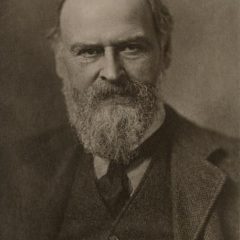
Wilfrid Ward

Wilfrid Philip Ward (1856-1916) was an British essayist and biographer.
He was created in 1856 at Old Hall, Ware, Herts to William George Ward. He attended St. Edmund’s College in Ware, Herts Ushaw College, in Durham, England and Gregorian College in Rome, Italia. Afterward, he was occupied at educational facilities in the uk. He lectured at Lowell Institute, Boston in 1915. He edited the Dublin Review, led to publications like the Edinburgh Review, Quarterly Review, Contemporary Review. He died in 1916.
Ward and the friend Baron Friedrich von Hugel happen to be referred to as “the 2 leading lay British Catholic thinkers of the generation”.
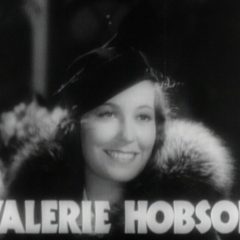
Valerie Hobson

Image by/from Trailer screenshot, from DVD Bride of Frankenstein, Universal 2004
Valerie Hobson (born Babette Valerie Louise Hobson, 14 April 1917 – 13 November 1998) was an Irish-born actress who made an appearance in many films throughout the 1930s, 1940s and 1950s. Her second husband was John Profumo, a government minister who grew to become the topic of a wonderful sex scandal in 1963.
Babette Louisa Valerie Hobson was created in Larne, County Antrim, in Ulster. Her father would be a captain within the Royal Navy.
Before she was 11 years of age, Hobson had started to study acting and dancing in the Royal Academy of Dramatic Arts.
In 1935, still in her own teens, she made an appearance as Baroness Frankenstein in Bride of Frankenstein with Boris Karloff and Colin Clive. She performed opposite Henry Shell that very same year in Werewolf based in london, the very first Hollywood werewolf film. The second 1 / 2 of the 1940s saw Hobson in possibly her two most memorable roles: because the adult Estella in David Lean’s adaptation of effective Expectations (1946), and because the refined and virtuous Edith D’Ascoyne within the black comedy Kind Hearts and Coronets (1949).
In 1952 she divorced her first husband, film producer Anthony Havelock-Allan (1904-2003). In 1954, she married Brigadier John Profumo (1915-2006), an MP, quitting acting shortly later on. Profumo would be a prominent politician of Italian descent.
Hobson’s last starring role is at the initial London manufacture of Rodgers and Hammerstein’s musical take part in the King and that i, which opened up in the Theatre Royal, Drury Lane, on 8 October 1953. She performed Mrs. Anna Leonowens opposite Herbert Lom’s King. The show ran for 926 performances.
After Profumo’s ministerial career led to disgrace in 1963, following revelations he’d lied to home of Commons about his affair with Christine Keeler, Hobson was by him, plus they labored together for charitable organization through out her existence, though she did miss their more public personas.
Hobson’s oldest boy, Simon Anthony Clerveaux Havelock-Allan, was created in May 1944 with Down’s syndrome. Her middle child, Mark Havelock-Allan, was created on 4 April 1951 and grew to become the court. Her youngest child may be the author David Profumo (b. 16 October 1955), who authored Getting the home Lower: A Household Memoir (2006) concerning the scandal. Inside it, he writes his parents told him nothing from the scandal and the man discovered it from another boy in school.
After her dying, Hobson’s body was cremated in compliance together with her wishes. Half her ashes were interred in the household vault in Hersham. The remainder were scattered on 1 The month of january 1999 by her sons David Profumo and Mark Havelock-Allan, close to the family’s farm in Scotland. Hobson was portrayed by Deborah Grant within the film Scandal (1989), by Joanna Traveling in Andrew Lloyd Webber’s stage musical Stephen Ward the Musical, which opened up in the Aldwych Theatre on 19 December 2013, by Emilia Fox within the BBC small-series The Trial of Christine Keeler in 2019.
The Mirror Crack’d back and forth
The Mirror Crack’d back and forth is really a work of detective fiction by Agatha Christie and first printed within the United kingdom through the Collins Crime Club on 12 November 1962 and in america by Dodd, Mead and Company in September 1963 underneath the shorter title from the Mirror Crack’d with a copyright date of 1962. The United kingdom edition retailed at 15 shillings (15/-) and also the US edition at $3.75.
It’s occur the imaginary British village of St. Mary Mead featuring Miss Marple. It had been dedicated by Christie: “To Margaret Rutherford, in admiration.”
The novel received good reviews on publication, for “the shrewd exposition of why is a female film star tick”, and being readable, although the plot wasn’t as “taut” as a number of Christie’s novels. A later review thought it was “among the best of her later books” and loved the way in which “the alterations in village existence and sophistication structure because the war are detailed”.
While dealing with a disease, Jane Marple is out for any walk-in St. Mary Mead and requires a fall. She encounters Louise Badcock, who brings her to her home and relates a tale of meeting American actress Marina Gregg, that has gone to live in England to star inside a film about Elisabeth of Austria and purchased Gossington Hall from Marple’s friend Dolly Bantry.
Gregg and her latest husband, producer Jason Rudd, host a fete at Gossington Hall in recognition of St John Ambulance. One of the visitors attending are Mrs. Bantry, actress Lola Brewster, Gregg’s personal friend Ardwyck Fenn, and Louise Badcock and her husband Arthur. All five are asked to some private room to satisfy Marina and also have their picture taken.
Upon meeting Gregg, Louise shares the storyline of meeting her in Bermuda and receiving her autograph, where Mrs. Bantry notices an unusual look mix Gregg’s face. Mrs. Bantry then takes other women to determine the renovations designed to the home simply to be interrupted upon finding Louise has collapsed without explanation. Despite all tries to revive her, Louise is pronounced dead.
Mrs. Bantry informs Marple concerning the occasions all around the fete and also the frozen check out Marina’s face, evaluating it to some phrase from Alfred, Lord Tennyson’s poem The Woman of Shalott. Detective-Inspector Dermot Craddock spearheads the analysis, learning that Louise died because of ingesting six occasions the suggested dose from the tranquilizer Calmo. The drug have been tucked right into a daiquiri that initially belonged to Gregg but was provided to Louise after someone jogged her arm and caused her to spill it.
Operating around the assumption that Gregg was the intended target, Craddock proceeds to explore her complicated past. Desperate to possess a child of her very own, she married several occasions but was not able to get pregnant. She then adopted three children but grew to become pregnant and delivered a psychologically disabled boy before suffering an anxious breakdown. Among the children, Margot Bence, is revealed to possess been present at Gossington Hall at the time from the fete but she denies killing Gregg despite her hate towards her adoptive mother.
Because the analysis continues, two more and more people are wiped out during the period of twenty-four hrs. Rudd’s social secretary, Ella Zielinsky, dies first from cyanide poisoning following the atomizer she ways to use her hay fever is tainted with prussic acidity. Later that night, Gregg’s butler, Giuseppe, is shot two times within the in his bed room after working your day working in london and depositing £500 into his banking account. Ardwyck Fenn informs Craddock he received an appointment a few days before, accusing him of killing Louise, and that he recognized the anonymous caller as Ella when she sneezed.
Marple’s house cleaner, Cherry Baker, reveals her friend Gladys, who had been a web server at Gossington Hall at the time from the fete, informed her she believes Louise deliberately spilled the cocktail which she would meet Giuseppe before he died. After delivering Gladys on a holiday in Bournemouth and phoning the vicar, she travels to Gossington Hall simply to uncover Gregg died in her own sleep from your overdose.
With Craddock and Rudd present, Marple reconstructs as soon as when Louise recounted the storyline of her meeting Gregg in Bermuda, ultimately revealing that Gregg was the killer all along. Louise, who had been struggling with German measles at that time, was not directly accountable for Gregg’s boy being born disabled as well as for Gregg herself suffering an anxious breakdown. Overcome with rage, Gregg doctored her very own daiquiri prior to making it to ensure that Louise drank it. She then attempted to convince everybody the poisoned drink was intended for her and wiped out Ella and Giuseppe once they deduced she was the killer. Marple sent Gladys off to safeguard her from becoming Gregg’s next victim.
Marple then implies Rudd administered the overdose to safeguard her and also to prevent her from taking another existence. Rudd neither confirms nor denies her accusations, rather commenting on his wife’s beauty and also the suffering she suffered.
The title from the novel originates from the poem The Woman of Shalott by Alfred, Lord Tennyson. The Woman of Shalott resides in a tower near Camelot, and sees it just reflected inside a glass. She’ll be condemned if she looks directly when Lancelot seems, she looks directly at him and Camelot and also the searching glass cracks. This poem is known by name several occasions within the novel, using these lines quoted:
In the finish, Miss Marple quotes the final three lines in talking about the dead actress:
Francis Iles (Anthony Berkeley Cox) was somewhat muted in the praise in the review within the Protector of seven December 1962 as he stated,
“she’s obviously thought up yet another brilliant little peg which to hold her plot, however the chief interest in my experience from the Mirror Crack’d back and forth was the shrewd exposition of why is a female film star tick the way in which she does tick. Despite the fact that you could pay a single coincidence concerning that husband and wife, the 2nd and quite extremely improbable one has a tendency to destroy belief within the story – still much more because it leads nowhere whatsoever.”
Maurice Richardson from the Observer of 11 November 1962 summarized, “An average Christie bit diffuse and never so taut as some still fairly readable, though.”
Kirkus Reviews gave a brief review, noting Miss Marple’s complaints concerning the limits enforced on her behalf through getting old, yet nothing stops her mind from working well. The novel is summarized with this upbeat remark: “It had been her prying curiosity – her gift of putting odd bits together to create a picture that gave the locals and Scotland Yard the correct solution. Lengthy existence to her.”
Robert Barnard, writing in 1990, stated this novel was “All of the the real British village mysteries in Christie’s output, and among the best of her later books. Film milieu superimposed around the familiar St Mary Mead background.” He continued to remark that “Like the majority of Marples this isn’t wealthy in clueing, however the alterations in village existence and sophistication structure because the war are detailed inside a knowledgeable and fairly supportive way.”
The novel was on Anthony Boucher’s list for 1963 of Best Crime Fiction of the season. It had been one amongst 14 indexed by 1963.
The actual-existence tragedy from the birth from the first child of yankee actress Gene Tierney and her husband Oleg Cassini seems is the foundation of one plot point for that superstar character, although not the murder plot, though Christie never stated this about her novel. Tierney described her event in her own life story, years after Christie authored this novel Tierney’s story have been well publicised for a long time before novel was written. The state website of Agatha Christie, shows that Gene Tierney’s experience influenced Christie in developing the film star character within this novel. Tierney hadn’t adopted children prior to the birth of her first child and Tierney bore a proper daughter 5 years later, and therefore Christie didn’t copy Tierney’s existence within this novel.
In June 1943, during pregnancy together with her first child, Tierney came lower with German measles, contracted during her only appearance in the Hollywood Canteen. Hereditary rubella syndrome was forwarded to the infant. Little Daria was created prematurely, weighing only 3 pounds, 2 ounces, and requiring a complete bloodstream transfusion. The newborn was deaf, partly blind with cataracts, and seriously developmentally disabled. The kid ultimately was institutionalised inside a psychological hospital.
About 2 yrs following the child was created, Tierney was contacted with a female fan to have an autograph in a garden party. The fan says during The Second World War, she’d sneaked from quarantine while sick with German measles to go to the Hollywood Canteen and meet Tierney. This incident, along with the conditions to which the data was imparted towards the actress, is comparable to the very first pregnancy of Marina Gregg within the story.
Christie made interesting clue within the surname of Marina Gregg for any lady who’d a young child suffering from hereditary rubella syndrome. This is actually the same surname as Mister Norman Gregg, the Australian ophthalmologist who first described cataracts in hereditary rubella syndrome in 1941. Professor David Mackey pointed out this in the 2005 Gregg lecture towards the Royal Australian and Nz College of Ophthalmologists meeting.
The novel was serialised within the Star Weekly Novel, a Toronto newspaper supplement, in 2 abridged instalments from 9-16 March 1963 underneath the title The Mirror Crack’d with every issue that contains a protective cover illustration by Gerry Sevier.
The novel was adapted for any 1980 feature film with Angela Lansbury becoming Miss Marple. The film’s co-stars were Bette Davis as Marina and Kim Novak as Lola Brewster, and also the cast also incorporated Rock Hudson and Tony Curtis. The show was launched because the Mirror Crack’d, the shortened US book title. The show altered numerous elements within the novel, including Marina’s surname (she uses Rudd, not Gregg), her associates, taking out the character of Giuseppe, adding dying threats, among other modifications, including shifting the setting to 1953, nine years prior to the book’s publication.
Another adaptation from the novel is made by BBC television in 1992 included in its series Miss Marple using the title role performed by Joan Hickson (in her own final performance as Jane Marple), and starring Claire Blossom as Marina Gregg and Glynis Barber as Lola Brewster. The only real major changes were that Giuseppe isn’t wiped out, Alfred Badcock isn’t a former husband of Mariana Gregg, Superintendent Slack and Sergeant Lake are designed in and also the character of Hailey Preston is taken away. The novel was the ultimate adaptation for that BBC series Miss Marple. Margaret Courtenay made an appearance within this adaptation as Miss Dark night, getting formerly portrayed Dolly Bantry within the 1980 feature film version.
ITV Studios and WGBH Boston created another adaptation for that Marple tv series starring Julia McKenzie as Miss Marple, with Joanna Lumley reprising her role as Dolly Bantry, Lindsay Duncan as Marina Gregg and Hannah Waddingham as Lola Brewster. Investigating the murder together with Miss Marple is Inspector Hewitt, performed by Hugh Bonneville. This version, while ultimately faithful to Christie’s original text, incorporated numerous notable changes. A few of these changes were affected by the alterations which were produced in the 1980 film adaptation:
Film director and screenwriter Rituparno Ghosh produced a Bengali language form of Christie’s story as Shubho Mahurat, which reset the storyline within the film industry of Kolkata. Within this version, Sharmila Tagore plays the ageing star Padmini, the counterpart to Christie’s Marina Gregg. The film features Rakhi Gulzar becoming the same as Miss Marple.
TV Asahi adapted the novel in 2018 starring Ikki Sawamura and Hitomi Kuroki, using the title Two Nights Drama Special: Murder from the Great Actress – The Mirror Crack’d Back and forth (Japanese: アガサ・クリスティ 二夜連続ドラマスペシャル 大女優殺人事件~鏡は横にひび割れて~) because the second night, and also the first night was 4.50 from Paddington. This drama altered the primary role to some chief inspector from Tokyo, japan Metropolitan Police Department.
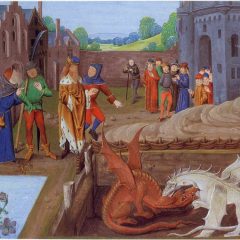
White-colored dragon

Image by/from Unknown
The white-colored dragon is really a symbol connected in Welsh mythology using the Anglo-Saxons.
The first use of the white-colored dragon denoting the Anglo-Saxons can be found in the Historia Brittonum. The appropriate story happens at Dinas Emrys when Vortigern attempts to develop a castle there. Every evening, unseen forces destroy the castle walls and foundations. Vortigern consults his advisors, who simply tell him to locate a boy without any natural father, and also to sacrifice him. Vortigern finds this type of boy, but on hearing that he’s to become offer dying to resolve the demolishing from the walls, the boy dismisses the understanding from the advisors. The boy informs the king of these two dragons. Vortigern excavates the hill, freeing the dragons. They continue their fight and also the red dragon finally defeats the white-colored dragon. The boy informs Vortigern the white-colored dragon symbolises the Saxons which the red dragon symbolises the folks of Vortigern.
The storyline is repeated in Geoffrey of Monmouth’s imaginary Good reputation for the Nobleman of england (c. 1136). Within this telling the boy is recognized as the youthful Merlin. The Historia Brittonum and Good reputation for the Nobleman of england would be the only medieval texts to make use of the white-colored dragon denoting the British.
An identical story of white-colored and red dragons fighting can be found in the mediaeval romance Lludd and Llefelys, although within this situation the a dragon is unfamiliar with symbolize Britons or Saxons. The fight backward and forward dragons may be the second plague to strike the area of england, because the White-colored Dragon would make an effort to overcome the Red Dragon, making the Red cry out a fearful shriek that was heard over every Brythonic hearth. This shriek experienced people’s hearts, scaring them a lot the men lost their hue as well as their strength, women lost their kids, youthful men and also the maidens lost their senses, and all sorts of creatures and trees and also the earth and also the waters were left barren. Lludd finally eradicated the plague by catching the dragons and burying each of them inside a rock pit at Dinas Emrys in Snowdonia, north Wales, the securest devote Britain in those days. He taken the dragons by digging a pit underneath the exact point in which the dragons would fall lower exhausted after fighting. This area what food was in Oxford, which Lludd discovered to be the precise center from the island as he measured the area of england. The pit were built with a satin covering regarding this along with a cauldron of mead inside it at the end. First, the dragons fought against through the pit by means of terrific creatures. They started to battle in mid-air within the pit by means of dragons. Then, exhausted using the fighting, they fell lower around the pit by means of pigs and sank in to the pit, drawing the satin covering under them in to the cauldron at the end from the pit, whereupon they drank the mead and went to sleep. The dragons were then obsessed with the satin covering and put into the pit to become hidden at Dinas Emrys.
Mister Walter Scott (1771-1832) mentions the white-colored dragon in the poem “The Saxon War Song”:
Whet the vibrant steel,
Sons from the White-colored Dragon!
Kindle the torch,
Daughter of Hengist!
In Feb 2003 throughout his enthronement at Canterbury Cathedral Archbishop Rowan Johnson used hands-woven gold silk robes bearing a silver and gold clasp that demonstrated the white-colored dragon of England and also the red dragon of Wales.
In 2014 the Royal Wessex Yeomanry adopted the white-colored dragon because the centrepiece of the new capbadge.

Philippine wine

Image by/from Philippine Information Agency
Philippine wine or Filipino wine are various wines created within the Philippines. They include indigenous wines fermented from palm sap, grain, job’s tears, sugarcane, and honey in addition to modern wines mostly created from various fruit crops.
Indigenous wine-making traditions within the Philippines goes back to prior to the colonization the hawaiian islands through the Spanish within the 16th century. These were usually area of the traditional tapay fermentation process and were fermented inside earthen jars referred to as tapayan. These were consumed for both entertainment as well as in the animist rituals within the various indigenous anito religions. Heavy use of tuba along with other alcohol based drinks within the Philippines were as reported by early Spanish colonizers. Social consuming (tagayan or inuman in Tagalog and Visayan languages) was and remains an essential facet of Filipino social interactions. Indigenous wines range from the following:
One of the most broadly prevalent wines created within the Philippines may be the tuba that is created from palm saps. The most typical kinds of tuba are manufactured from coconut and nipa palm sap. Tuba may also be produced from the kaong palm (Arenga pinnata) and fishtail palms (Caryota spp.), which are classified as tuhak and tunggang, correspondingly.
A notable variant of tuba in the Visayan peoples of Visayas and Mindanao may be the bahalina, that is distinctively reddish-brown colored because of the utilization of bark extracts from certain mangrove species. Tuba can also be generally consumed with raw egg yolks along with other sweet ingredients, a mixture referred to as kinutil.
Throughout the Spanish colonial period, distillation technologies were adopted by native Filipinos as soon as 1574, leading to improvised stills referred to as kawa. They were accustomed to distill tuba right into a palm liquor referred to as vino de coco or vino de nipa, that is now referred to as lambanog in modern occasions.
Grain wines was once common in pre-colonial occasions, included in the procedure for tapay production, however only survive among relatively isolated ethnic groups within the islands. The pangasi from the Visayans, for instance, has become virtually extinct. However, a version survives one of the Subanen people, which may also be produced from job’s tears (adlay), though even this really is beginning to vanish because the starch source is more and more being substituted with cassava. Pangasi also survives one of the Sulodnon people of Panay, although it has additionally been substituted for sugarcane.
One of the Manobo people of Bukidnon, an identical grain wine exists known as agkud. It’s flavored with ginger root and sugarcane juice. Within the northern Philippines, the only real surviving grain wines are the tapuy from the Igorot people, sometimes known in your area as baya. It’s combined with ginger root and roots. It’s a essential a part of traditional rituals from the highland tribes.
Sugarcane wines range from the basi from the Ilocanos and also the palek from the Ivatan. Basi is notable for the reason that it caused the 1807 Basi Revolt when Spanish government bodies attempted to ban the non-public output of basi.
Another sugarcane wine was the intus of Visayas and Mindanao. It’s largely extinct, although it still partly survives one of the Lumad peoples of Mindanao where it’s flavored with langkawas (Alpinia galanga) or pal-la (Cordyline fruticosa) roots.
Mead produced from honey were rare, even just in precolonial occasions. They are extinct and just known from colonial sources. They range from the kabarawan from the Visayans that was produced from honey combined with bark in the kabarawan tree (Neolitsea villosa) and also the bais from the Mandaya and Manobo people which is made of honey and water.
The majority of the modern wines created in the united states derive from in your area created crops with grape-based wines mostly imported from Australia and Countries in europe. This Year, it had been reported that previous tries to produce grapes that are appropriate enough for wine-making in northern Philippines unsuccessful because of unacceptable soil conditions and temperatures.
Modern local vino is mostly fruit wines, including bignay wine produced from bignay berries (Antidesma bunius) guyabano wine produced from soursop (Annona muricata) mangosteen wine produced from mangosteen duhat wine produced from black plum (Syzygium cumini) and mango wine produced from Philippine mangoes. Another in your area created wines are oregano wine from Quezon created from Cuban oregano (Plectranthus amboinicus).
Liqueurs created in the colonial era will also be generally offered as “wine”. Typically the most popular are anisado, anise liqueurs generally infused with assorted herbal ingredients by early Chinese-Filipino immigrants. A notable variant of anisado is anisado Mallorca, or just Mallorca, which adds sugar and may also be used like a cooking wine.